

AI Can Watch Your IVF Embryo Grow and Predict If It’s Chromosomally Normal, Without Any Biopsy – Fertility Plus
Fertility Plus shared a post on LinkedIn:
“AI Can ‘Watch’ Your IVF Embryo Grow and Predict If It’s Chromosomally Normal — Without Any Biopsy!
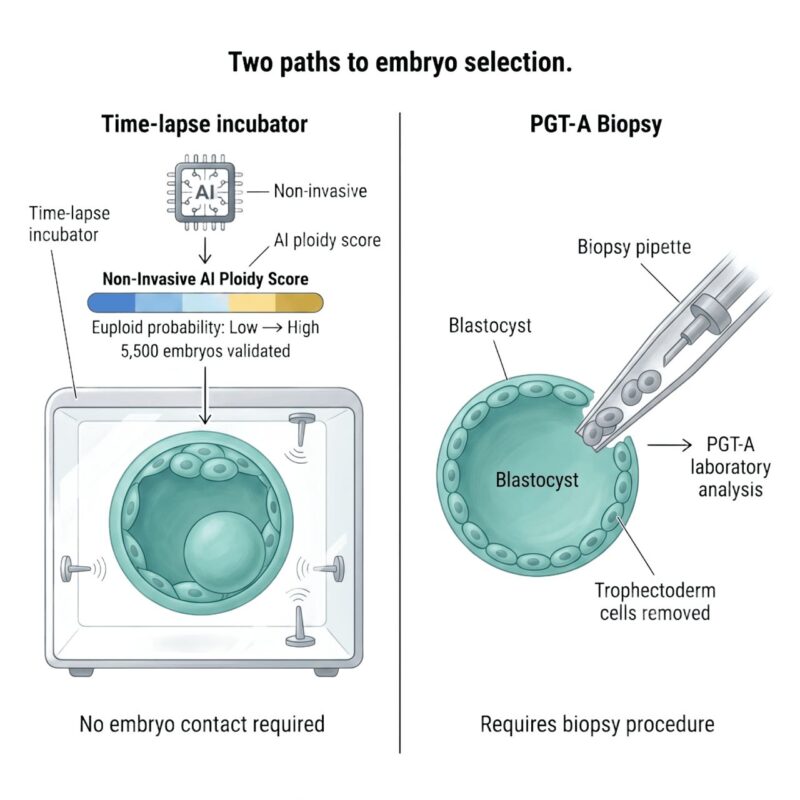
Imagine your IVF clinic using the same time-lapse videos they already record to quietly check which embryos are more likely to have the right number of chromosomes. A major new study trained an AI system on over 5,500 embryos from four different IVF clinics. Instead of taking cells from the embryo (which is invasive and expensive), the AI simply watches the full ‘movie’ of the embryo developing from fertilization to blastocyst stage.
It gives each embryo an AI ploidy score. The higher the score, the higher the chance the embryo is euploid (chromosomally normal). These higher-scoring embryos were also more likely to result in a fetal heartbeat after transfer. When doctors combined the AI score with the usual visual grading of embryos, they could predict which ones were likely normal even better than with visual grading alone.
This is exciting news for patients who cannot or do not want PGT-A genetic testing due to cost, personal choice, or limited embryos. It offers a safe, non-invasive extra layer of information using data your clinic is already collecting. The study shows the tool works across different clinics, making it more reliable for real-world use. While more research is still needed, this could help many couples feel more confident when choosing which embryo to transfer.
For any inquiries or questions, please email:
Giménez-Rodríguez C, Shapiro M, Tauber Y, Lustgarten N, Seidman DS, Gilboa D, Meseguer M. Bridging the gap between embryo euploidy, pregnancy potential and artificial intelligence: an AI-driven ploidy model using spatio-temporal time-lapse data. Reprod Biomed Online. In press 2025.
If you found this helpful, subscribe and follow for more clear, hopeful updates on the latest in fertility science and IVF breakthroughs!”
Stay updated on all scientific advances in the field of fertility with Fertility News.
-
Oct 16, 2026, 19:56Dina Ibrahem: Poor ICM vs. Poor TE
-
Oct 16, 2026, 19:47Sean Lauber: NIPT and Amniocentesis after PGT-A Reveal Few Abnormalities
-
Oct 16, 2026, 19:42Devyanshi Dixit: C-Section vs. Vaginal Birth – 2 Birth Paths, 2 Very Different Recoveries
-
Oct 16, 2026, 19:32Pawel Kordowitzki: Maternal Vitamin D Homeostasis, Pregnancy Outcomes and Offspring Health
-
Oct 16, 2026, 19:13Shizuko Takahashi: Our Study on Women’s Experiences of Assisted Reproductive Care in China Has Been Accepted by RBMO
-
Oct 16, 2026, 19:09ESHRE Announces ECRES-GESEA Reproductive Surgery Training and Certification in Slovenia
-
Oct 16, 2026, 18:20Kabita KB: What Happens if PLCZ1 Is Defective?
-
Oct 16, 2026, 18:12Partha Sarathi Das: From Reproductive Lifespan to Reproductive Healthspan
-
Oct 16, 2026, 18:05Joyce Harper: It Was a Pleasure to Give 2 Talks Celebrating World Menopause Day