

Ting Yuan: Metabolic Factors Influencing IVF Success Beyond PCOS
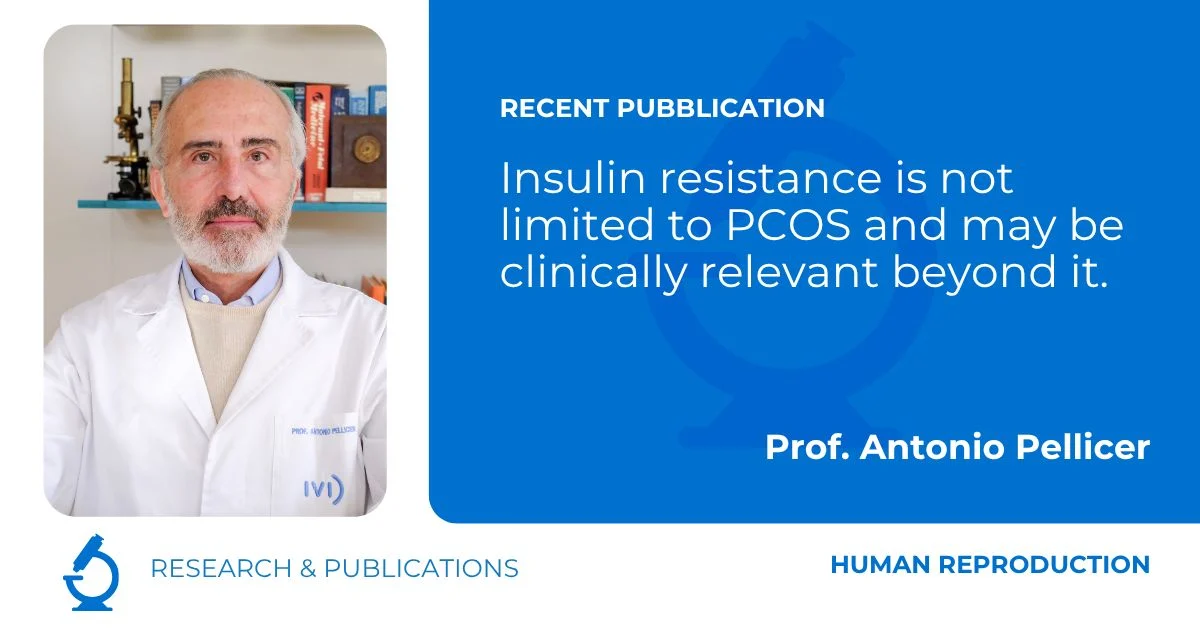
Ting Yuan, Co-Founder and Clinical Director at Zhaoxi Fertility Center Malaysia, shared a post by Antonio Pellicer, Presidente en IVI RMA Global, on LinkedIn about a paper by Antonio Pellicer et al published in Human Reproduction:
“Most people think fertility is about the embryo.
But that’s often not the real problem.
Fertility is not just about one organ.
It’s a system.
A recent study suggests something we may be underestimating in clinical practice:
- Insulin resistance is not limited to PCOS
- It can significantly affect outcomes even in non-PCOS patients
I often explain fertility using a simple framework:
- Seed → embryo quality
- Soil → endometrial receptivity
- Sunlight → hormonal regulation
- Water → metabolic health (especially insulin sensitivity)
In reality, we tend to focus heavily on the ‘seed’ and the ‘soil’.
But if the ‘water system’ is disrupted, the entire ecosystem is affected.
Even a high-quality embryo may fail in an imbalanced internal environment.
In my experience, some of the most challenging IVF cases are not about embryo quality – but about underlying metabolic imbalance.
This is why fertility care may need a shift:
- from organ-focused thinking
- to system-level, integrative management
Curious do you routinely assess metabolic factors beyond PCOS in your patient?”
Quoting Antonio Pellicer’s post:
“A multicenter retrospective cohort study from the IVIRMA Global Research Alliance reported that 30.5% of non-PCOS infertile women presented insulin resistance.
In this population, insulin resistance was observed to be associated with higher clinical miscarriage rates and lower live birth rates compared to insulin-sensitive patients.
Among insulin-resistant patients, metformin exposure prior to embryo transfer was observed to be associated with higher clinical pregnancy rates, lower miscarriage rates, and increased live birth rates.
These findings should be interpreted with caution in light of the retrospective study design and potential confounding factors, and do not imply direct clinical recommendations.
They may support the hypothesis that metabolic factors could be considered as part of a broader clinical assessment, beyond traditional diagnostic categories.
Further prospective studies are required to confirm these observations and to better define their clinical implications.
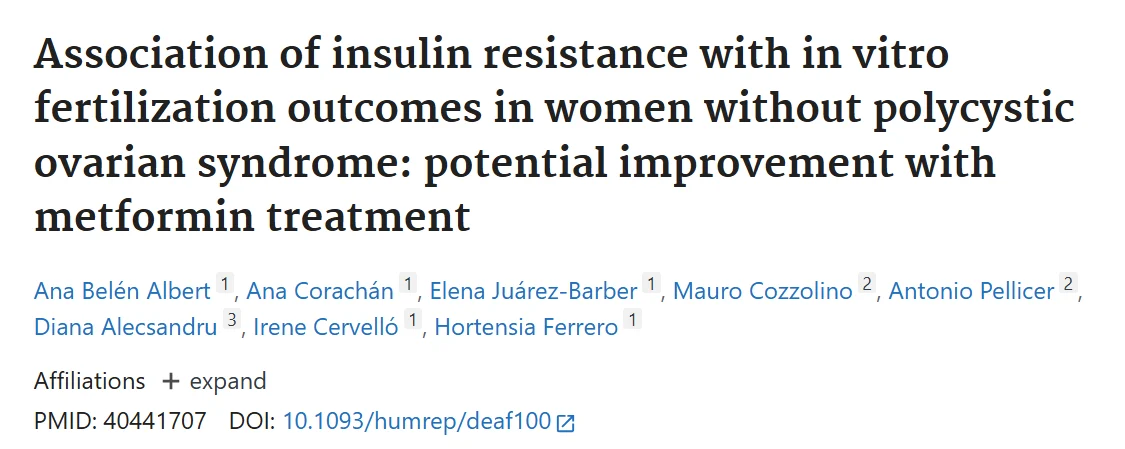
Title: Association of insulin resistance with in vitro fertilization outcomes in women without polycystic ovarian syndrome: potential improvement with metformin treatment
Authors: Ana Belén Albert, Ana Corachán, Elena Juárez-Barber, Mauro Cozzolino, Antonio Pellicer, Diana Alecsandru, Irene Cervelló, Hortensia Ferrero
Stay updated on all scientific advances in the field of fertility with Fertility News.
-
Apr 22, 2026, 11:36Christopher Robinson: Vaginal Clamping of Uterine Arteries in Postpartum Hemorrhage
-
Apr 22, 2026, 11:25Naval Shah: IVF Lab Quality and Standardisation Take Centre Stage at ALPHA 2026
-
Apr 22, 2026, 11:09Khalil Faaed: Recent Updates in AI Are Advancing Embryology and ART
-
Apr 22, 2026, 10:57Donor-Conceived Adults Experience Disclosure in France – RBMO
-
Apr 22, 2026, 10:15Strengthening Menopause Care Through Education and Access – SOGC
-
Apr 22, 2026, 10:07Christopher Robinson: Diagnosing High-Tone Pelvic Floor Dysfunction
-
Apr 22, 2026, 09:53Can Double Embryo Transfer With Mosaic Embryos Be a Reasonable Option in IVF? – Fertility Plus
-
Apr 22, 2026, 09:41Amy Mortimer: First Impressions From New Role at Care Fertility Manchester
-
Apr 22, 2026, 09:33Cristina Hickman: The Next Era of Fertility Care – AI, Access, and Empathy