

Christos Makridis: Why Fertility Depends on How We See the Future
Christos Makridis, CEO/Founder of CM Culture Management, shared on LinkedIn about a paper he co-authored with Clara Piano, published in SSRN:
”Why have fertility rates fallen? Parenthood is a decades-long commitment, so fertility also depends on how people understand adulthood and whether the future seems worth investing in.
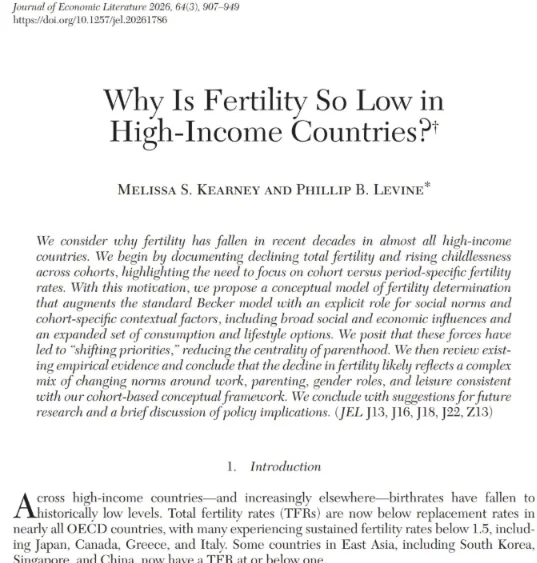
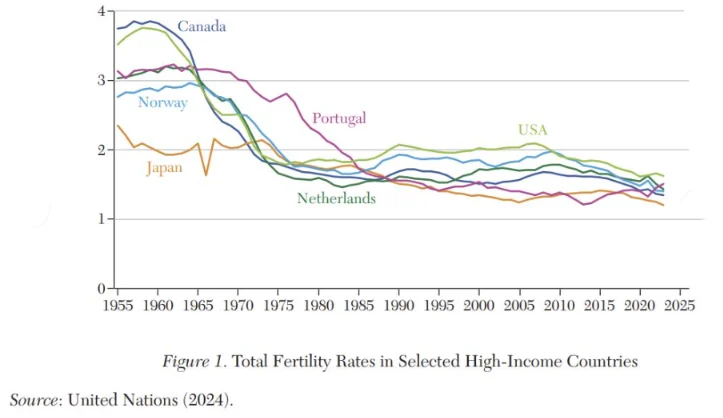
A new Journal of Economic Literature article by Melissa Kearney and Phillip Levine does a good job synthesizing the evidence for why fertility has fallen across nearly every high-income country. Their answer moves beyond conventional explanations of income, childcare costs, and women’s wages.
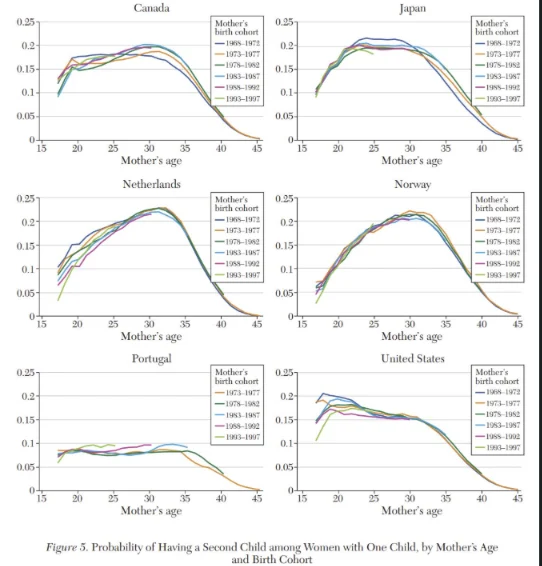
The authors emphasize the importance of following birth cohorts rather than relying exclusively on annual fertility rates. Lower annual fertility can reflect delayed childbearing, but the cohort evidence increasingly shows more than postponement. Recent generations are having fewer children over their lifetimes and remaining childless at higher rates.
Kearney and Levine describe this as a process of ‘shifting priorities.’
Successive cohorts face different norms around work, parenting, gender roles, and leisure, along with a much wider range of socially accepted alternatives to family formation. Parenthood may remain desirable, but it occupies a less central position relative to careers, travel, consumption, digital entertainment, and other sources of identity and fulfillment.
This framework also helps explain why modest pronatalist policies often have limited results. Cash benefits, tax credits, childcare subsidies, and parental leave can reduce specific costs, but incremental interventions rarely change the broader lifetime calculation involved in marriage and parenthood.
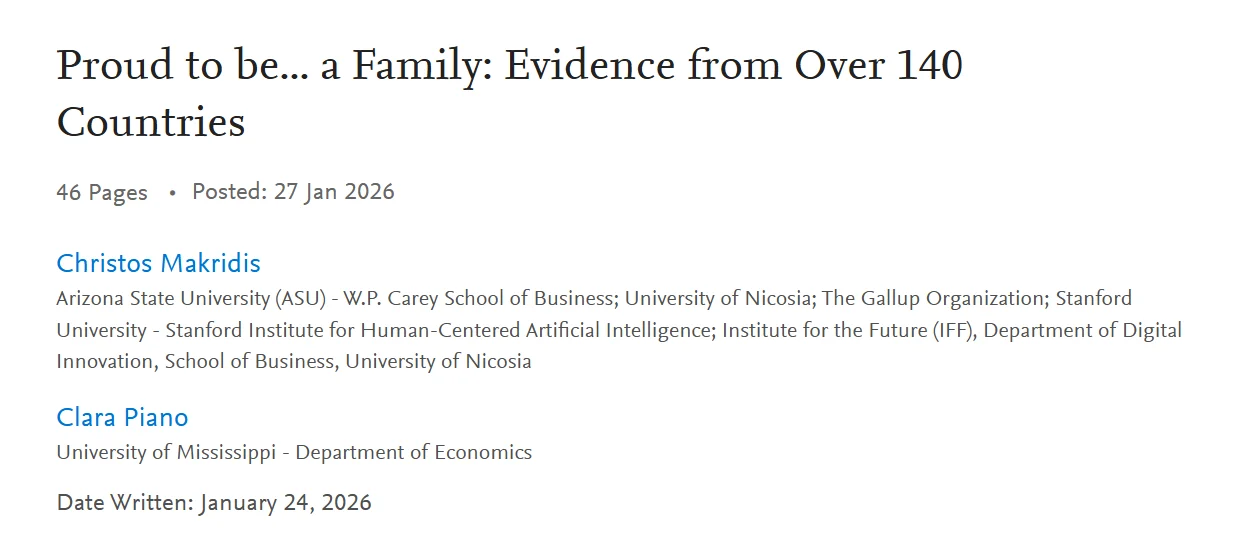
The argument connects closely with my research with Clara Piano, ‘Proud to be… a Family: Evidence from Over 140 Countries.’ Using Gallup World Poll data from 2006 through 2025, we find that countries with higher levels of self-reported thriving experience higher fertility, even after accounting for income, education, marriage, labor-market conditions, and religiosity.
Fertility appears to respond to material conditions, but also to collective confidence that life is improving and the future is sufficiently stable to support a family.”
Title: Proud to be… a Family: Evidence from Over 140 Countries
Authors: Christos Makridis, Clara Piano
You can read the Full Article.
Stay informed with the latest updates in fertility and reproductive medicine on Fertility News.
-
Oct 21, 2026, 17:57Ula Sankowska: What I’ll Bring to ASRM INNOVATE in Baltimore
-
Oct 21, 2026, 17:40Robert Borowczyk: The Invisible Waiting Room
-
Oct 21, 2026, 17:35Fereshteh Safian: Behind the Scenes of Reproductive Medicine
-
Oct 21, 2026, 17:20The Relationship Between Trophectoderm Biopsy and Early Pregnancy Outcomes – RBMO
-
Oct 21, 2026, 17:09Jules McDonald: The Future of Fertility Is Happening in Abu Dhabi
-
Oct 21, 2026, 16:53Ashley Evans: I Never Imagined I’d Be a Fertility Story with a Group of People Whom I Have Never Met…
-
Oct 21, 2026, 16:41Karthik Raj: Asherman’s Syndrome – When the Endometrium Cannot Regenerate Normally
-
Oct 21, 2026, 16:36Katy Encalade: A Few Misconceptions I Think Every Woman Considering Egg Donation Deserves to Understand
-
Oct 21, 2026, 16:21The FeRGI Working Group 2026-2027 – ESHRE SIG Reproductive Genetics