
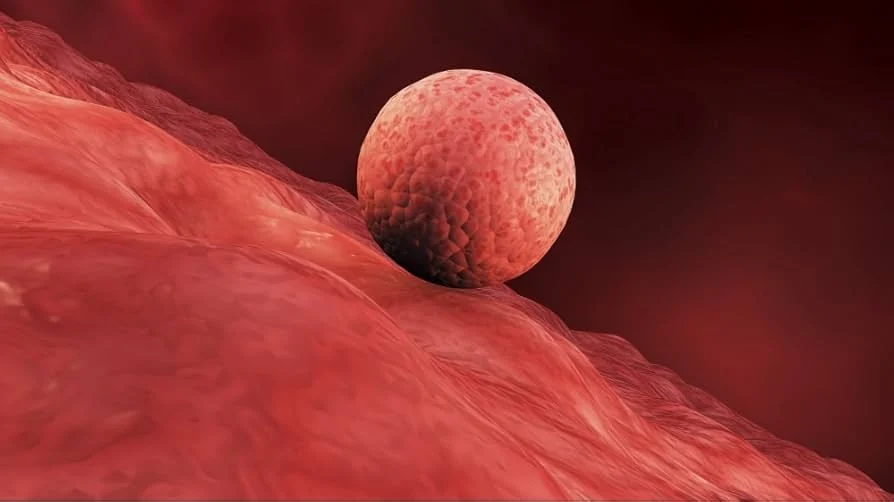
Dinesh Velu Rajan: Exploring the Role of Dysbiosis in ART Outcomes
Dinesh Velu Rajan, Junior embryologist at Dr Aravind’s IVF, shared a post on LinkedIn about a paper by F. Giangrazi et al. published in Human Reproduction:
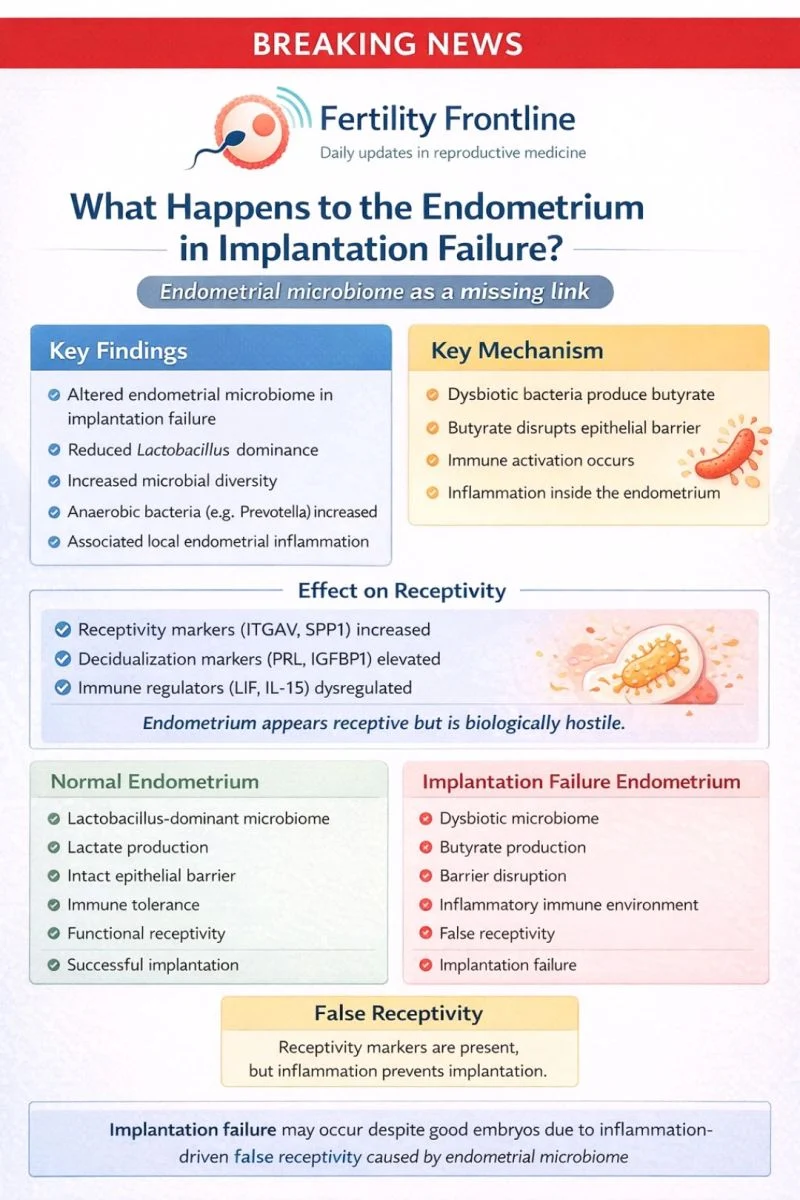
“Endometrial Microbiome: A Missing Link in Implantation Failure.
Key Results
- Implantation failure is associated with endometrial microbiome dysbiosis
- ↓ Lactobacillus dominance
- ↑ Microbial diversity
- Dysbiosis produces butyrate
- Butyrate induces inflammation
- Endometrial barrier weakens
- Receptivity markers increase
- Implantation still fails
- Inflammation-driven false receptivity
Key Concepts
- Endometrial Microbiome
- Microbes in the uterine lining
- Lactobacillus Dominance
- Healthy, implantation-supportive state
- Dysbiosis
- ↓ Lactobacillus + ↑ diversity + inflammation
- Butyrate
Results:
The endometrial microbiome is different in implantation failure:
- Healthy women had a Lactobacillus-dominant endometrium
- Failed cases showed reduced Lactobacillus
- Anaerobic bacteria such as Prevotella were more common in failure cases
- This shows that a non-Lactobacillus-dominant microbiome is associated with implantation failure.
Dysbiosis is linked to inflammation, not hormone failure
Receptivity markers were increased, not reduced
Surprisingly, the study found that:
- Many classical receptivity markers were higher in women who failed to implant
- Markers like ITGAV and SPP1 were increased
- Decidualization markers such as PRL and IGFBP1 were also elevated
This means:
The endometrium looked ‘ready’ at a molecular level
But implantation still did not occur
This introduces the concept of false or dysfunctional receptivity.
Butyrate is the key mediator connecting microbiome and inflammation
The authors tested bacterial metabolites to understand the mechanism.
They found that:
Dysbiotic bacteria produce butyrate
Butyrate strongly affected endometrial cells
Other metabolites like acetate had minimal effects
Lactate (from Lactobacillus) was protective
This identified butyrate as the main harmful mediator.
Butyrate increases receptivity markers in epithelial cells
When endometrial epithelial cells were exposed to butyrate:
Expression of ITGAV and SPP1 increased
Receptivity signals were amplified
Effects were stronger in the presence of progesterone
This mimics:
A strongly receptive endometrium
But without successful implantation
Butyrate creates a molecular illusion of receptivity.
Butyrate damages the epithelial barrier
Despite increasing receptivity markers, butyrate also caused harm.
The study showed that butyrate:
Reduced epithelial barrier strength
Decreased TEER values
Made the endometrium more permeable
Altered tight junction proteins
This allows:
More microbial products to enter
More immune activation
A weak barrier promotes chronic inflammation.
Butyrate activates inflammatory signalling in the endometrium
Butyrate exposure led to:
Increased pro-inflammatory cytokines
Upregulation of IL-1β, IL-6, TNF-α, and IL-8
Increased antimicrobial peptides
Importantly:
The endometrium behaves as if it is under microbial attack.
Source.”
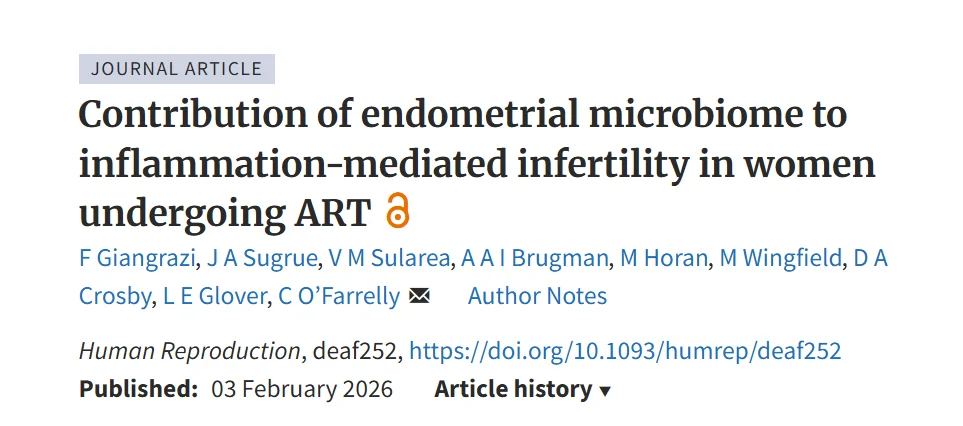
Title: Contribution of endometrial microbiome to inflammation-mediated infertility in women undergoing ART
Authors: F Giangrazi, J A Sugrue, V M Sularea, A A I Brugman, M Horan, M Wingfield, D A Crosby, L E Glover, C O’Farrelly
Stay updated on all scientific advances in the field of fertility with Fertility News.
-
Apr 3, 2026, 12:57Sergei Gorlovetsky: The Invisible Work Breaking Fertility Clinics
-
Apr 3, 2026, 12:50Ting Yuan: Rethinking Oocyte Quality Through Reproducible Patterns
-
Apr 3, 2026, 12:36Asma Khalil: An Incredibly Powerful Podcast Brings Attention to Women’s Fertility Challenges
-
Apr 3, 2026, 12:29Angela Koech: Every 30 Seconds, Africa Loses a Baby to a Preventable Stillbirth
-
Apr 3, 2026, 12:17Sergei Gorlovetsky: AI Support Expands Guidance for IVF Patients at Home
-
Apr 3, 2026, 12:06Thin Womb Lining Doesn’t Have to End Your IVF Dreams – Fertility Plus
-
Apr 3, 2026, 12:04Updated NICE IVF Guidance Contrasts with Declining NHS Support – HFEA
-
Apr 3, 2026, 11:59IVF Remains Safe for Women With a History of Cancer – ESHRE
-
Apr 3, 2026, 11:56Vitamin D Binding Protein and Reproductive Outcomes – Fertility and Sterility