
Gharam Mohammad: Uterine Factors for Personalized IVF Strategies
Gharam Mohammad, MBBS Student at Thumbay University Hospital, shared a post on LinkedIn:
“The Abstract I presented at IFFI 2026, which received an Excellence Award, focused on a simple but important question:
Why does implantation fail in IVF even when good-quality embryos are transferred?
The key message is that implantation failure is not always related to the embryo itself. Evidence shows that the endometrial environment, especially the endometrial microbiome, plays a major role in implantation and IVF success. A healthy, Lactobacillus-dominant endometrial microbiome is associated with higher implantation and pregnancy rates, while microbial imbalance (dysbiosis) is linked to inflammation, poor receptivity, and recurrent implantation failure.
Understanding and addressing uterine factors may help move IVF toward more personalized and effective treatment strategies.”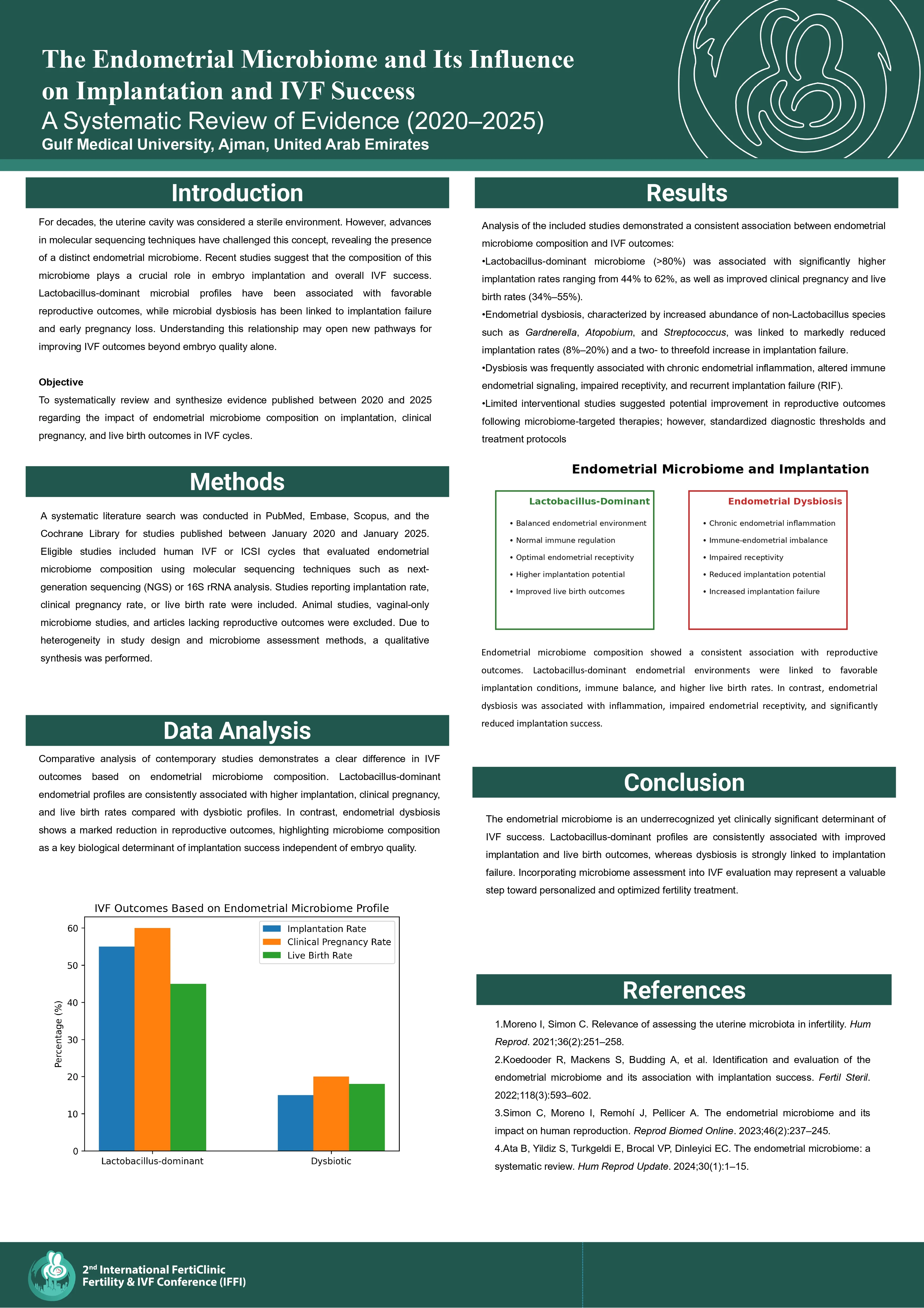
Stay updated on all scientific advances in the field of fertility with Fertility News.
-
Oct 8, 2026, 17:18Khalil Faaed: Vitrification Prevents Ice, but Does It Prevent Oocyte Damage?
-
Oct 8, 2026, 17:16Ritu Anand: Better Conversations Ultimately Lead to Better Care in Fertility
-
Oct 8, 2026, 17:14Mark Trolice: Excited to Speak at Women’s HealthX
-
Oct 8, 2026, 17:12Delighted to Welcome Dr. Róisín Mortimer – Waterstone Clinic-IVF and Fertility
-
Oct 8, 2026, 17:09Deirdre Zander-Fox: Pleased to Be an Invited Speaker at ESHRE Precision ART
-
Oct 8, 2026, 17:06Roohi Jeelani: Is Modern Life Actually Making It Harder to Get Pregnant?
-
Oct 8, 2026, 17:04Robert Borowczyk: We Judge the Newest IVF Consultation Group Too Quickly…
-
Oct 8, 2026, 17:01Carlos Guerrero: Great Couple of Days Visiting the Team at New Leaders in Fertility and Endocrinology
-
Oct 8, 2026, 17:00Sarah Banks: Improving Patient Experience Isn’t Always About Making Huge Changes…