

The Global IVF Market Is Set to Reach $65B by 2032 – Meddilink
Meddilink shared a post on LinkedIn:
“The global IVF market is entering a decade of accelerated growth, driven by rising infertility rates, advancements in assisted reproductive technologies, and increasing adoption of digital solutions for cycle management. For stakeholders across clinical, laboratory, and executive functions, this landscape presents both opportunities and operational challenges that demand strategic investment in technology and patient-centered models.
Market and Forecast highlight (2024–2032)
- The global IVF services market was valued at USD 28.41 billion in 2024.
- By 2032, it is projected to reach USD 65 billion, growing at a CAGR of ~11%.
- By 2027,over 40% of global IVF clinics are expected to use AI-enhanced decision support in embryo selection.
- By 2030, digitally integrated IVF workflows may become the default in North America and Western Europe, with strong adoption emerging in Asia-Pacific.
Regional Insights
- North America:Leads with strong AI adoption, digital records, and supportive insurance in select states. Market growth is driven by delayed parenthood and the consolidation of clinic networks.
- Europe:Mature market with high utilization in Denmark, Spain, and the UK. Supported by favorable regulations and growing cross-border IVF services.
- Asia-Pacific:Fastest-growing region with rising infertility rates and strong government support in India, China, and Japan. Increasing use of automation and digital fertility platforms.
- Middle East and Africa: Rapid market development, especially in GCC countries. Fertility centers are part of national health plans; private pay demand is rising despite limited insurance.
- Latin America:Growth fueled by fertility tourism in Brazil, Mexico, and Argentina. Demand centered in urban private clinics; gradual digital lab adoption underway.
Global IVF Market
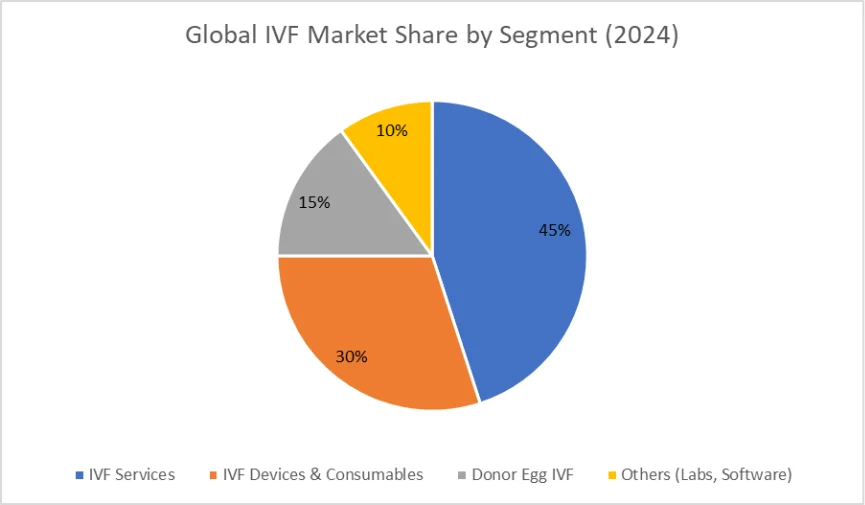
Key Trends Reshaping the IVF Market
- Technology Integration-AI-driven embryo selection improves success rates by reducing subjective bias in lab assessments.
-Interoperable digital platforms unify lab, clinic, and admin data—improving compliance and traceability. - Rising Demand and Accessibility-Increasing infertility prevalence due to lifestyle, late parenthood, and medical conditions.
-Gradual expansion of insurance coverage and government support in select regions. - Service Model Innovation-End-to-end, tech-enabled IVF journeys—from monitoring to embryo transfer.
-At-home diagnostic kits, remote cycle monitoring, and AI-powered alerts are reducing delays and errors.
Strategic Opportunities for Stakeholders (2024–2032)
- AI and Automation: Adoption of machine learning for embryo viability assessment and lab automation.
- Collaborations and Partnerships:Fertility clinics and technology providers are forming strategic alliances to integrate advanced solutions such as AI-based IVF platforms and robotic lab systems.
- Data-Driven Workflows: Platforms that enable real-time monitoring, standardized data retrieval, and KPI dashboards.
- Emerging Markets Expansion: Rapid growth expected in Asia-Pacific due to increasing awareness, affordability, and policy support.
Competitive Landscape
The IVF sector is highly competitive, with increasing overlap between fertility clinics, med-tech firms, and digital health companies:
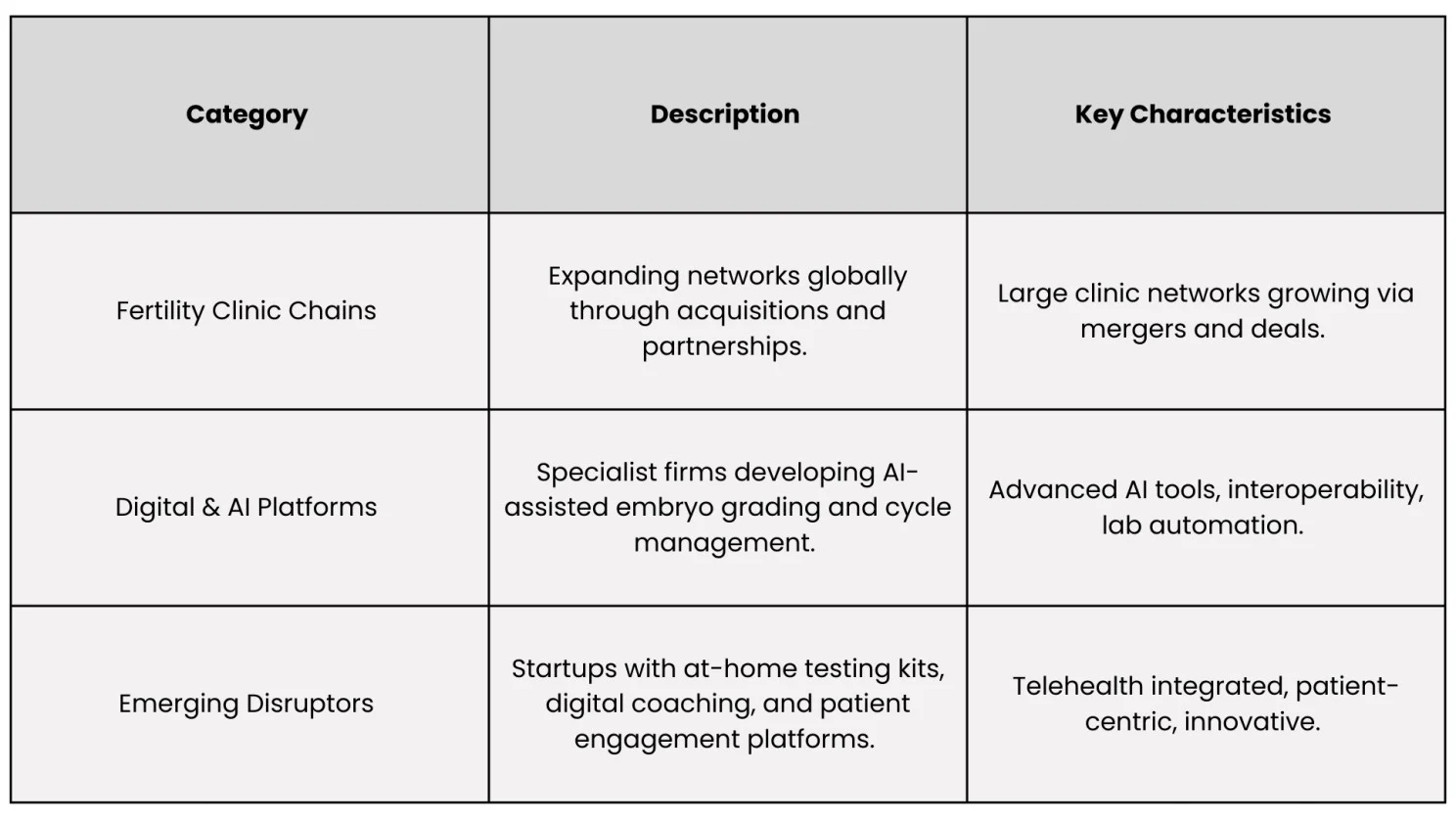
Competitive differentiation is increasingly defined by:
- Clinical outcomes (higher pregnancy and live birth rates).
- Technology integration (AI, robotics, digital records, and automation).
- Patient experience (digital transparency, affordable care packages, fertility-friendly financing).
Conclusion:
The IVF industry is entering a transformative decade where technology adoption, globalization, and patient-centric care models will define success. By 2032, IVF is projected to exceed USD 65 billion, with AI-powered workflows, interoperable platforms, and expanded patient access reshaping the landscape worldwide. Organizations that align clinical innovation with operational efficiency and digital engagement will emerge as leaders in this competitive, rapidly evolving market.”
-
Sep 19, 2026, 17:48Gaurav Gangwani: 40% of Infertile Men Have Varicocele, but Some Fertility Doctors Don’t Screen for It Routinely
-
Sep 19, 2026, 17:45Steven Leist: No One Should Have to Navigate the Path to Parenthood Alone
-
Sep 19, 2026, 17:43Gautam Allahbadia: An Embryo’s Journey Doesn’t Always Follow a Perfectly Predictable Path
-
Sep 19, 2026, 17:41Aumatma Simmons: Fertility Progress Isn’t Always All-or-Nothing
-
Sep 19, 2026, 17:37Emre Seli: Useful Information for Counseling Patients After an IVF Cycle with Complete Embryo Developmental Arrest
-
Sep 19, 2026, 17:34Lucas Almoño: When a Team Is Built with Outstanding People, the Impact Is Even Greater
-
Sep 19, 2026, 17:31MEFS 2026 Is Where Knowledge Moves Forward
-
Sep 19, 2026, 17:30Baroness Geeta Nargund: Speaking About the Urgent Need for Fertility Education in the UK House of Lords
-
Sep 19, 2026, 17:27Mahnaz Fida: Beyond IVF – A Patient-Centred Journey from Fertility Assessment to Parenthood