
Transient Reoxygenation During Embryo Handling in Hypoxic IVF Culture: Why the Handling Window Matters
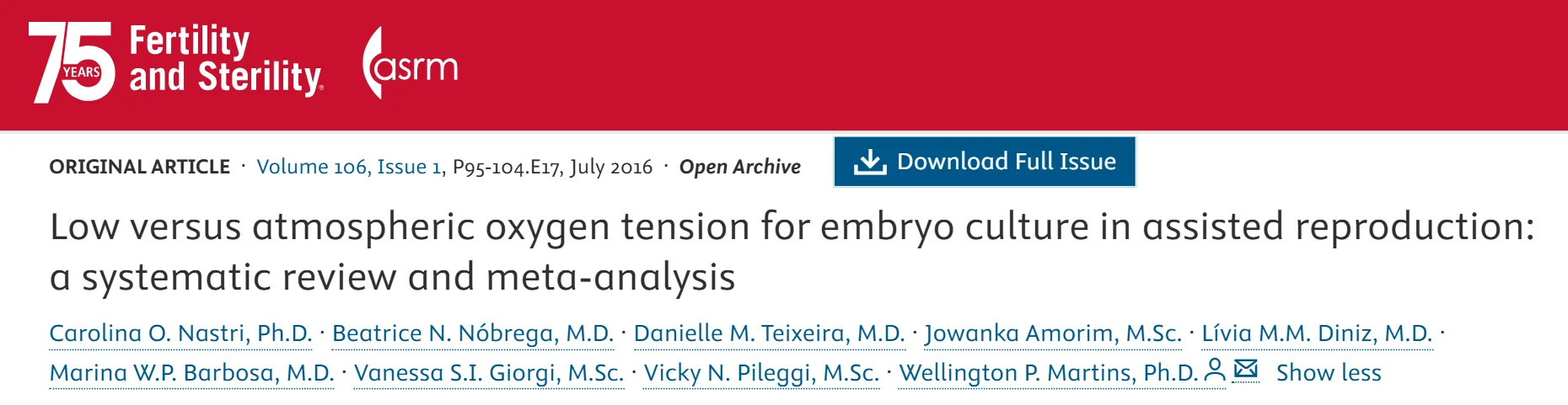
“Reduced-oxygen embryo culture is now an established component of modern assisted reproductive technology (ART) laboratory practice. A systematic review of 21 studies found that low-oxygen culture groups were generally maintained at 5–6% oxygen, although the certainty of evidence for clinical benefit remained limited (Nastri et al., 2016). The programmed oxygen concentration inside an incubator, however, does not represent the oxygen environment experienced continuously by an embryo.
During fertilization assessment, embryo assessment, biopsy, vitrification-related procedures, or routine laboratory handling, culture dishes leave the controlled incubator environment and encounter atmospheric oxygen. The resulting transition is not simply an ‘incubator versus room air’ event. Oxygen must diffuse between the surrounding atmosphere, overlay oil and culture medium, creating a dynamic microenvironment within the culture droplet.
Recent experimental evidence provides quantitative data on this transition and raises an important laboratory question: how rapidly does a culture droplet reoxygenate during routine handling, and how does the oil overlay influence that process?
How quickly does culture medium reoxygenate after leaving a hypoxic incubator?
Kulkarni et al. (2026) directly measured oxygen saturation dynamics in ART culture media under conditions designed to reproduce laboratory oxygen transitions. Culture-medium droplets were equilibrated at 5% oxygen, 5% carbon dioxide and 37°C and subsequently exposed to an atmospheric incubator containing approximately 18–19% oxygen. Oxygen saturation was measured every 30 seconds using a fibre-optic microprobe.
The transition was measurable but not instantaneous. During equilibration from atmospheric conditions toward hypoxia, light oil demonstrated a half-life of approximately 71 minutes, compared with 116 minutes for heavy oil. During reoxygenation, the corresponding half-times were approximately 50 minutes for light oil and 78 minutes for heavy oil (Kulkarni et al., 2026).
These measurements provide an important distinction between the incubator set point and the oxygen state of the culture medium. A dish removed from a hypoxic incubator does not immediately acquire atmospheric oxygen throughout the culture droplet. Instead, oxygen concentration changes according to the physical properties of the culture system.
Importantly, this study measured oxygen dynamics in culture media rather than developmental or clinical outcomes in human embryos. The findings therefore establish a measurable physicochemical phenomenon, not evidence that transient reoxygenation itself damages embryos.
Does oil viscosity change the oxygen environment during routine handling?
The 2026 oxygen-dynamics study demonstrated that oil viscosity significantly influenced both oxygen equilibration and reoxygenation kinetics. Light oil permitted faster oxygen transfer, whereas heavy oil slowed the transition in both directions (Kulkarni et al., 2026).
This finding does not establish that heavy oil is clinically superior. A slower oxygen transition is not automatically equivalent to a better embryo culture environment. The same physical property that slows reoxygenation also slows the return toward the intended hypoxic environment after the dish is returned to the incubator.
The clinical literature also requires careful interpretation. Tran et al. (2026) evaluated 578 IVF cycles in a prospective, single-centre, non-randomized cohort. Heavy paraffin oil was associated with higher cleavage and blastocyst-formation rates, while pregnancy outcomes, including live birth, did not differ significantly between the groups. Because oil allocation followed routine laboratory workflow rather than randomization, these findings demonstrate an association rather than a causal effect of oil viscosity (Tran et al., 2026).
The most defensible interpretation is therefore narrower: oil viscosity changes the kinetics of oxygen transfer, while the independent clinical significance of that change remains unresolved.
Does a slower oxygen transition mean better embryo protection?
Not necessarily.
The objective of an IVF culture system is not simply to minimize oxygen movement. It is to maintain a stable and appropriate microenvironment for the embryo. Oxygen is one component of that environment, alongside temperature, pH, osmolality, humidity, media composition, droplet configuration and handling conditions.
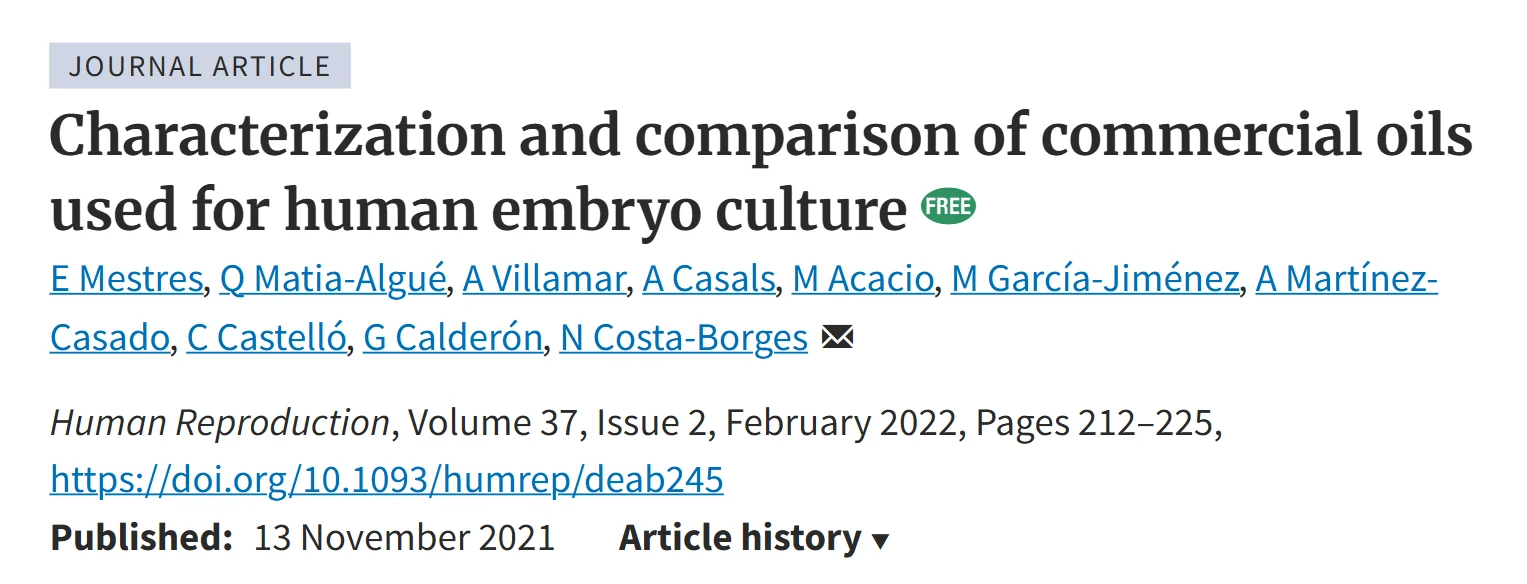
Commercial oils themselves are heterogeneous. Mestres et al. (2022) characterized 13 commercially available oils and identified substantial differences in viscosity, density, oxidation-related properties and their capacity to stabilize culture conditions. Higher-viscosity oils tended to provide additional protection against some culture-condition fluctuations, although temperature differences between oils were small. The study also identified commercially available oil samples with embryo toxicity in a sensitive mouse embryo assay, highlighting that viscosity alone does not define oil quality.
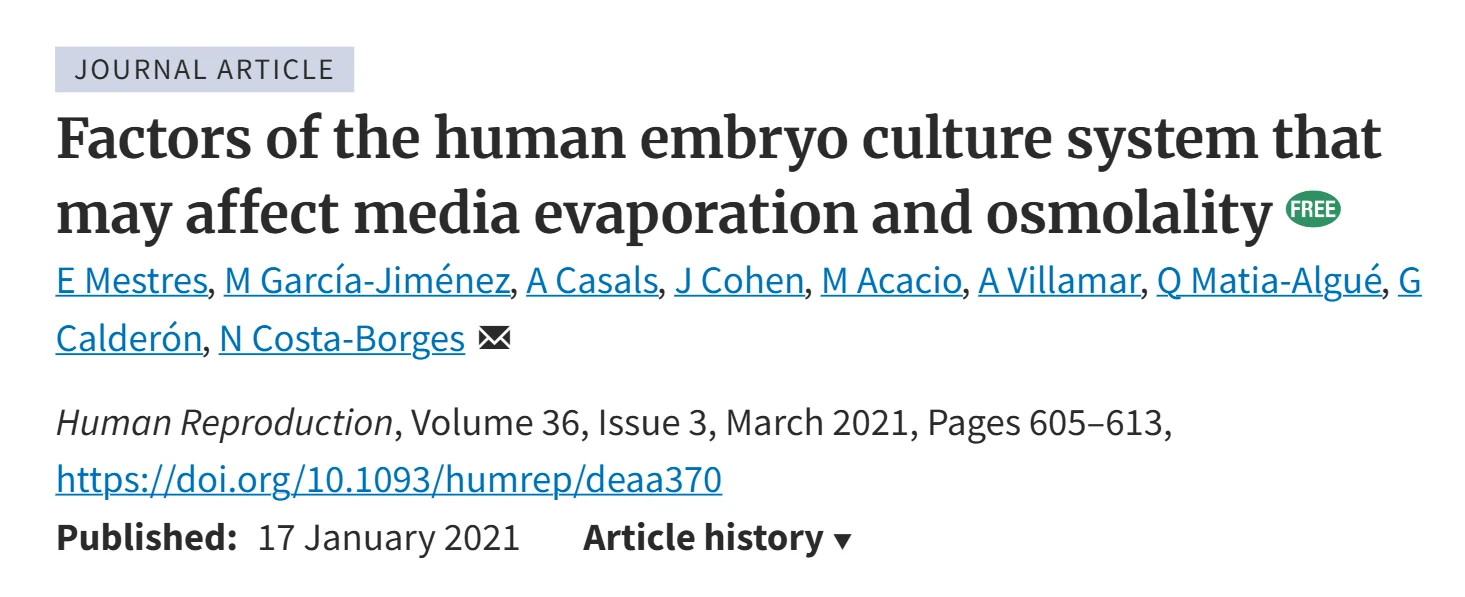
Media stability is similarly dependent on the broader culture system. Mestres et al. (2021) demonstrated that incubator humidity, oil volume, culture-medium type and dish design influence evaporation and consequently osmolality. These findings reinforce the principle that an oil overlay should be evaluated as one component of an integrated culture system rather than as an isolated variable.
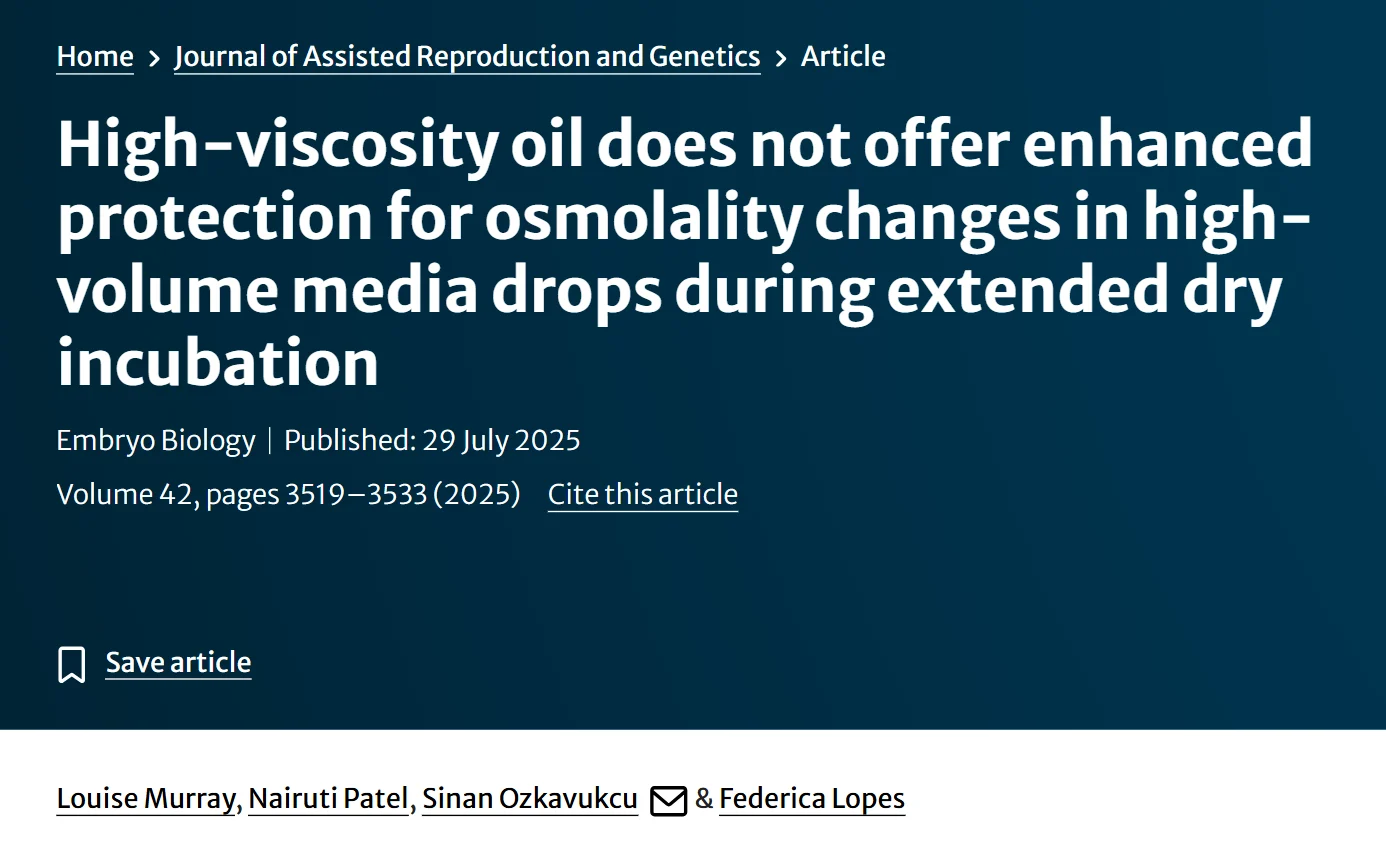
Recent evidence also argues against assuming that higher viscosity universally provides greater protection. Murray et al. (2025) found that high-viscosity oil did not provide superior protection against osmolality changes compared with conventional oil under their specific experimental conditions of dry incubation and high-volume media drops.
Thus, the relevant laboratory question is not simply whether an oil is ‘light’ or ‘heavy,’ but how the complete culture system behaves under the conditions in which it is actually used.
What does the handling window mean for IVF laboratory practice?
The emerging evidence supports attention to handling time without establishing a universal harmful exposure threshold.
There is currently insufficient evidence to define a specific number of minutes outside a hypoxic incubator at which atmospheric exposure becomes harmful to human embryos. Such a threshold should therefore not be inferred from oxygen half-times measured in culture media.
The practical implication is instead one of workflow control and reproducibility. The 2026 ESHRE Good Practice recommendations provide an updated international framework for IVF laboratory practice and emphasize maintenance of controlled laboratory conditions throughout embryology procedures.
For laboratories using reduced-oxygen incubation, this supports minimizing unnecessary atmospheric exposure and avoiding avoidable interruptions during embryo handling. Efficient workflow, stable temperature, appropriate gas conditions, validated culture systems, appropriate oil preparation and consistent handling procedures remain more defensible targets than prescribing an arbitrary time limit.
The handling window should therefore be regarded as part of the embryo culture system itself.
What evidence is still needed?
The current evidence identifies a measurable physical phenomenon but does not yet establish its independent effect on embryo competence or live birth.
Kulkarni et al. (2026) quantified oxygen dynamics in culture media but did not assess human embryo developmental or clinical outcomes. Tran et al. (2026) provided human embryological and pregnancy data but did not directly measure oxygen kinetics during handling and used a non-randomized design. These studies therefore answer different parts of the same scientific question.
The next generation of studies needs to integrate these approaches. Real-time oxygen measurements during realistic laboratory handling could be combined with embryo-developmental endpoints and, where appropriate, clinical outcomes. Experimental designs should also account for oil viscosity, oil volume, droplet geometry, dish design, incubator oxygen concentration, temperature, pH and osmolality rather than treating viscosity as an isolated determinant.
This distinction is important for clinical embryology. The incubator establishes the intended gas environment, but the embryo experiences a dynamic microenvironment created by the interaction of atmosphere, oil, culture medium, dish geometry and laboratory handling.
Transient reoxygenation is therefore no longer merely a theoretical consideration: it is a measurable physicochemical transition within the culture system. What remains unresolved is whether the magnitude and duration of that transition independently influence human embryo competence or reproductive outcomes.”
Written by Saadat Hassan
Senior Clinical Embryologist/IVF and Embryology
BSc (Hons) Medical Laboratory Technology
King Edward Medical University, Lahore, Pakistan
References
Title: Oxygen equilibration dynamics in assisted reproductive technology embryo culture media
Authors: Sanjana Kulkarni, Bailey K Morris, Sacha A Krieg, Thomas O’Leary, Adam Krieg
You can read the Full Article in the Journal of Assisted Reproduction and Genetics.
Title: ESHRE recommendations on Good Practice in the IVF laboratory
Authors: ESHRE Good Practice in the IVF Lab Working Group, Gemma Arroyo, Amy Barrie, Giovanni Coticchio, Thomas Ebner, Jackson Kirkman-Brown, Nathalie Le Clef, Kersti Lundin, Cristina Magli, Marina Quesada Martinez, Maria José de los Santos Molina, Kelly Tilleman, Ioannis Sfontouris
You can read the Full Article in Human Reproduction.
Title: Light versus heavy paraffin oil for embryo culture in in vitro fertilization: a prospective cohort study
Authors: Huy Phuong Tran, Anh Tuan Do, Vy Nguyen-Thao Do, Tuyet Thi-Diem Hoang, Ha Le-Bao Tran, Trang Nguyen-Khanh Huynh, Thuy Thi-Thanh Tran, Tam Trung Luu, Thuan Duc Nguyen, Son Truong Dang
You can read the Full Article in Middle East Fertility Society Journal.
Title: High-viscosity oil does not offer enhanced protection for osmolality changes in high-volume media drops during extended dry incubation
Authors: Louise Murray, Nairuti Patel, Sinan Ozkavukcu, Federica Lopes
You can read the Full Article in the Journal of Assisted Reproduction and Genetics.
Title: Factors of the human embryo culture system that may affect media evaporation and osmolality
Authors: E Mestres, M García-Jiménez, A Casals, J Cohen, M Acacio, A Villamar, Q Matia-Algué, G Calderón, N Costa-Borges
You can read the Full Article in Human Reproduction.
Title: Characterization and comparison of commercial oils used for human embryo culture
Authors: E Mestres, Q Matia-Algué, A Villamar, A Casals, M Acacio, M García-Jiménez, A Martínez-Casado, C Castelló, G Calderón, N Costa-Borges
You can read the Full Article in Human Reproduction.
Title: Low versus atmospheric oxygen tension for embryo culture in assisted reproduction: a systematic review and meta-analysis
Authors: Carolina O. Nastri, Beatrice N. Nóbrega, Danielle M. Teixeira, Jowanka Amorim, Lívia M.M. Diniz, Marina W.P. Barbosa, Vanessa S.I. Giorgi, Vicky N. Pileggi, Wellington P. Martins
You can read the Full Article in Fertility and Sterility.
Other articles featuring Saadat Hassan on Fertility News.
-
Oct 8, 2026, 17:18Khalil Faaed: Vitrification Prevents Ice, but Does It Prevent Oocyte Damage?
-
Oct 8, 2026, 17:16Ritu Anand: Better Conversations Ultimately Lead to Better Care in Fertility
-
Oct 8, 2026, 17:14Mark Trolice: Excited to Speak at Women’s HealthX
-
Oct 8, 2026, 17:12Delighted to Welcome Dr. Róisín Mortimer – Waterstone Clinic-IVF and Fertility
-
Oct 8, 2026, 17:09Deirdre Zander-Fox: Pleased to Be an Invited Speaker at ESHRE Precision ART
-
Oct 8, 2026, 17:06Roohi Jeelani: Is Modern Life Actually Making It Harder to Get Pregnant?
-
Oct 8, 2026, 17:04Robert Borowczyk: We Judge the Newest IVF Consultation Group Too Quickly…
-
Oct 8, 2026, 17:01Carlos Guerrero: Great Couple of Days Visiting the Team at New Leaders in Fertility and Endocrinology
-
Oct 8, 2026, 17:00Sarah Banks: Improving Patient Experience Isn’t Always About Making Huge Changes…