
Embryo Competence Beyond Morphology: How Close Are We to Truly Understanding the Embryo?
“Embryo Competence is one of the central questions in modern assisted reproduction. Yet embryo competence is not represented by a single visible feature, genetic result, metabolic profile, or laboratory score. It is a biological continuum extending from the oocyte through fertilization, cleavage, blastulation, implantation, placentation, ongoing pregnancy, and live birth.
Embryo morphology remains the foundation of embryo assessment. However, morphology describes appearance rather than the complete biological capacity of an embryo. Modern embryology therefore increasingly combines morphological, genetic, developmental, metabolic, and computational information.
The critical question is not whether one technology is superior to another. It is whether additional information improves clinical decision-making without unnecessary intervention.
What Does Embryo Competence Actually Mean?
Embryo competence refers to the biological capacity of an embryo to progress through development and ultimately contribute to an ongoing pregnancy and live birth.
Competence is not a binary property. An embryo passes through multiple biological checkpoints:
- Oocyte competence
- Fertilization
- Cleavage-stage development
- Blastocyst formation
- Chromosomal integrity
- Implantation
- Placentation
- Ongoing pregnancy
- Live birth
Before the Embryo: The Biology of the Oocyte
Embryo competence does not begin at fertilization. It begins, in part, with the biological competence of the oocyte.
Maternal age, meiotic competence, cytoplasmic maturation, mitochondrial function, and the molecular environment of the oocyte influence subsequent embryonic development. No single routine clinical test captures the complete biological competence of an oocyte.
This reinforces an important principle: reproductive potential is not created at one developmental checkpoint. It is carried forward through a sequence of biological events.
Is Morphology Still the Foundation of Embryo Selection?
Yes. Morphology remains a fundamental component of clinical embryo assessment. Blastocyst expansion, inner cell mass appearance, trophectoderm characteristics, and developmental progression provide clinically relevant information. The ESHRE/ALPHA Istanbul Consensus (ESHRE/ALPHA, 2025) emphasizes standardized embryo assessment and recognizes morphology as an important component of embryo selection.
However, morphology has biological limits. Two embryos with similar morphological grades do not necessarily possess identical chromosomal or developmental potential. Conversely, embryos with different morphological grades do not represent completely separate biological categories.
The more informative question is not simply, ‘Which embryo looks best?’
It is: ‘What additional biological information improves the prediction provided by morphology?’
Does PGT-A Measure Embryo Competence?
Preimplantation Genetic Testing for Aneuploidy (PGT-A) is a laboratory technique used during in vitro fertilization (IVF) to assess whether cells obtained from an embryo biopsy have a chromosomally normal or abnormal complement. It provides genetic information that morphology alone cannot provide.
PGT-A is not a complete embryo competence test. The ASRM Practice Committee (2024) states that routine PGT-A for all patients undergoing IVF has not been demonstrated as an appropriate universal strategy. PGT-A provides information about chromosomal status, while implantation and live birth remain multifactorial biological outcomes.
PGT-A therefore answers a specific question: ‘What is the chromosomal status represented by the biopsy?’ It does not answer every question about implantation potential, placental development, endometrial interaction, or long-term developmental competence.
Do Time-Lapse, Metabolomics and AI Reveal the Best Embryo?
Time-lapse imaging adds developmental information by continuously recording embryo morphology and morphokinetics. It provides more observations than conventional periodic assessment.
However, more observation has not translated consistently into higher live-birth rates. In the TILT randomized controlled trial, Bhide et al. (2024) studied 1,575 participants. Live birth occurred in 33.7% of the time-lapse selection group and 33.0% of the standard-care group. The difference was not statistically significant.
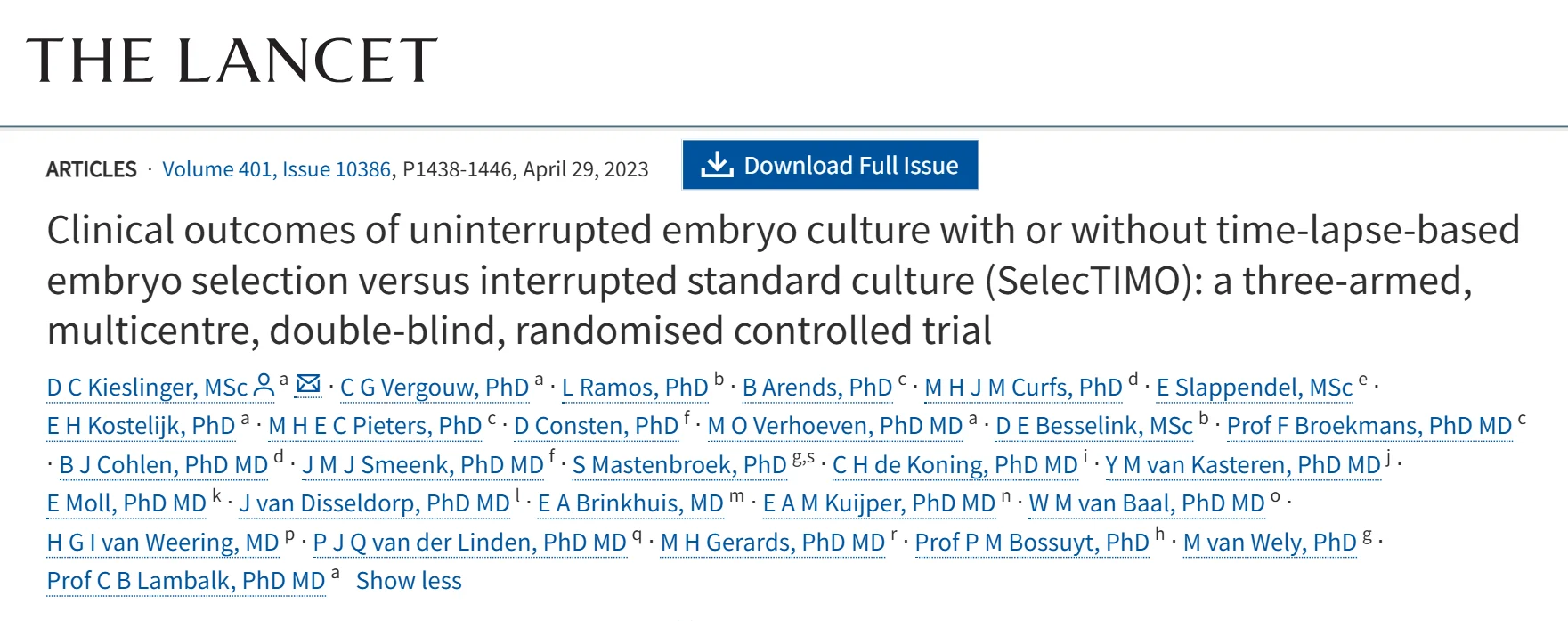
The SelecTIMO randomized controlled trial (van der Weiden et al., 2023) also found no significant difference in 12-month cumulative ongoing pregnancy between time-lapse embryo selection, uninterrupted culture with time-lapse imaging, and conventional incubation.
These trials provide an important lesson: additional information is not automatically additional clinical benefit.
What About Metabolomics?
Metabolomics examines small molecules present in the embryo’s surrounding culture environment. The approach is attractive because spent culture medium contains biological information without requiring embryo biopsy.
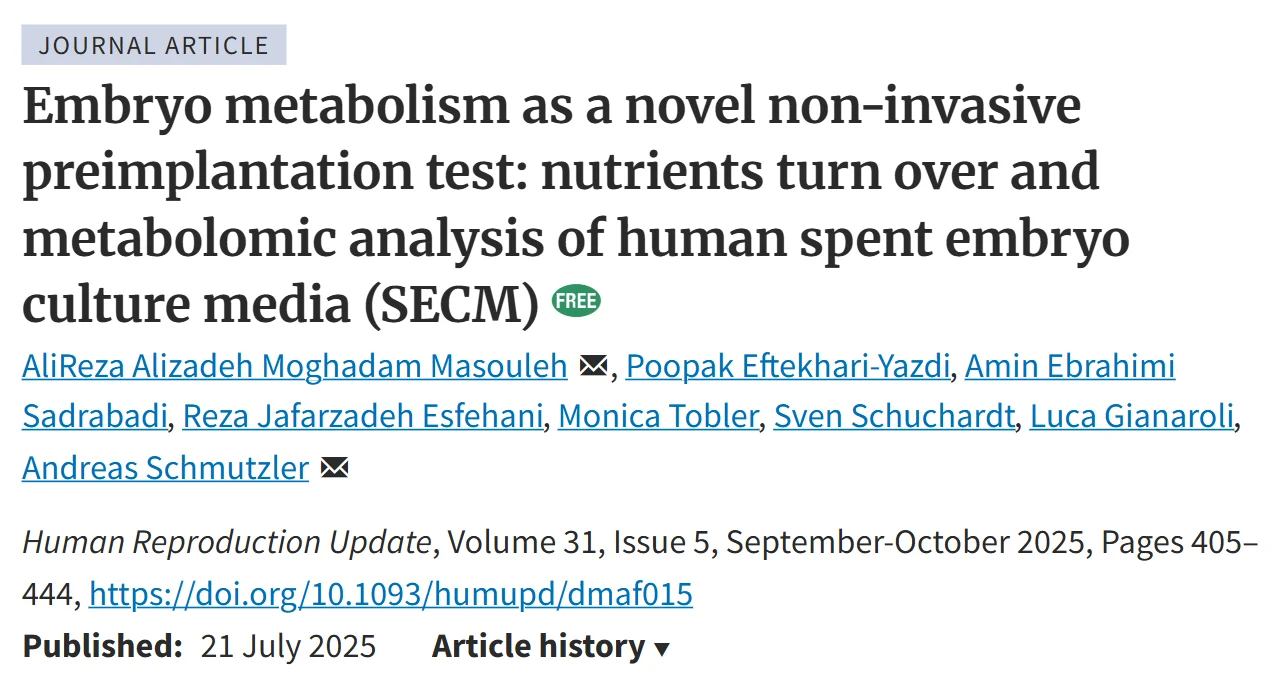
Alizadeh Moghadam Masouleh et al. (2025), reviewing 49 original human studies from 20 countries, identified substantial methodological heterogeneity and emphasized the need for standardization.
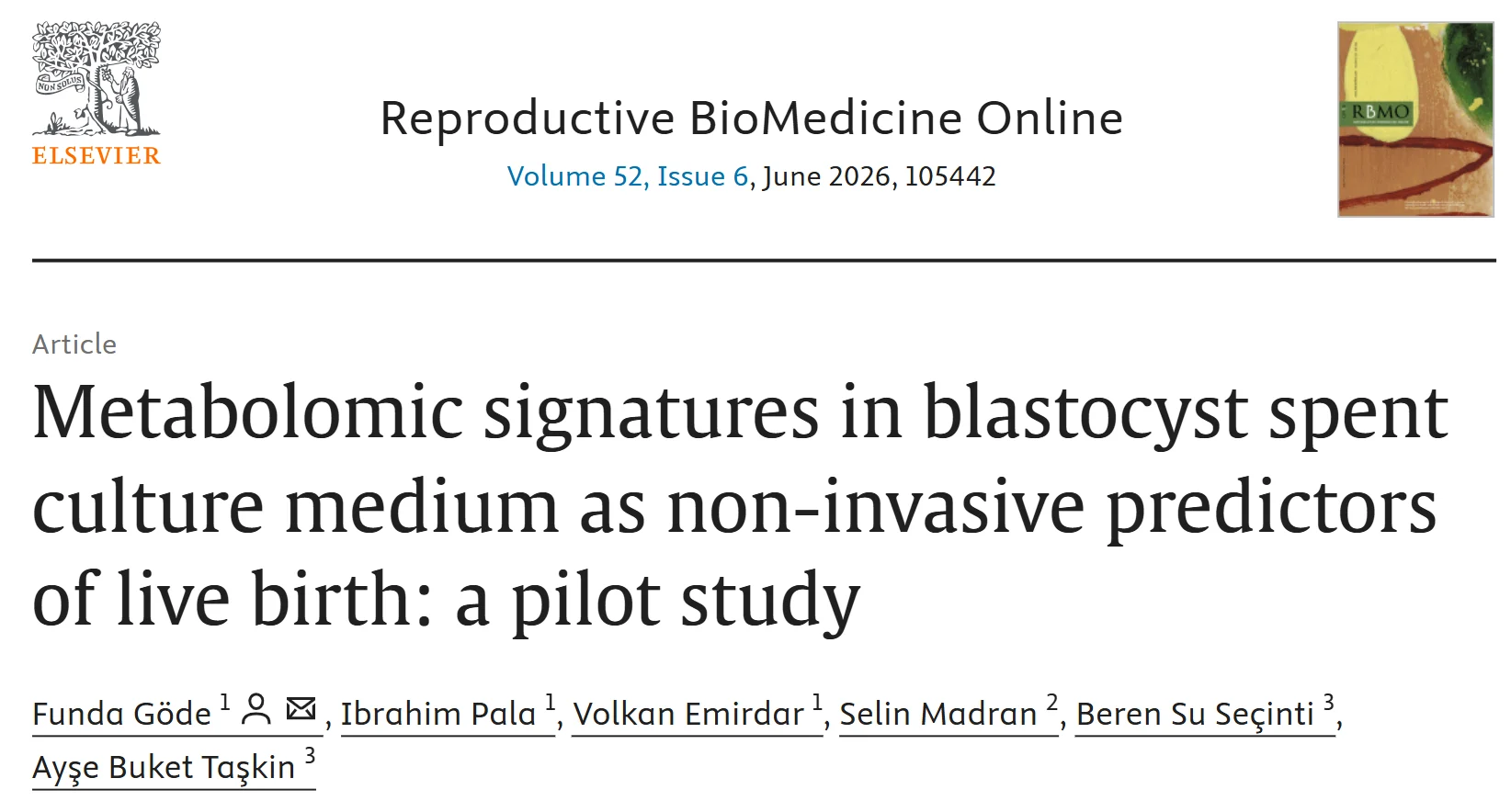
Göde et al. (2026) analyzed 70 spent culture-medium samples and 173 metabolites. Six metabolites differed between pregnancy and non-pregnancy groups, while ten differed between live-birth and non- live-birth groups. The reported area under the receiver operating characteristic curve was 0.788 for pregnancy and 0.834 for live birth. These findings require larger external validation before routine clinical use.
What About the Embryo’s Molecular Footprint?
The next generation of non-invasive embryo assessment examines cell-free DNA, RNA, proteins, extracellular vesicles, and other molecular signals released into the culture environment.
The attraction is straightforward: more biological information with less direct sampling. However, contamination, low signal concentration, maternal DNA, culture-medium variability, laboratory handling, and biological interpretation remain important technical challenges. Non-invasive molecular assessment remains a research field rather than an established replacement for embryo biopsy.
Where Does Artificial Intelligence Fit?
Artificial intelligence (AI) provides another layer of embryo assessment. AI systems analyze large datasets and identify patterns that are difficult to quantify consistently through visual assessment alone. These systems are being developed for embryo morphology, morphokinetics, genetic information, and multimodal prediction.
But prediction is not the same as biological understanding. An algorithm can produce a probability score without explaining the biological mechanism behind that prediction. Performance also depends on training data, laboratory conditions, imaging systems, patient populations, and external validation.
The key clinical question is whether AI improves patient-important outcomes when integrated into real clinical workflows.
Do We Need Every Technology for Every Embryo?
No single embryo requires every available assessment. Each technology answers a different biological question:
| Technology | Primary information |
| Morphology | Developmental appearance |
| Time-lapse | Morphokinetic patterns |
| PGT-A | Chromosomal status |
| Metabolomics | Biochemical environment |
| Molecular profiling | Biological signals |
| AI | Pattern recognition and prediction |
Right test. Right patient. Right embryo. Right clinical question.
The correct strategy is therefore not maximal testing. It is appropriate testing. More laboratory manipulation, biopsy, handling, cost, and complexity require a demonstrable clinical justification.
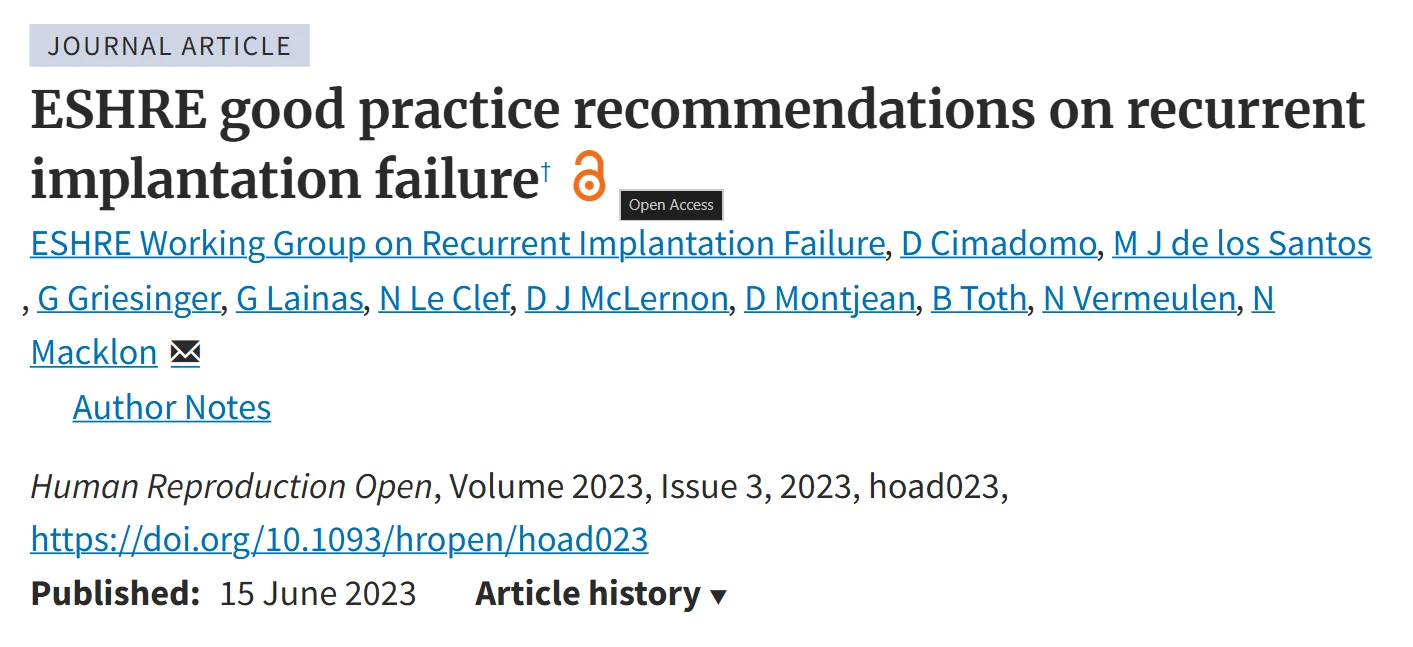
The embryo also does not implant in the incubator. Implantation occurs within the endometrium. The ESHRE Good Practice Recommendations for Recurrent Implantation Failure (ESHRE, 2023) describe endometrial receptivity as biologically complex and do not support routine use of commercially available endometrial receptivity testing without an appropriate clinical rationale.
Embryo selection therefore represents one side of the implantation equation: Embryo × Endometrium × Biological Synchrony.
How Is Embryo Selection Evolving?
The future of Embryo Competence assessment is moving toward integration of complementary information while reducing unnecessary intervention.
- Morphology provides structure.
- Genetics provides chromosomal information.
- Time-lapse provides developmental dynamics.
- Metabolomics provides biochemical signals.
- Molecular approaches provide additional biological information.
- AI provides computational integration.
The goal is not to collect the largest possible amount of data. The goal is to identify the information that changes clinical decisions and improves outcomes.
Maximum biological information. Minimum biological disturbance. Meaningful clinical benefit.”
Written by Saadat Hassan
Senior Clinical Embryologist / IVF and Embryology
BSc (Hons) Medical Laboratory Technology
King Edward Medical University, Lahore, Pakistan
References
Title: The Istanbul consensus update: a revised ESHRE/ALPHA consensus on oocyte and embryo static and dynamic morphological assessment
Authors: The Working Group on the update of the ESHRE/ALPHA Istanbul Consensus, Giovanni Coticchio, Aisling Ahlström, Gemma Arroyo, Basak Balaban, Alison Campbell, Maria José De Los Santos, Thomas Ebner, David K Gardner, Borut Kovačič, Kersti Lundin, M Cristina Magli, Saria Mcheik, Dean E Morbeck, Laura Rienzi, Ioannis Sfontouris, Nathalie Vermeulen, Mina Alikani
You can read the Full Article in Human Reproduction.
Title: The use of preimplantation genetic testing for aneuploidy: a committee opinion
Authors: Practice Committees of the American Society for Reproductive Medicine and the Society for Assisted Reproductive Technology
You can read the Full Article in Fertility and Sterility.
Title: Clinical effectiveness and safety of time-lapse imaging systems for embryo incubation and selection in in-vitro fertilisation treatment (TILT): a multicentre, three-parallel-group, double-blind, randomised controlled trial
Authors: Priya Bhide, David Y L Chan, Doris Lanz, Odai Alqawasmeh, Eleanor Barry, Dominic Baxter, Francisco Gonzalez Carreras, Yasmin Choudhury, Ying Cheong, Jacqueline Pui Wah Chung, Bonnie Collins, Luping Cong, Sally Doidge, James Heighway, Deepali Patel, M Carmen Pardo, Annabel Rattos, Annie Wright, Julie Dodds, Teresa Perez, Khalid S Khan, Shakila Thangaratinam
You can read the Full Article in The Lancet.
Title: Clinical outcomes of uninterrupted embryo culture with or without time-lapse-based embryo selection versus interrupted standard culture (SelecTIMO): a three-armed, multicentre, double-blind, randomised controlled trial
Authors: D C Kieslinger, C G Vergouw, L Ramos, B Arends, M H J M Curfs, E Slappendel, E H Kostelijk, M H E C Pieters, D Consten, M O Verhoeven, D E Besselink, F Broekmans, B J Cohlen, J M J Smeenk, S Mastenbroek, C H de Koning, Y M van Kasteren, E Moll, J van Disseldorp, E A Brinkhuis, E A M Kuijper, W M van Baal, H G I van Weering, P J Q van der Linden, M H Gerards, P M Bossuyt, M van Wely, C B Lambalk
You can read the Full Article in The Lancet.
Title: Embryo metabolism as a novel non-invasive preimplantation test: nutrient turnover and metabolomic analysis of human spent embryo culture media (SECM)
Authors: AliReza Alizadeh Moghadam Masouleh, Poopak Eftekhari-Yazdi, Amin Ebrahimi Sadrabadi, Reza Jafarzadeh Esfehani, Monica Tobler, Sven Schuchardt, Luca Gianaroli, Andreas Schmutzler
You can read the Full Article in Human Reproduction Update.
Title: Metabolomic signatures in blastocyst spent culture medium as non-invasive predictors of live birth: a pilot study
Authors: Funda Göde, Ibrahim Pala, Volkan Emirdar, Selin Madran, Beren Su Seçinti, Ayşe Buket Taşkin
You can read the Full Article in Reproductive BioMedicine Online.
Title: ESHRE good practice recommendations on recurrent implantation failure
Authors: ESHRE Working Group on Recurrent Implantation Failure, D Cimadomo, M J de los Santos, G Griesinger, G Lainas, N Le Clef, D J McLernon, D Montjean, B Toth, N Vermeulen, N Macklon
You can read the Full Article in Human Reproduction Open.
You can also read Saadat Hassan’s previous article, “The Forgotten Part of the Sperm: Why Sperm Tail Membrane Disruption Matters in ICSI“, published in Fertility News.
-
Oct 22, 2026, 15:22Beth Zoneraich: Pinnacle Fertility Team Is Heading to the ASRM 2026
-
Oct 22, 2026, 15:18Kim Schamroth: Honored to Be Representing EraBorn and EDN at ASRM 2026
-
Oct 22, 2026, 15:13Becca DiCondina Has Been Appointed Clinical Science Specialist at CooperSurgical
-
Oct 22, 2026, 15:11Devyanshi Dixit: Can a Pap Smear Help You Get Pregnant?
-
Oct 22, 2026, 15:08Registration for RISE 2027 Is Open – ASRM
-
Oct 22, 2026, 15:04New RBMO Study Suggests Ethnic and Genetic Differences May Influence Ovarian Stimulation Response
-
Oct 21, 2026, 17:57Ula Sankowska: What I’ll Bring to ASRM INNOVATE in Baltimore
-
Oct 21, 2026, 17:40Robert Borowczyk: The Invisible Waiting Room
-
Oct 21, 2026, 17:35Fereshteh Safian: Behind the Scenes of Reproductive Medicine