

Saadat Hassan: Embryo Culture Media and the Changing Metabolic Needs of the Human Embryo
“Does Modern IVF Reflect Developmental Biology?
Why do the embryo’s metabolic requirements change during development?
The human preimplantation embryo is metabolically dynamic. From fertilisation to blastocyst formation, it undergoes cleavage divisions, compaction, lineage differentiation and blastocoel formation. These developmental transitions coincide with changes in energy metabolism, substrate utilisation and cellular biosynthesis. This raises an important question for in vitro fertilisation (IVF): how closely do embryo culture media reflect the changing physiological requirements of the developing embryo?
Early preimplantation embryos use metabolic pathways differently from later-stage embryos. Pyruvate and lactate are important energy substrates during early development, while glucose utilisation generally increases as development progresses. Amino acids contribute to protein synthesis, osmotic regulation and other cellular processes. These patterns do not represent a simple switch from one nutrient to another; substrate utilisation varies with developmental stage and culture conditions (Gardner et al., 2000).
The natural reproductive tract is also dynamic. The oviduct and uterus provide changing concentrations of nutrients and metabolites as the embryo moves towards implantation. However, the exact composition and local dynamics of this environment are difficult to reproduce in vitro. Culture media are therefore engineered approximations of the natural environment rather than exact replicas of it (Sciorio and Rinaudo, 2023).
Do sequential media better reflect developmental changes?
Sequential culture systems use different formulations for different stages of preimplantation development. Their rationale is that the requirements of a cleavage-stage embryo differ from those of a developing blastocyst. A medium designed for early development may therefore have a different formulation from one intended for later stages.
This approach has a biologically plausible basis: culture conditions need to support embryos as their developmental requirements change. Nevertheless, biological plausibility does not establish that sequential media produce better clinical outcomes.
Single-step culture systems are designed to support development across multiple preimplantation stages without routine replacement by a different formulation. Depending on the manufacturer’s instructions and laboratory protocol, they may reduce the need to move embryos between media or dishes. However, “single-step” does not mean embryos are never handled, or that every component remains unchanged throughout culture.
The terms sequential and single-step describe broad formulation strategies rather than complete descriptions of a culture system’s performance. Media may differ in glucose, amino acids, lactate, pyruvate, electrolytes and other components, even when they belong to the same category.
Zagers and colleagues (2025) analysed commercially available human embryo culture media from seven suppliers. The investigators identified distinct compositional differences between products, highlighting the absence of a clear standard for human embryo culture medium formulation. Consequently, the label attached to a culture strategy cannot substitute for evaluating its specific formulation and supporting evidence.
What does clinical evidence establish about culture media?
The key question is not which system appears more physiological in theory, but whether its use improves outcomes that matter to patients.
The updated 2026 Cochrane systematic review examined randomised comparisons of commercially available human embryo culture media. The available studies evaluated different formulations, and their clinical results could not be meaningfully pooled across the relevant comparisons. Although some individual comparisons suggested differences in live birth or ongoing pregnancy, the review concluded that evidence remains insufficient to support or refute the use of any specific culture medium for human embryo culture (Laverde et al., 2026).
The 2026 European Society of Human Reproduction and Embryology (ESHRE) recommendations similarly state that there is insufficient evidence to recommend either sequential or single-step media as superior for culture to the blastocyst stage in terms of ongoing pregnancy, live birth or neonatal outcomes. They advise laboratories to use culture media according to the manufacturer’s recommendations (ESHRE Good Practice in the IVF Lab Working Group, 2026).
These conclusions do not prove that all culture media perform identically in every laboratory. Rather, they show that a general clinical advantage for one broad strategy has not been established. An increase in blastocyst formation or a difference in embryo morphology does not, by itself, demonstrate an improvement in cumulative live birth or neonatal outcomes.
The distinction between laboratory endpoints and patient outcomes is fundamental. Studies need to assess not only embryo development in the laboratory but also outcomes across the treatment pathway. Appropriate comparisons require consideration of patient populations, culture protocols, embryo-transfer practices and the specific media being tested.
The culture microenvironment: nutrients, waste and stability
Culture performance depends on more than the ingredients listed on a product label. The environment surrounding an embryo is influenced by culture volume, embryo density, drop geometry, temperature, pH, osmolality, gas conditions, handling and medium stability. Nutrient availability and the accumulation of metabolic by-products also deserve consideration, although their effects depend on the particular culture configuration.
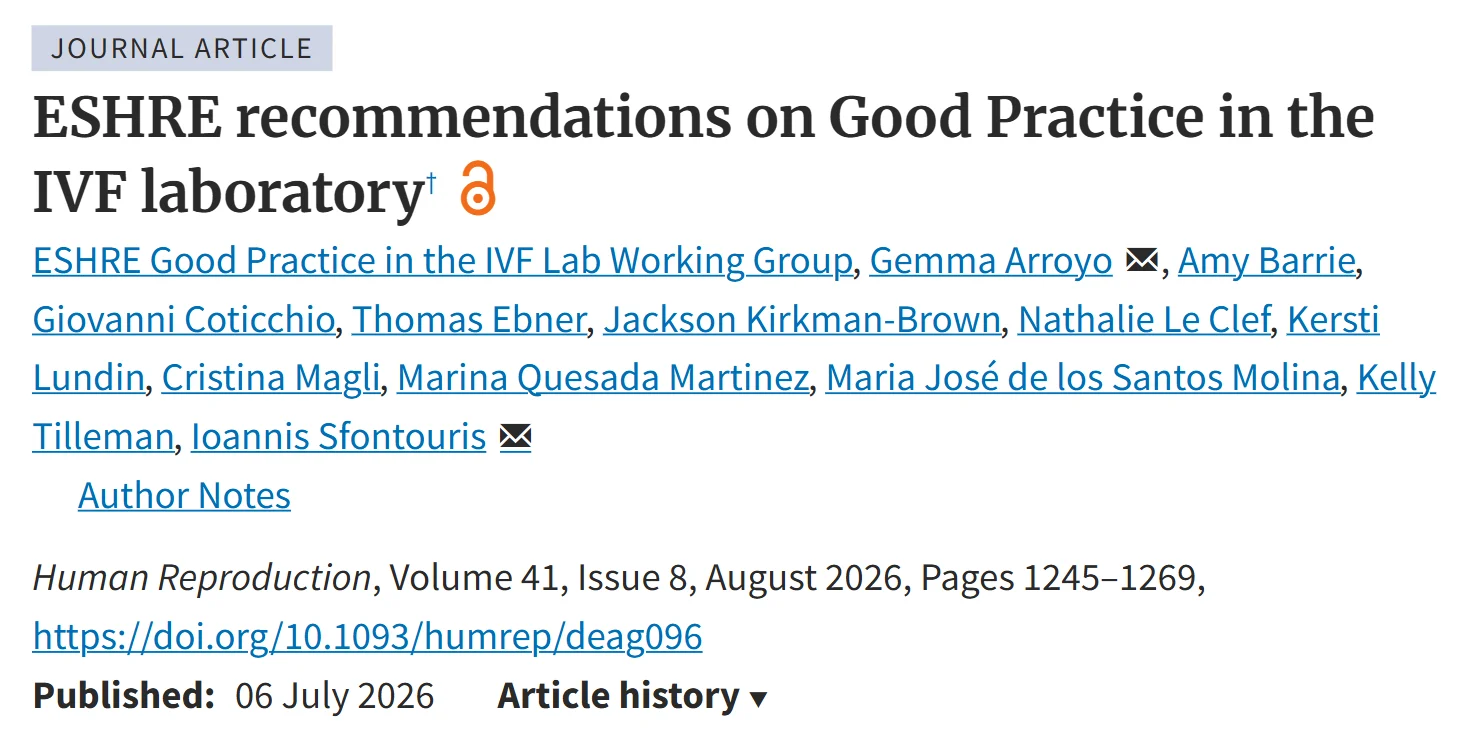
Ammonium illustrates why formulation and stability matter. It can arise through the degradation of amino acids in culture media, including spontaneous deamination under culture conditions. Kleijkers and colleagues (2016) measured ammonium accumulation in commercially available culture media and protein supplements during storage and incubation. They found that accumulation varied with formulation and conditions, with unstable glutamine and protein supplementation contributing to the observed increases.
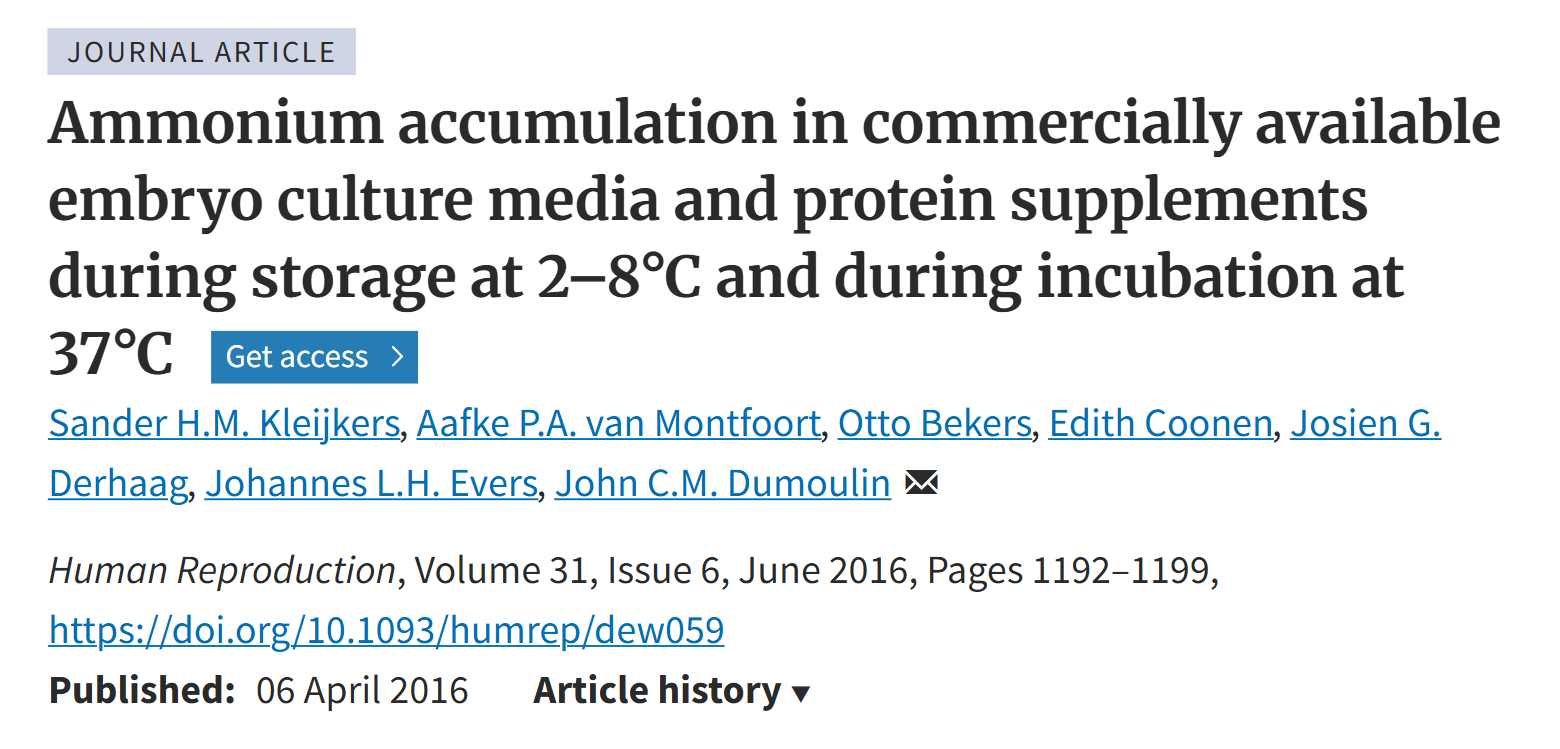
Experimental research has also demonstrated adverse effects of ammonium exposure on embryo development and metabolism. Gardner and colleagues (2013) investigated an ammonium gradient in human and mouse embryos and reported changes in development, metabolism and gene expression. Their experiments used sequential media, demonstrating that ammonium-related concerns are not exclusive to single-step systems.
These findings support careful attention to medium formulation, storage, preparation and use according to the manufacturer’s instructions. They do not establish that every single-step medium accumulates harmful ammonium concentrations during extended culture, or that sequential media are universally safer.
Handling introduces a separate consideration. Moving embryos between dishes or media may expose them to fluctuations in temperature, pH, gas conditions and light, depending on the protocol. Reducing unnecessary handling may help maintain a stable environment, but it is not scientifically justified to claim that handling stress is always more harmful than metabolic waste accumulation. Their relative importance depends on the specific system and requires direct evidence.
Could future technologies reproduce a more dynamic environment?
Microfluidic culture technologies are being investigated as a way to control fluid movement, nutrient transport and the local environment around cells or embryos. Such approaches offer opportunities to investigate dynamic culture conditions and the relationship between nutrient delivery and waste removal.
However, technical feasibility and physiological plausibility are not equivalent to proven clinical benefit. Human IVF applications require validation of embryo safety, reproducibility, practical workflow and patient-relevant outcomes before superiority over established approaches can be claimed.
Progress also depends on transparent reporting of media composition and rigorous evaluation of existing culture systems. Randomised trials comparing clearly specified formulations under well-defined laboratory conditions would help establish whether particular differences translate into meaningful clinical benefits. Cumulative live birth and neonatal outcomes remain important alongside laboratory measures.
The central challenge is to translate knowledge of developmental metabolism into culture systems that are biologically informed and clinically validated.”
Written by Saadat Hassan
Senior Clinical Embryologist/IVF and Embryology
BSc (Hons) Medical Laboratory Technology
King Edward Medical University, Lahore, Pakistan
References
Title: Embryo Nutrition and Energy Metabolism and Its Relationship to Embryo Growth, Differentiation, and Viability
Authors: David K. Gardner, Thomas B. Pool, Michelle Lane
You can read the Full Article in Seminars in Reproductive Medicine.
Title: Culture conditions in the IVF laboratory: state of the ART and possible new directions
Authors: Romualdo Sciorio, Paolo Rinaudo
You can read the Full Article in the Journal of Assisted Reproduction and Genetics.
Title: The composition of commercially available human embryo culture media
Authors: M S Zagers, M Laverde, M Goddijn, J J de Groot, F A P Schrauwen, F M Vaz, S Mastenbroek
You can read the Full Article in Human Reproduction.
Title: Culture media for human pre‐implantation embryos in assisted reproductive technology cycles
Authors: Maitane Laverde, Miriam Zagers, Madelon van Wely, MA Youssef, Sebastiaan Mastenbroek
You can read the Full Article in the Cochrane Database of Systematic Reviews.
Title: ESHRE recommendations on Good Practice in the IVF laboratory
Authors: ESHRE Good Practice in the IVF Lab Working Group, Gemma Arroyo, Amy Barrie, Giovanni Coticchio, Thomas Ebner, Jackson Kirkman-Brown, Nathalie Le Clef, Kersti Lundin, Cristina Magli, Marina Quesada Martinez, Maria José de los Santos Molina, Kelly Tilleman, Ioannis Sfontouris
You can read the Full Article in Human Reproduction.
Title: Ammonium accumulation in commercially available embryo culture media and protein supplements during storage at 2–8°C and during incubation at 37°C
Authors: Sander H.M. Kleijkers, Aafke P.A. van Montfoort, Otto Bekers, Edith Coonen, Josien G. Derhaag, Johannes L.H. Evers, John C.M. Dumoulin
You can read the Full Article in Human Reproduction.
Title: Human and mouse embryonic development, metabolism and gene expression are altered by an ammonium gradient in vitro
Authors: D K Gardner, R Hamilton, B McCallie, W B Schoolcraft, M G Katz-Jaffe
You can read the Full Article in Reproduction.
Other articles featuring Saadat Hassan on Fertility News.
-
Oct 27, 2026, 17:04Reconnecting with Colleagues and Making New Connections at ASRM 2026 – The Association of Reproductive Managers
-
Oct 27, 2026, 17:02Excited to Kick Off the First Day of ASRM 2026 – Fertility Consultancy
-
Oct 27, 2026, 17:00Oluyemisi Famuyiwa: An Evening of Connection, Collaboration, and Celebration at ASRM 2026
-
Oct 27, 2026, 16:58Devyanshi Dixit: Exploring Key Women’s Health Topics Ahead of GFWH 2026
-
Oct 27, 2026, 16:53Ashley Wong: Hello from Baltimore and ASRM 2026
-
Oct 27, 2026, 16:48Anastasia Herman: Proud to Be Part of One of the Most Important International Events in Reproductive Medicine
-
Oct 27, 2026, 16:45Team LifeAire Is Excited to Be Back at ASRM 2026
-
Oct 27, 2026, 16:43Holly Sheffield: Looking Forward to Connecting With Customers, Colleagues, and Partners at ASRM 2026
-
Oct 27, 2026, 16:39Stephen Parker Ellington: Novara Team Is in Baltimore and Ready to Help Shape the Future of Fertility Care at ASRM 2026