
Sargol Aminnezhad: How Fetal Cells Shape a Mother’s Body and Health
Sargol Aminnezhad, Post-doctoral Research Fellow at Tarbiat Modares University, shared a post on LinkedIn:
” ‘How Fetal Cells Shape a Mother’s Body and Health’
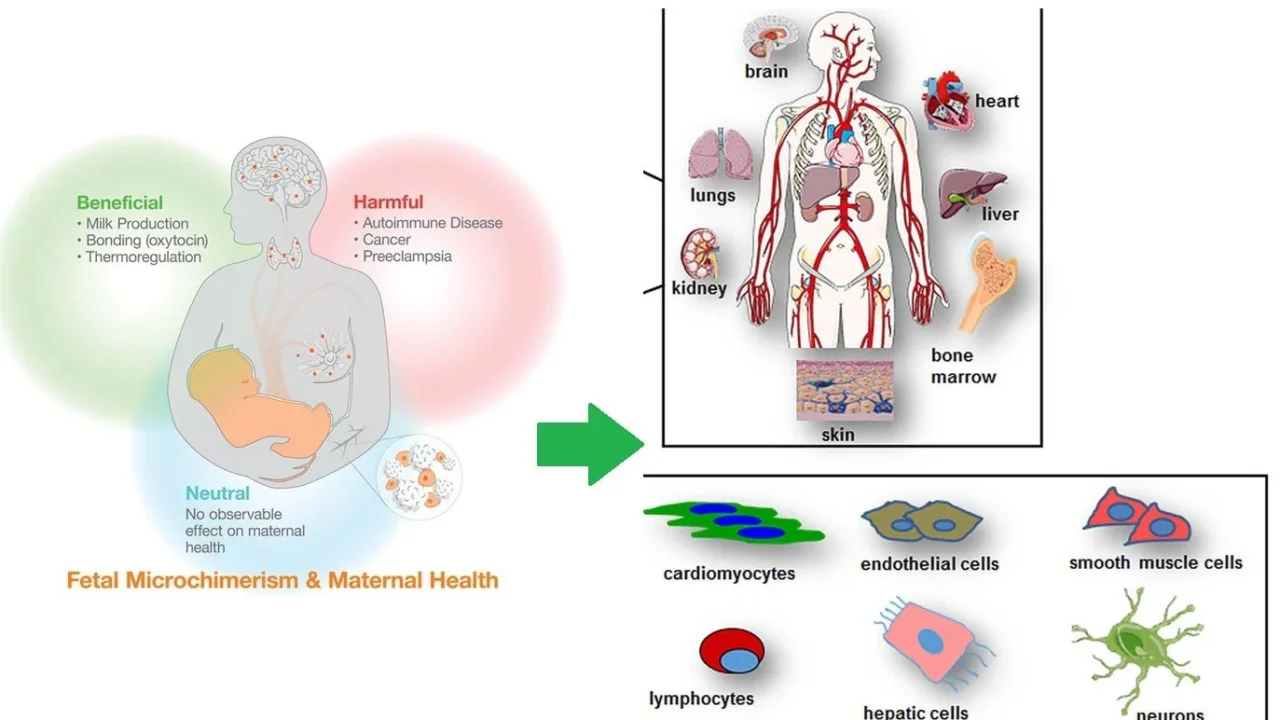
The concept of the mother–offspring tug-of-war provides an evolutionary framework for understanding the paradoxical role that fetal microchimerism plays in maternal health. During pregnancy, fetal cells can cross the placenta and take long-term residence within maternal tissues—a phenomenon known as fetal microchimerism. Research shows that these fetal cells may persist for decades and can exert both beneficial and detrimental effects on the mother.
Once in the maternal bloodstream, fetal cells can migrate and integrate into a variety of organs, including the liver, heart, thyroid, breast, and even the brain. Many of these tissues are deeply involved in regulating resource allocation, making them likely reservoirs for fetal cells. Within these tissues, the maternal immune system plays an active and dynamic role in shaping fetal–maternal interactions.
From an evolutionary perspective, these interactions can be viewed as a combination of cooperation and conflict. In some cases, fetal cells appear to assist in maternal tissue repair or enhance physiological functions such as lactation. In other cases, however, they may act in ways that prioritize fetal fitness—potentially competing for maternal resources and contributing to physiological strain or increased risk of autoimmune disorders.
Recent work by Amy Boddy and colleagues has significantly advanced our understanding of this phenomenon. Their research highlights that the impact of fetal microchimerism depends on where these cells settle and how they interact with local maternal tissues. The outcomes of these micro-level negotiations between mother and fetus—this ‘tug-of-war’—are therefore crucial in shaping maternal health and wellbeing.
References
Stay updated on all scientific advances in the field of fertility with Fertility News.
-
Oct 11, 2025, 06:44The Global IVF Market Is Set to Reach $65B by 2032 – Meddilink
-
Mar 16, 2026, 13:30Simon Meagher and Rabih Chaoui Discuss Fetal Heart Scanning in the Latest ISUOG Podcast – ISUOG
-
Mar 16, 2026, 12:58Exploring the Link Between Adenomyosis and Proliferative Endometrial Disorders – Fertility and Sterility
-
Mar 16, 2026, 12:55Nicola Pozzi: A New Mechanism to Reduce Thrombus Formation Without Increasing Bleeding Risk
-
Mar 16, 2026, 12:44Endometriosis Awareness Month Virtual Issue! – ISUOG
-
Mar 16, 2026, 12:30Jeanne Conry: When the Government Intervenes, Women Die
-
Mar 16, 2026, 12:23Magdalena Simonis Highlights the Need to Change the Rhetoric on Endometriosis
-
Mar 16, 2026, 12:00Julia Chain Highlights Fertility Preservation as Part of Women’s Health Campaign – HFEA
-
Mar 15, 2026, 15:26Watching Life Begin: Scientists Track Embryo Implantation in Real Time! – Science Magazine
-
Mar 15, 2026, 15:03Reem Abu-Rustum Spotlights Fetal Situs in New ISUOG Quiz – ISUOG