
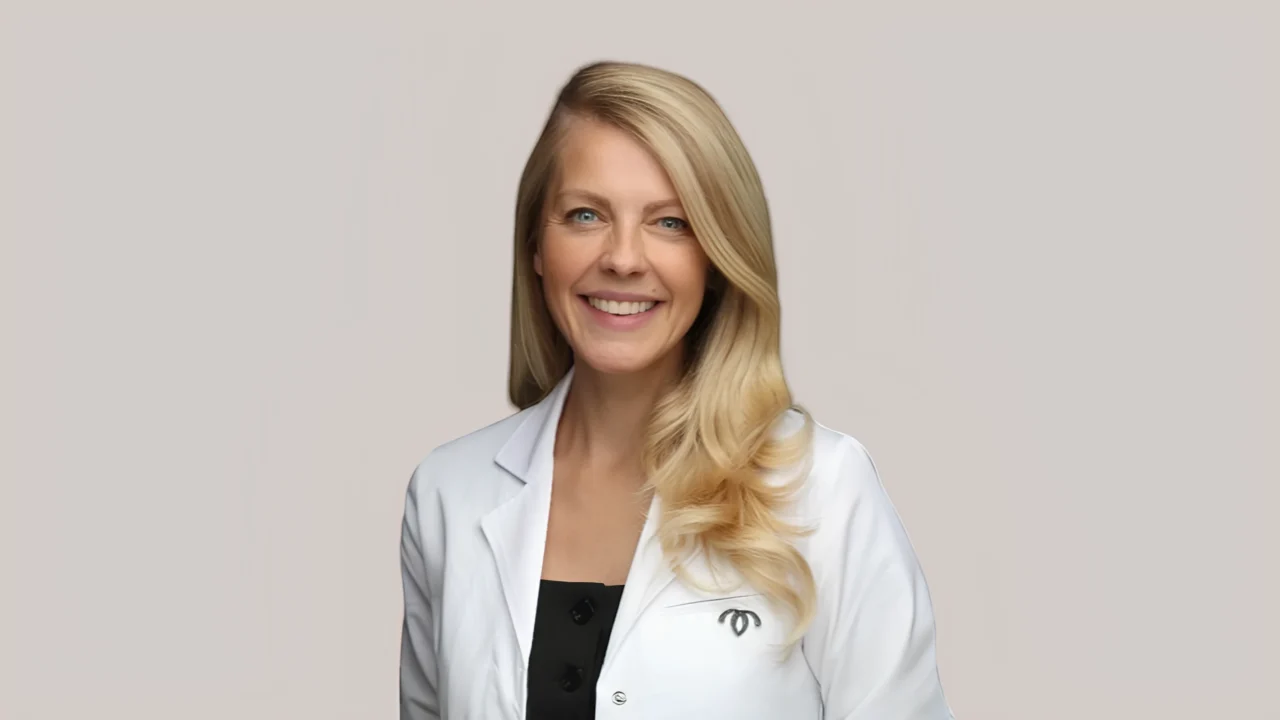
Helen O’Neill: Testosterone Declines Gradually from a Woman’s 20s Onwards
Helen O’Neill, Associate Professor in Reproductive and Molecular Genetics at UCL, shared a post on LinkedIn about a paper she co-authored with colleagues published in the Journal of Endocrinological Investigation:
”This shouldn’t be groundbreaking. But it is.
A woman’s testosterone changes as she ages.
And yet for years, a 25-year-old and a 55-year-old woman could have exactly the same testosterone result and be judged against essentially the same idea of what is ‘normal’.
The reference ranges used internationally were built from just 149 women, grouped into only two age brackets: 20-49 and 50+.
Our new paper changes that.
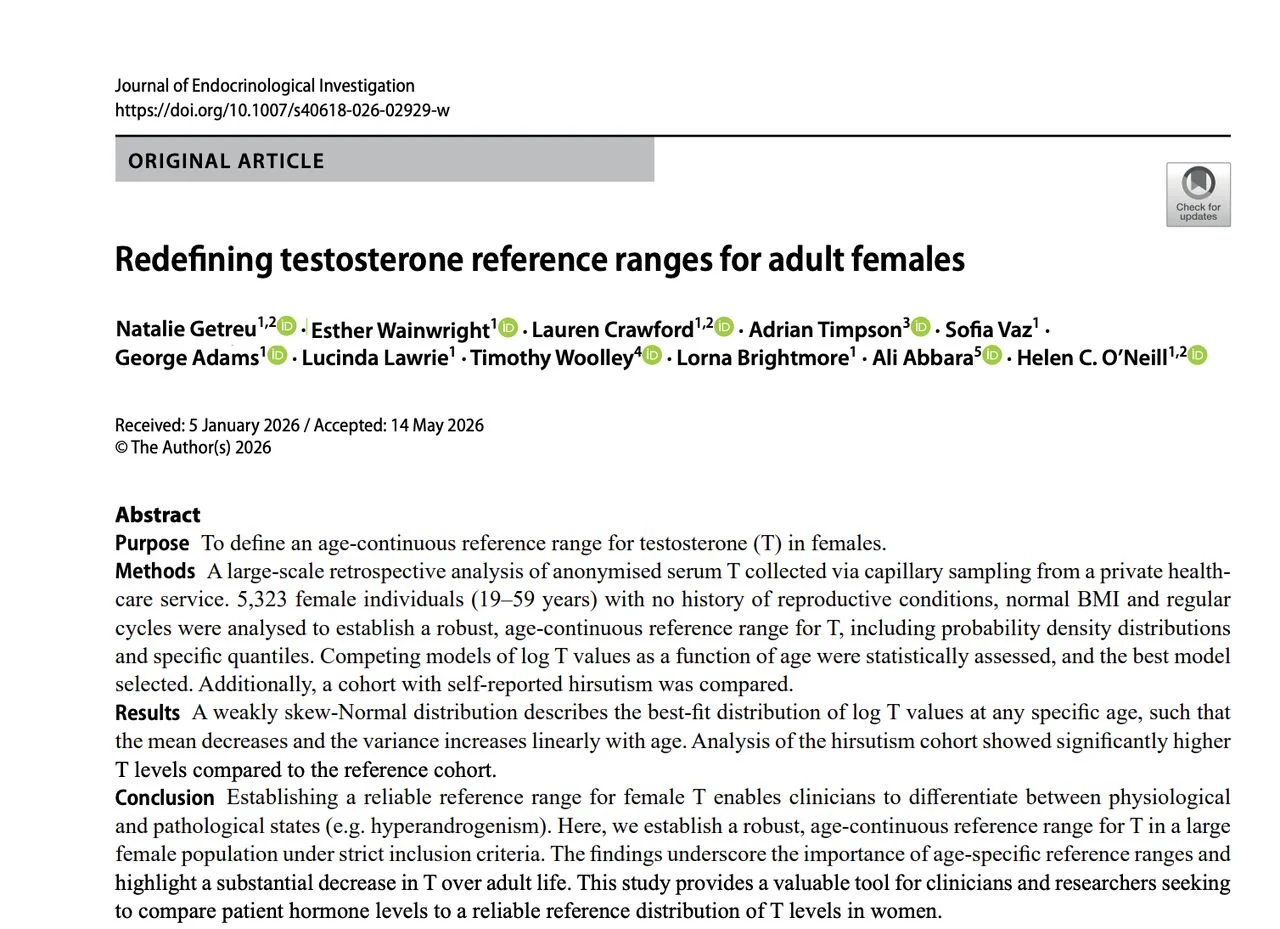
Using data from 30,453 women across England, Scotland and Wales, we created a carefully selected reference population of 5,323 women aged 19-59 and modelled testosterone year by year across four decades.
What we found is simple, but clinically important:
Testosterone declines gradually from a woman’s twenties onwards, by around 1.4% per year.
There is no sudden cliff edge at menopause. And as women age, the variation between individuals becomes wider.
So there is no single ‘normal female testosterone range’ that adequately describes women across adulthood.
This is so important because reference ranges determine whether a result gets labelled normal or abnormal.
A woman may be reassured that her testosterone is ‘normal’ when it is actually unusual for her age. Another may undergo unnecessary investigation because the reference range does not properly reflect her biology.
Rather than creating another arbitrary cut-off, we built a model that shows where a woman’s testosterone sits within the distribution for her exact age.
This feels particularly timely as the FDA is holding a public workshop on testosterone use in menopausal women today, including two fundamental questions: how testosterone changes with age and how it should be measured.
We will be submitting this paper, alongside our age-specific data, to the FDA docket.
There is currently no FDA-approved testosterone therapy for menopausal women in the US. Much of the testosterone prescribed to women uses male formulations off-label, adjusted towards a supposed ‘female normal range’.
But you cannot accurately treat ‘normal’ if you have never properly defined what normal looks like.
This is the kind of work we are dedicated to doing at Hertility. Creating the data that doesn’t exist.
Women’s health does not need louder opinions. It needs better data.
Better reference populations. Better evidence. Better definitions of female physiology.
Because the foundations of medicine should represent the people they are being used to treat.
Very proud of my Hertility research team: Natalie Getreu, Esther Wainwright, Lauren Crawford, Adrian Timpson, Sofia Vaz, George Adams, Lucinda Lawrie, Timothy Woolley, Lorna Brightmore and Ali Abbara for this work.”
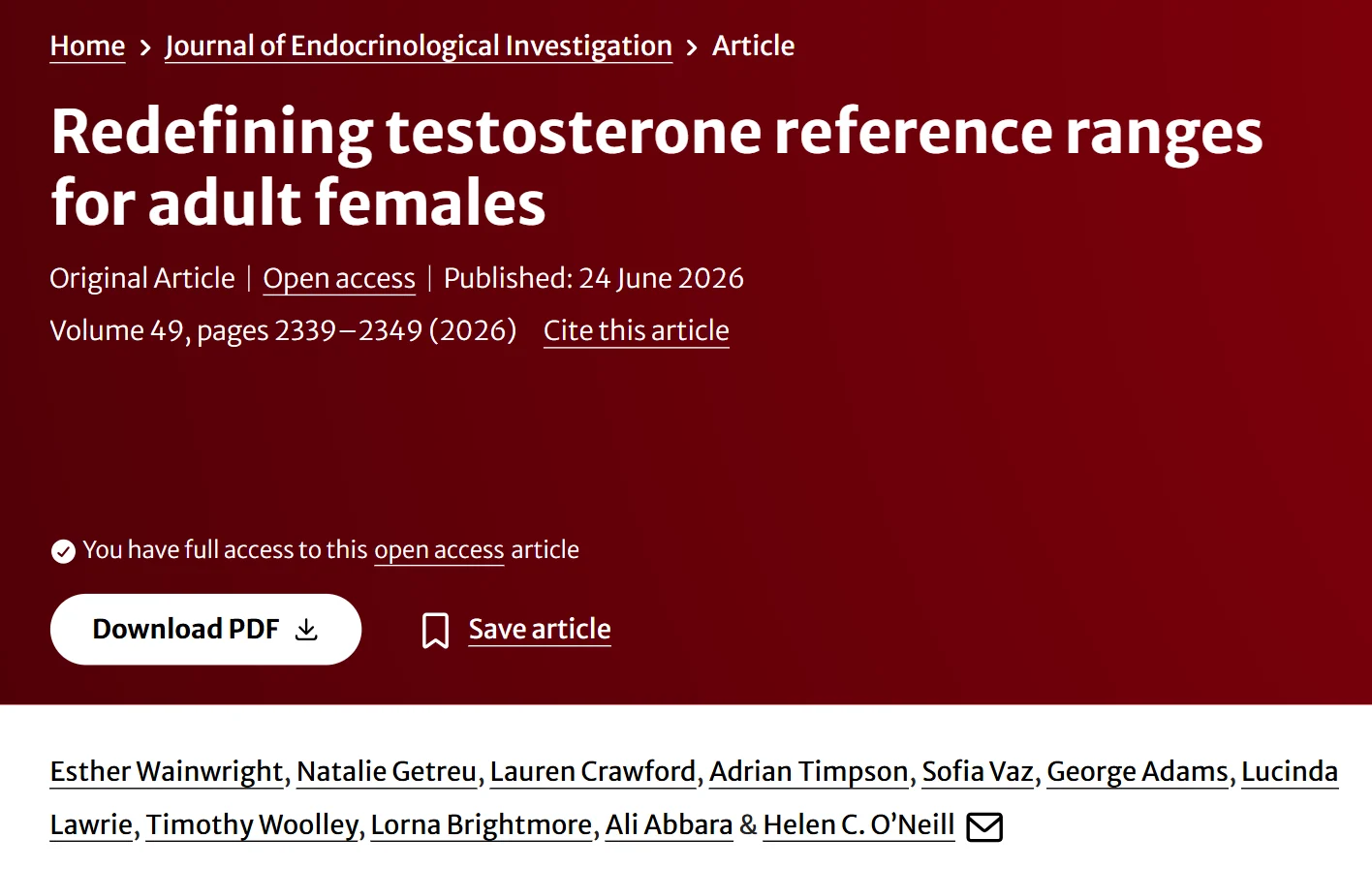
Title: Redefining testosterone reference ranges for adult females
Authors: Natalie Getreu, Esther Wainwright, Lauren Crawford, Adrian Timpson, Sofia Vaz, George Adams, Lucinda Lawrie, Timothy Woolley, Lorna Brightmore, Ali Abbara
You can read the Full Article in the Journal of Endocrinological Investigation.
Stay informed with the latest updates in fertility and reproductive medicine on Fertility News.
-
Sep 18, 2026, 20:27Hrishikesh Pai: Rethinking Male Infertility
-
Sep 18, 2026, 20:25Eric Verdin: Wrapping Up the Reproductive Aging Summit at the Center for Healthy Aging in Women
-
Sep 18, 2026, 20:21Investigating Pregnancy Outcomes in Women with Idiopathic POI – RBMO
-
Sep 18, 2026, 20:18Sue Ritchie: Why Aren’t We Talking About Male Fertility More?
-
Sep 18, 2026, 20:13Salma Yasin: Every Day of BFS Study Week 2026 Has Been an Exceptional Learning Experience
-
Sep 18, 2026, 20:01Qingcai Wang: Over 35 and Torn Between Trying Longer and Starting IVF?
-
Sep 18, 2026, 19:58Bhumika: Can a Woman Become Pregnant Again While Already Pregnant?
-
Sep 18, 2026, 19:5215 More Experts Join the International Fertility Forum Mumbai 2026
-
Sep 18, 2026, 19:50Curious About What Happens Behind the Scenes in the Labs? – Sims IVF