
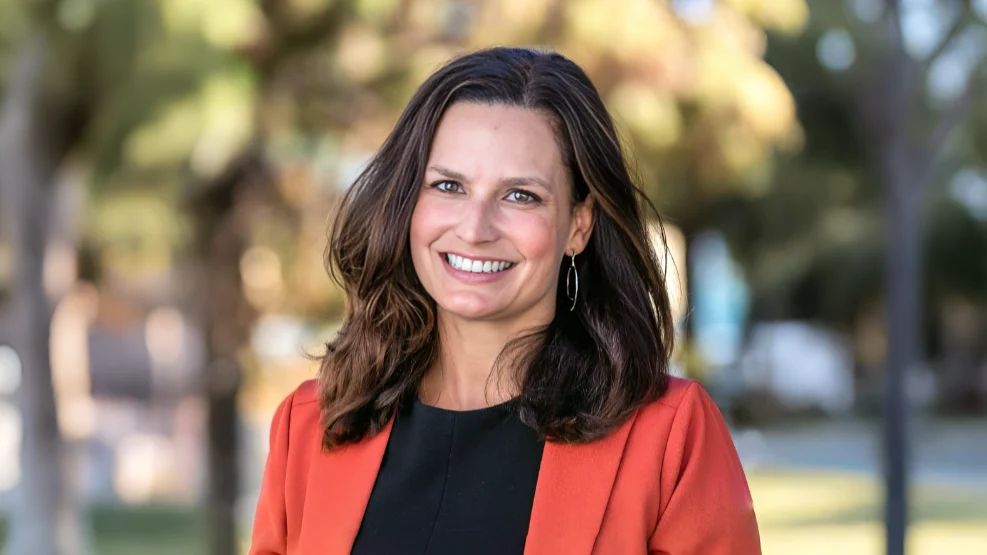
Katie Baca-Motes։ What Menopause Means for Brain Health
Katie Baca-Motes, CEO and Co-Founder of GSD Health Research, shared a post on LinkedIn about a paper by Riley Bove and Ruth Dobson published in Nature Reviews Neurology։
“We talk a lot about menopause in relation to symptoms, hormones, and reproductive health.
We talk much less about what it means for brain health, in part because reproductive aging is often measured too loosely, or not measured at all.
A new Roadmap in Nature Reviews Neurology by Riley Bove and Ruth Dobson lays out how much we still do not know about menopause, brain health, and neurological disease.
One example is multiple sclerosis.
The Roadmap notes that 90% of women with MS experience disease onset before age 50, with a typical age at spontaneous menopause of 51.5 years.
Many women are therefore moving through perimenopause and postmenopause with established disease.
At the same time, postmenopausal women have been almost entirely excluded from pivotal trials of approved MS therapies, even though they account for more than one-third of people living with MS.
That leaves clinicians and patients making treatment decisions across a life stage when pharmacokinetics, pharmacodynamics, immune biology, symptoms, adverse effects, and tolerability may all be changing, without enough evidence to guide them.
The measurement problem is broader than MS, and more specific than simply ՛include menopause.՛
The Stages of Reproductive Aging Workshop criteria separate late reproductive life from the menopausal transition and divide postmenopause into early and late stages. Perimenopause spans the final years of menstrual cycles through the first year after the final menstrual period.
But research often collapses this granularity into a single category: ՛menopausal.՛
That matters because reproductive stage, menopause timing, menopause type, and reproductive lifespan may each carry different information.
Reproductive lifespan, calculated as age at menopause minus age at menarche, is a more accurate predictor of brain health and mortality than age at menopause alone. Longer reproductive lifespan has been linked to larger grey matter volumes in hippocampal, parietal, and precuneus regions, lower Alzheimer disease risk, and slower Parkinson disease progression.
Yet these variables are not consistently captured in neurological cohorts or clinical trials.
The Roadmap calls for better reproductive-aging measures, longitudinal cohorts, diverse populations, qualitative research, biomarkers, multimodal imaging, multi-omics, and trials that capture menopause-related variables from the start.
This is also the kind of study-design question we think about often in our work at GSD Health Research: which reproductive variables need to be collected, and when, for a dataset to support meaningful sex-specific analysis?
The postmenopausal period accounts for one-third to one-half of the female lifespan. If we want to understand brain health, disease progression, treatment response, and prevention across that lifespan, reproductive aging needs to be measured with much more care.”
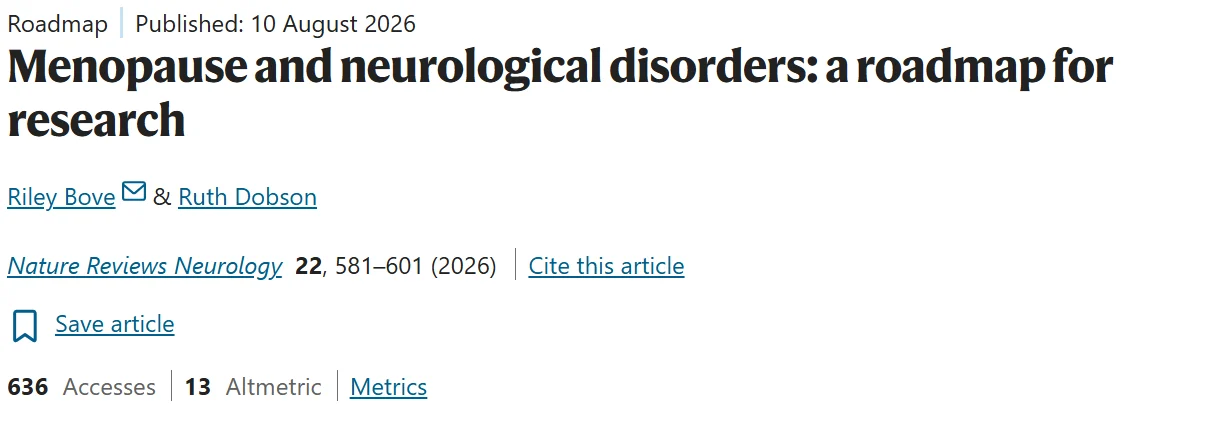
Title: Menopause and neurological disorders: a roadmap for research
Authors: Riley Bove, Ruth Dobson
You can read the Full Article in Nature Reviews Neurology.
Stay informed with the latest updates in fertility and reproductive medicine on Fertility News.
-
Aug 25, 2026, 19:15Clare Mansfield: Geraldine Lavin Has Been Appointed an Advisor to Flowering Fertility
-
Aug 25, 2026, 19:12Devyanshi Dixit: The Future of Gynecology – Prevention Instead of Treatment?
-
Aug 25, 2026, 19:09Manimegalai Ramasamy: Life Cycle of an Oocyte
-
Aug 25, 2026, 19:06Putri Sari Pertiwi Siahaan: A Reflection from Inside the IVF Laboratory
-
Aug 25, 2026, 19:04S.0 Mikaye: Classification of Sperm Malformations
-
Aug 25, 2026, 19:02Carmen Mair: Brown Spotting Before Your Period Is Not Automatically a Progesterone Problem
-
Aug 25, 2026, 18:57Stefanie Valakas: The Value a Fertility Dietitian Can Add to the Fertility Clinic Arena
-
Aug 25, 2026, 18:51Jennifer R. Berman: The Biggest Gap in Menopause Care is Continuity
-
Aug 25, 2026, 18:40Fahimeh Ramezani Tehrani: PCOS, Pre-Pregnancy Weight and Pregnancy Outcomes