

Keith King: Scientists Capture First-Ever Footage of a Human Embryo Implanting Into a Uterus
Keith King, Advisory Board Member at Quranium, shared a paper on LinkedIn about a paper by Amélie Luise Godeau et al. published in Science Advances:
“Scientists Capture First-Ever Footage of a Human Embryo Implanting Into a Uterus
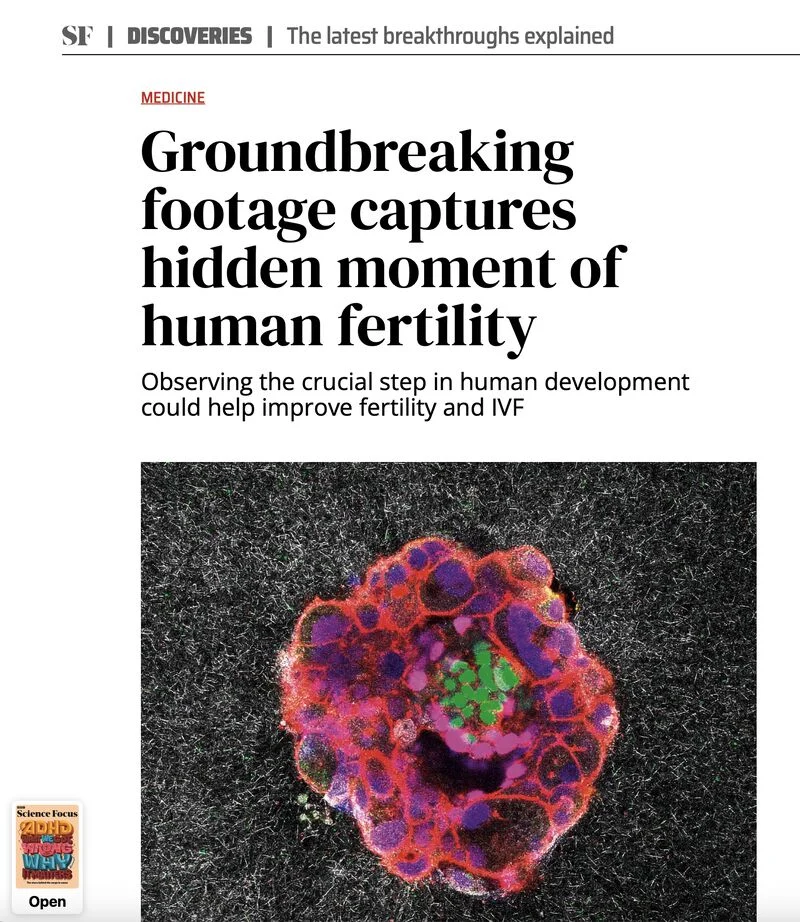
In a stunning scientific milestone, researchers have recorded the first real-time 3D footage of a human embryo implanting into an artificial uterus, revealing the hidden process that marks the true beginning of pregnancy. The breakthrough, published in Science Advances, offers an unprecedented look at one of the most delicate and crucial moments in human development.
How It Was Achieved
To replicate the uterine environment, scientists created a biological scaffold made of collagen and developmental proteins – a lab-grown ‘lining’ that mimics the human womb. When they placed fertilised human embryos onto the surface, they captured the moment the embryos burrowed deep into the tissue, anchoring themselves completely before growing outward.
By contrast, mouse embryos – often used as research stand-ins – only adhere to the surface of the uterine tissue. The discovery highlights a fundamental difference in implantation between species and underscores the limitations of relying solely on animal models to study early human pregnancy.
Why It Matters
Implantation failure is responsible for up to 60% of miscarriages and remains one of the greatest challenges in both natural fertility and IVF treatments. By directly observing this stage, researchers can now study the molecular and cellular cues that determine whether implantation succeeds or fails – paving the way for more effective fertility therapies and improved embryo selection for in vitro fertilisation.
The findings could also advance contraceptive research and deepen understanding of early pregnancy disorders. For the first time, scientists have a visual roadmap of how life truly begins – offering hope to millions struggling with infertility.
Keith King”
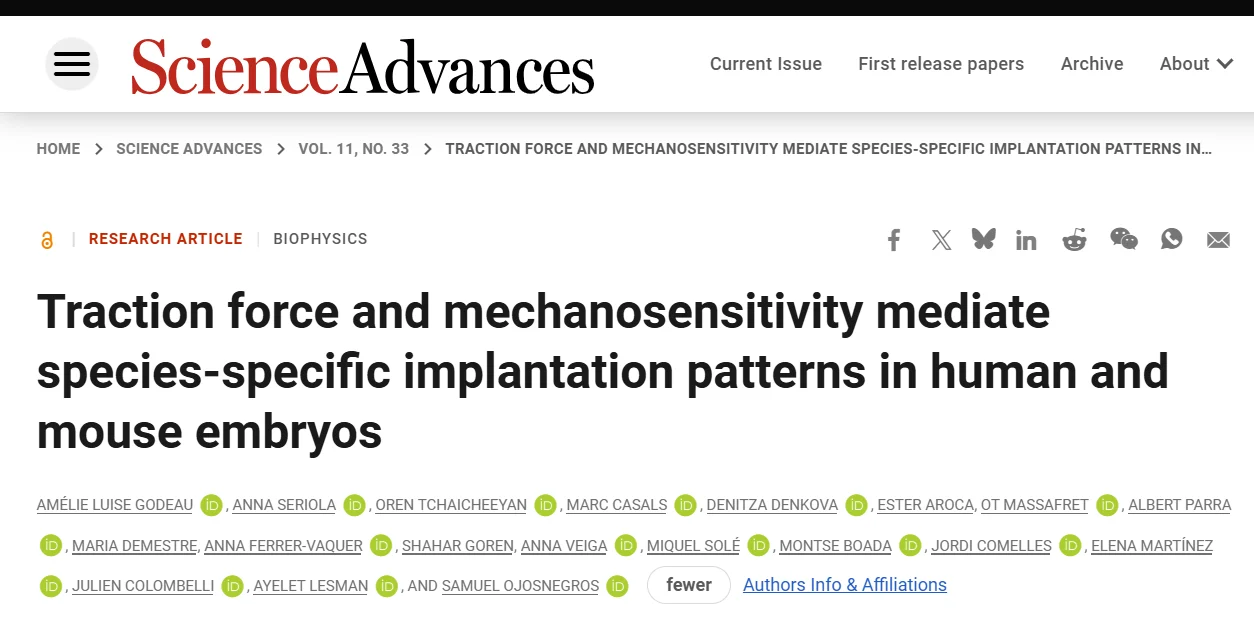
Title: Traction force and mechanosensitivity mediate species-specific implantation patterns in human and mouse embryos
Authors: Amélie Luise Godeau, Anna Seriola, Oren Tchaicheeyan, Marc Casals, Denitza Denkova, Ester Aroca, Ot Massafret, Albert Parra, Maria Demestre, Anna Ferrer-Vaquer, Shahar Goren, Anna Veiga, Miquel Solé, Montse Boada, Jordi Comelles, Elena Martínez, Julien Colombelli, Ayelet Lesman, Samuel Ojosnegros
Read the full article.
Stay updated on all scientific advances in the field of fertility with Fertility News.
-
Sep 18, 2026, 20:27Hrishikesh Pai: Rethinking Male Infertility
-
Sep 18, 2026, 20:25Eric Verdin: Wrapping Up the Reproductive Aging Summit at the Center for Healthy Aging in Women
-
Sep 18, 2026, 20:21Investigating Pregnancy Outcomes in Women with Idiopathic POI – RBMO
-
Sep 18, 2026, 20:18Sue Ritchie: Why Aren’t We Talking About Male Fertility More?
-
Sep 18, 2026, 20:13Salma Yasin: Every Day of BFS Study Week 2026 Has Been an Exceptional Learning Experience
-
Sep 18, 2026, 20:01Qingcai Wang: Over 35 and Torn Between Trying Longer and Starting IVF?
-
Sep 18, 2026, 19:58Bhumika: Can a Woman Become Pregnant Again While Already Pregnant?
-
Sep 18, 2026, 19:5215 More Experts Join the International Fertility Forum Mumbai 2026
-
Sep 18, 2026, 19:50Curious About What Happens Behind the Scenes in the Labs? – Sims IVF