

Beyond Embryo Morphology: Can 2 Embryos Influence Each Other’s Implantation Through Endometrial Crosstalk?
“Embryo-endometrial crosstalk is central to implantation, yet an unresolved question arises when two embryos are transferred together: does each embryo communicate independently with the endometrium, or does the presence of one modify the implantation environment of the other? In IVF practice, a lower-grade embryo is sometimes added to a good-quality embryo because morphology cannot predict which embryo will implant.
The same uncertainty exists when two blastocysts appear equally excellent: their chromosomal constitution and biological competence are not necessarily identical. These observations justify examining the science behind mixed-quality double embryo transfer (DET), but they do not establish a clinical benefit from transferring two embryos simultaneously.
What does morphology reveal – and what remains unknown?
Blastocyst morphology describes expansion, inner cell mass, and trophectoderm appearance. It supports embryo prioritization but is not a direct measurement of chromosome copy number, gene function, metabolism or embryo-derived signals. A lower-grade blastocyst retains possible reproductive potential; a high-grade blastocyst does not guarantee implantation. Two apparently high-grade embryos also differ potentially in unobserved biological characteristics. Importantly, a morphologically lower-grade embryo is not equivalent to a developmentally arrested embryo, and neither category automatically identifies a harmful secretory profile.
Preimplantation genetic testing for aneuploidy (PGT-A) examines chromosome copy-number patterns in biopsied cells, not every genetic disorder or the embryo’s complete molecular competence. Mosaicism and sampling limitations complicate interpretation. The 2024 American Society for Reproductive Medicine (ASRM) committee opinion found that routine PGT-A for all IVF patients lacks demonstrated benefit. Thus, uncertainty about the genetics of two morphologically similar embryos neither mandates universal testing nor justifies transferring both (ASRM Practice Committee, 2024).
What has embryo-endometrial crosstalk research actually demonstrated?
Implantation involves reciprocal signalling among embryonic cells, endometrial epithelium and decidualized stromal cells. Decidualization is the transformation of endometrial stromal cells into specialized cells that support early pregnancy. In experimental work, Brosens and colleagues (2014) showed that decidual cells distinguish signals associated with embryos of different developmental competence; signals from impaired embryos triggered a cellular stress response. Macklon and Brosens (2014) described this capacity as endometrial ‘biosensing’.
These findings support differential maternal recognition of embryo-derived signals. They do not demonstrate that a chromosomally abnormal embryo inhibits a competent co-transferred embryo, or that a competent embryo rescues a less competent one. Three interpretations remain possible: predominantly independent local interactions; indirect facilitation through shared maternal responses; or interference through altered endometrial signalling. The latter two are mechanistic hypotheses, not established human DET effects. Spatial separation, signal concentration, and timing further limit direct extrapolation from cell-culture experiments to clinical implantation.
What do comparative transfer studies show?
In a retrospective cohort study of 4,640 IVF cycles, Hill and colleagues (2020) found that adding a lower-quality embryo did not reduce live-birth outcomes. In the study’s primary comparison, the authors reported a 10% increase in live birth and a 15% increase in multiple birth with the additional embryo. These are observational associations, not proof that the embryos biologically help or harm one another. The results describe outcomes per transfer and should not be interpreted as cumulative live birth across sequential transfers.
Xiao and colleagues (2022) pooled 17 studies involving 24,043 cycles. Mixed-quality DET versus single good-quality embryo transfer showed no statistically significant difference in clinical pregnancy (relative risk 1.02; 95% confidence interval 0.91-1.14) or live birth (relative risk 0.96; 95% confidence interval 0.87-1.07). Multiple pregnancy and multiple birth were more frequent with DET. This pooled evidence is more informative than an individual retrospective comparison, although differences in populations, embryo stage, and study design remain important.
Huang and colleagues (2024) retrospectively analyzed 1,506 fresh day-3 embryo-transfer cycles: 774 single transfers of a high-quality embryo and 732 double transfers of a high-quality plus a lower-quality embryo. Live birth per transfer was 33.2% with mixed-quality DET versus 24.5% with SET. Among clinical pregnancies, multiple pregnancy was 14.8% in the DET group versus 0.8% in the SET group. The groups differed at baseline, including age and treatment characteristics, so the observed live-birth difference cannot be assumed to be caused by transferring the second embryo.
Zeng and colleagues (2024) examined 1,462 frozen-thawed cleavage-stage or blastocyst transfer cycles. Their results differed by embryo stage: adding a lower-quality embryo did not significantly improve live birth after cleavage-stage transfer, while blastocyst-stage DET was associated with higher live birth but also substantially higher multiple-birth risk and adverse neonatal outcomes. These retrospective studies remain vulnerable to confounding by prognosis, embryo availability and treatment selection.
Critically, a singleton pregnancy after transfer of two embryos does not reveal which embryo implanted; a multiple pregnancy may indicate that both implanted. Even when the pregnancy or live-birth rate is higher after DET, the additional opportunity for independent implantation is an alternative explanation to embryo-to-embryo signalling. None of the cited clinical studies directly measures whether one co-transferred embryo changes the other embryo’s implantation probability through molecular signalling.
What is the evidence-based decision for embryologists and patients?
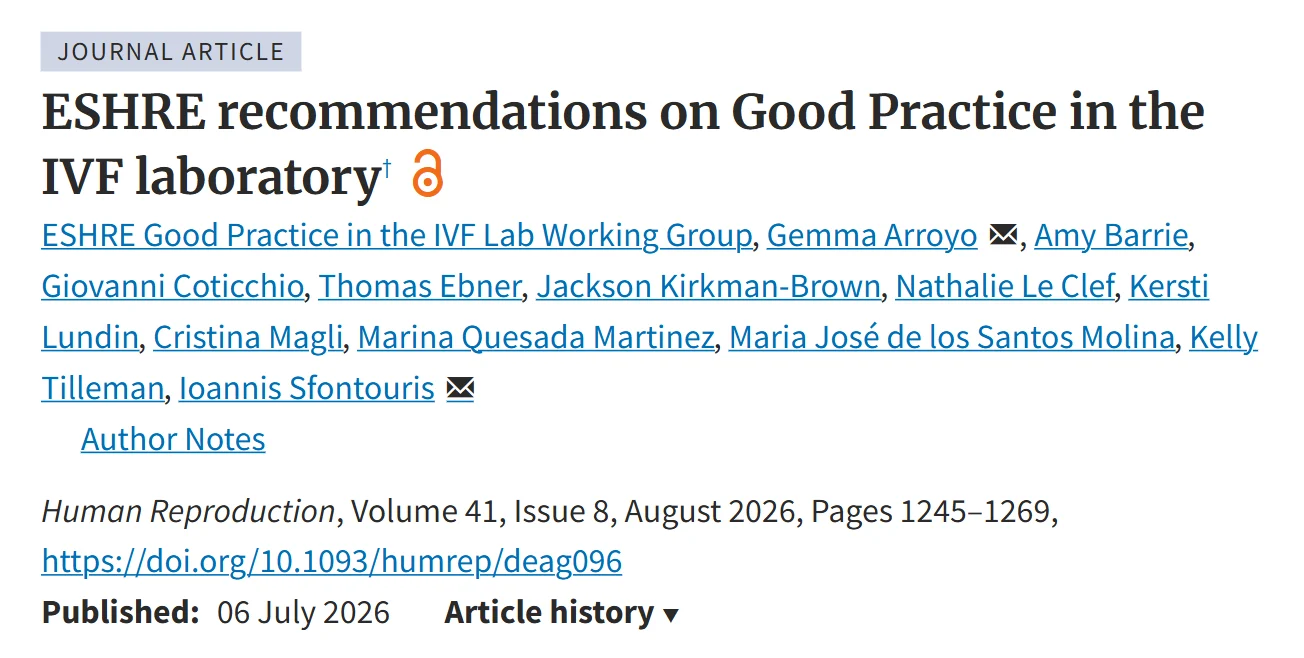
The 2024 European Society of Human Reproduction and Embryology (ESHRE) guideline states that no single clinical or embryological factor independently justifies recommending DET over elective single embryo transfer (SET). Multiple gestation increases maternal and neonatal risks, including preterm birth and low birthweight. The updated ESHRE IVF laboratory recommendations (2026) address embryo transfer procedures and laboratory quality practice. Embryo number decisions require individualized clinical assessment and counselling (ESHRE Guideline Group, 2024; ESHRE Good Practice in the IVF Lab Working Group, 2026).
For a patient with a good-quality embryo and favorable prognosis, the default approach is generally to transfer one embryo. A second usable lower-grade embryo deserves assessment against validated laboratory criteria and consideration for cryopreservation rather than automatic disposal or automatic co-transfer. Where feasible, sequential single transfers preserve another reproductive opportunity while avoiding the immediate risk of two embryos implanting together. The cumulative live-birth outcome, treatment burden and cryosurvival prospects still require patient-specific counselling.
Two morphologically excellent embryos do not create a separate indication for DET merely because their genetics remain unknown. Nor does uncertainty establish a universal indication for PGT-A. In less favorable circumstances, the clinician and embryologist need to review embryo development, prior outcomes, laboratory performance, patient preferences and the consequences of multiple pregnancy. Embryologists contribute standardized grading, culture and cryopreservation quality assurance, accurate embryo identification, and complete transfer documentation; clinical decisions require multidisciplinary counselling.
The outstanding research question is whether embryo-specific secretions generate spatially shared endometrial responses that alter another embryo’s implantation. Endometrial cell and organoid models using controlled embryo-conditioned media could help test this question, but laboratory findings would still require clinical validation. Until such evidence exists, embryo-endometrial biosensing is an experimental biological finding—not a reason by itself to add or exclude an embryo during transfer. The clinically defensible objective remains a healthy singleton live birth, considered alongside cumulative reproductive outcomes rather than pregnancy per transfer alone.
Evidence scope and limitations: This is a focused narrative synthesis of selected primary studies, one systematic review/meta-analysis, and professional guidance; it is not a registered systematic review or a formal exhaustive evidence assessment. The nine references and the numerical claims in the revised text were checked against accessible publisher, PubMed, and professional-society records. The hypothesis that one co-transferred embryo alters another embryo’s implantation through shared endometrial signalling remains unproven in human clinical DET studies.”
Written by Saadat Hassan
Senior Clinical Embryologist/IVF and Embryology
BSc (Hons) Medical Laboratory Technology
King Edward Medical University, Lahore, Pakistan
References
Title: Uterine Selection of Human Embryos at Implantation
Authors: Jan J. Brosens, Madhuri S. Salker, Gijs Teklenburg, Jaya Nautiyal, Scarlett Salter, Emma S. Lucas, Jennifer H. Steel, Mark Christian, Yi-Wah Chan, Carolien M. Boomsma, Jonathan D. Moore, Geraldine M. Hartshorne, Sandra Šućurović, Biserka Mulac-Jericevic, Cobi J. Heijnen, Siobhan Quenby, Marian J. Groot Koerkamp, Frank C. P. Holstege, Anatoly Shmygol, Nick S. Macklon
You can read the Full Article in Scientific Reports.
Title: The Human Endometrium as a Sensor of Embryo Quality
Authors: Nick S. Macklon, Jan J. Brosens
You can read the Full Article in Biology of Reproduction.
Title: Is transferring a lower-quality embryo with a good-quality blastocyst detrimental to the likelihood of live birth?
Authors: Micah J. Hill, Allison E. Eubanks, John M. Csokmay, Alicia Y. Christy, Samad Jahandideh, Alan H. DeCherney, Kate Devine, Eric D. Levens, Matthew T. Connell
You can read the Full Article in Fertility and Sterility.
Title: Transfer of a poor-quality along with a good-quality embryo on in vitro fertilization/intracytoplasmic sperm injection-embryo transfer clinical outcomes: a systematic review and meta-analysis
Authors: Yaling Xiao, Xue Wang, Ting Gui, Tao Tao, Wei Xiong
You can read the Full Article in Fertility and Sterility.
Title: The effect of transferring a low-quality embryo along with a high-quality embryo on the pregnancy outcome
Authors: Xianju Huang, Xinle Lu, Xue Jiang, Ludan Chao, Xiao Wang
You can read the Full Article in the Middle East Fertility Society Journal.
Title: Effect of frozen-thawed embryo transfer with a poor-quality embryo and a good-quality embryo on pregnancy and neonatal outcomes
Authors: Cheng Zeng, Rui-Hui Lu, Xin Li, Sheng Wang, Yan-Rong Kuai, Qing Xue
You can read the Full Article in Reproductive Biology and Endocrinology.
Title: The use of preimplantation genetic testing for aneuploidy: a committee opinion
Authors: Practice Committees of the American Society for Reproductive Medicine and the Society for Assisted Reproductive Technology
You can read the Full Article in Fertility and Sterility.
Title: ESHRE guideline: number of embryos to transfer during IVF/ICSI
Authors: ESHRE Guideline Group on the Number of Embryos to Transfer, Alessandra Alteri, Gemma Arroyo, Giuliana Baccino, Laurentiu Craciunas, Christian De Geyter, Thomas Ebner, Martina Koleva, Klaudija Kordic, Saria Mcheik, Heidi Mertes, Dinka Pavicic Baldani, Kenny A Rodriguez-Wallberg, Ioana Rugescu, Samuel Santos-Ribeiro, Kelly Tilleman, Bryan Woodward, Nathalie Vermeulen, Zdravka Veleva
You can read the Full Article in Human Reproduction.
Title: ESHRE recommendations on Good Practice in the IVF laboratory
Authors: ESHRE Good Practice in the IVF Lab Working Group, Gemma Arroyo, Amy Barrie, Giovanni Coticchio, Thomas Ebner, Jackson Kirkman-Brown, Nathalie Le Clef, Kersti Lundin, Cristina Magli, Marina Quesada Martinez, Maria José de los Santos Molina, Kelly Tilleman, Ioannis Sfontouris
You can read the Full Article in Human Reproduction.
Other articles featuring Saadat Hassan on Fertility News.
-
Oct 14, 2026, 17:21Abhijit Kulkarni: The Missing Answer to Repeated IVF Failure May Lie in the Genes
-
Oct 14, 2026, 17:17A Very Special Visit That Made Our Day – Complete Fertility
-
Oct 14, 2026, 17:12Ensuring That Every Woman Receives the Highest Quality of Care Globally – FIGO
-
Oct 14, 2026, 17:08Sukhbir Singh: Why Are Canadians Leaving the Country for Endometriosis Care?
-
Oct 14, 2026, 17:03Angeline Beltsos: Thrilled to Announce That I’m Returning to Patient Care at Vios 2.0
-
Oct 14, 2026, 16:58Juan A. García Velasco: IVI RMA Global Evolves into IVI Institute, Strengthening Research and Innovation in Fertility Care
-
Oct 14, 2026, 16:49Devyanshi Dixit: Acknowledgement Matters After Baby Loss…
-
Oct 14, 2026, 16:41Joy Maria Mitchell: Prenatal Cytogenetics – Karyotype, FISH and Clinical Evaluation
-
Oct 14, 2026, 16:28Svitlana Yashchenok: Would You Introduce Non-Invasive PGT-A into Your Fertility Clinic Today?