

Terrence Hallahan: Enhancing Preeclampsia Prevention Through Aspirin Dose Adjustment
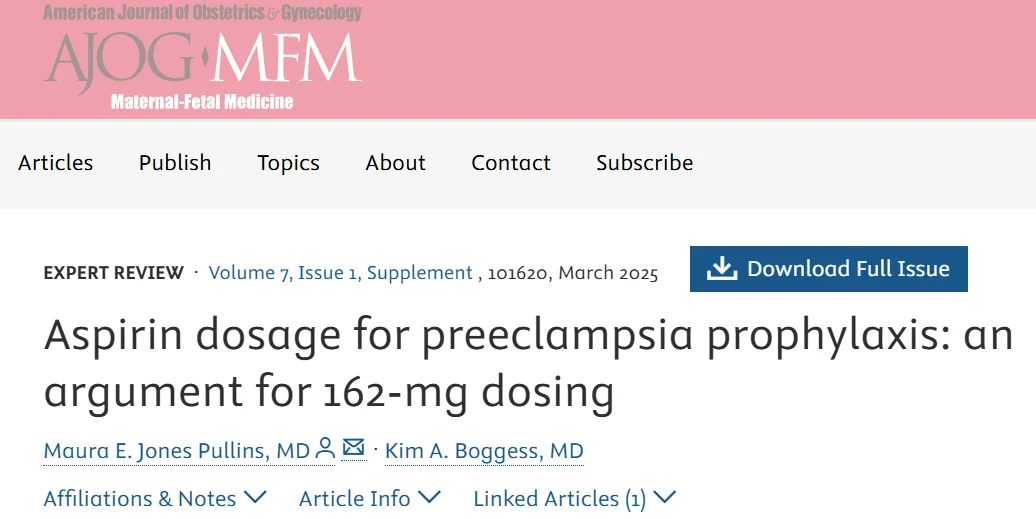
Terrence Hallahan, Director, Prenatal Screening Laboratory at Northwell Health Labs, shared a post on LinkedIn about a paper by Maura E. Jones Pullins et al. published in AJOG MFM:
“My recent post on preeclampsia prevention sparked a great conversation about aspirin dosage! Let’s dive into why 162mg of aspirin is increasingly preferred over 81mg for high-risk women preventing pre-term preeclampsia:
Enhanced Efficacy in High-Risk Women:
Seminal research (like Roberg’s meta-analysis) established that aspirin is effective against preterm (<37 weeks) preeclampsia (not term), requires initiation prior to 16 weeks gestation, and shows a clear dose-effect, with >100mg offering greater risk reduction.
The landmark ASPRE trial (150mg aspirin vs. placebo) demonstrated a remarkable 62% reduction in pre-term preeclampsia in the aspirin group.
Recent meta-analyses consistently note greater pre-eclampsia risk reduction with the 150- to 162-mg dose compared to 75- to 81-mg.
Importantly, in obese patients (20-40% of the population), 162mg has been demonstrated to be more effective.
Pharmacological Considerations:
The goal of low-dose aspirin (LDA) is to inhibit platelet cyclooxygenase-1 (COX-1) to reduce thromboxane A2. However, platelet aggregation assays show that up to 30% of women exhibit aspirin resistance at 81mg. This resistance is largely overcome at the 162mg dose, ensuring more consistent thromboxane A2 inhibition, crucial for preventing vasoconstriction.
Safety Profile:
Crucially, studies confirm that increasing the dose from 81mg to 162mg does not significantly increase the risk of maternal or fetal bleeding complications or other adverse events. Both doses are still considered ‘low-dose’ aspirin, making the 162mg dose favorable given its improved efficacy.
Professional Guidelines:
Although ACOG‘s primary recommendation is 81 mg, international organizations such as NICE (UK), FIGO and ISUOG all recommend higher doses, typically in the range of 100 mg to 150 mg daily. SOGC (Canada) allows for 81-162mg.
In essence, the evidence now strongly supports 162mg for superior, safe, and effective pre-term preeclampsia prevention.
For more detail see this expert review.
What are your thoughts or experiences with aspirin dosing in your practice?”
Title: Aspirin dosage for preeclampsia prophylaxis: an argument for 162-mg dosing
Authors: Maura E. Jones Pullins, Kim A. Boggess
Stay updated on all scientific advances in the field of fertility with Fertility News.
-
Oct 11, 2025, 06:44The Global IVF Market Is Set to Reach $65B by 2032 – Meddilink
-
Mar 16, 2026, 13:30Simon Meagher and Rabih Chaoui Discuss Fetal Heart Scanning in the Latest ISUOG Podcast – ISUOG
-
Mar 16, 2026, 12:58Exploring the Link Between Adenomyosis and Proliferative Endometrial Disorders – Fertility and Sterility
-
Mar 16, 2026, 12:55Nicola Pozzi: A New Mechanism to Reduce Thrombus Formation Without Increasing Bleeding Risk
-
Mar 16, 2026, 12:44Endometriosis Awareness Month Virtual Issue! – ISUOG
-
Mar 16, 2026, 12:30Jeanne Conry: When the Government Intervenes, Women Die
-
Mar 16, 2026, 12:23Magdalena Simonis Highlights the Need to Change the Rhetoric on Endometriosis
-
Mar 16, 2026, 12:00Julia Chain Highlights Fertility Preservation as Part of Women’s Health Campaign – HFEA
-
Mar 15, 2026, 15:26Watching Life Begin: Scientists Track Embryo Implantation in Real Time! – Science Magazine
-
Mar 15, 2026, 15:03Reem Abu-Rustum Spotlights Fetal Situs in New ISUOG Quiz – ISUOG