
Novel Protein Interaction Uncovered in Recurrent Pregnancy Loss Mechanisms – DNA-MDPI
DNA-MDPI shared a post on LinkedIn:
“Welcome to read the new paper.
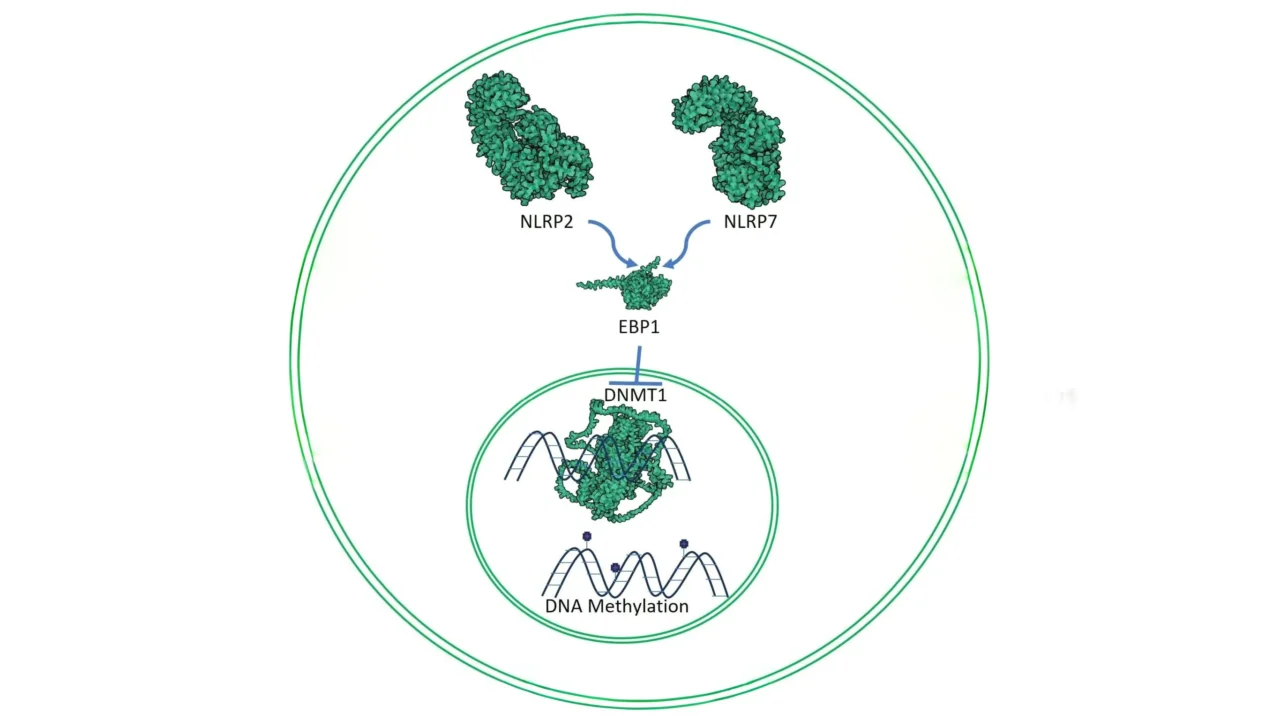
Background/Objectives: Mutations in NACHT, LRR and PYD domain-containing protein 2 (NLRP2) and NLRP7 genes, members of the NOD-like receptor (NLR) family of innate immune sensors, result in recurrent miscarriages and reproductive wastage in women. These genes have been identified to be maternal effect genes in humans and mice regulating early embryo development. Previous research in vitro suggests that NLRP2 and NLRP7 regulate DNA methylation and/or immune signaling through inflammasome formation. However, the exact mechanisms underlying NLRP2 and NLRP7 function are not well defined.
Methods: To determine the interacting proteins required for NLRP2/NLRP7-mediated regulation of DNA methylation, yeast 2-hybrid screens, coimmunoprecipitation, and FRET studies were performed and verified the ability of novel protein interactions to affect global DNA methylation by 5-methylcytosine-specific ELISA. Results: Various methodologies employed in this research demonstrate a novel protein interaction between human ErbB3-binding protein 1 (EBP1, also known as proliferation-associated protein 2G4 (PA2G4) and NLRP2 or NLRP7. In addition, NLRP2 and NLRP7 regulate EBP1 gene expression.
Functionally, global DNA methylation levels appeared to decrease further when NLRP2 and NLRP7 were co-expressed with EBP1, although additional studies may need to confirm the significance of this effect. Conclusions: Since EBP1 is implicated in apoptosis, cell proliferation, DNA methylation, and differentiation, our discovery significantly advances our understanding of how mutations in NLRP2 or NLRP7 may contribute to reproductive wastage in women through EBP1.”
Stay updated on all scientific advances in the field of fertility with Fertility News.
-
Sep 19, 2026, 16:48Complete Fertility Launches New Satellite Clinic in Salisbury
-
Sep 19, 2026, 16:45Lifestyle Choices and Environmental Exposures Can Actually Affect Your DNA – Montgomery Fertility Center
-
Sep 19, 2026, 16:41Natalie Crawford: What’s the Difference Between IUI and IVF?
-
Sep 19, 2026, 16:38Celebrating a Beautiful Family Whose Journey Brought Them 2 Incredible Chapters – Caperton Fertility Institute
-
Sep 19, 2026, 16:29Frozen for 22 Years: Baby Born in Greece From an Embryo Created in 2004
-
Sep 19, 2026, 16:25Barbara Lawrenz: Developmental Competence of Oocytes from Dominant Follicles in the Early Follicular Phase
-
Sep 19, 2026, 16:22Vikram Sinai Talaulikar: The Best Mentors I Could Have Asked For
-
Sep 19, 2026, 15:24Sims IVF Appoints Leading Reproductive Medicine Specialist Prof. Enda McVeigh as New Medical Director
-
Sep 19, 2026, 15:22Early Fee for ESHRE Campus 2026 Ends 30 September