
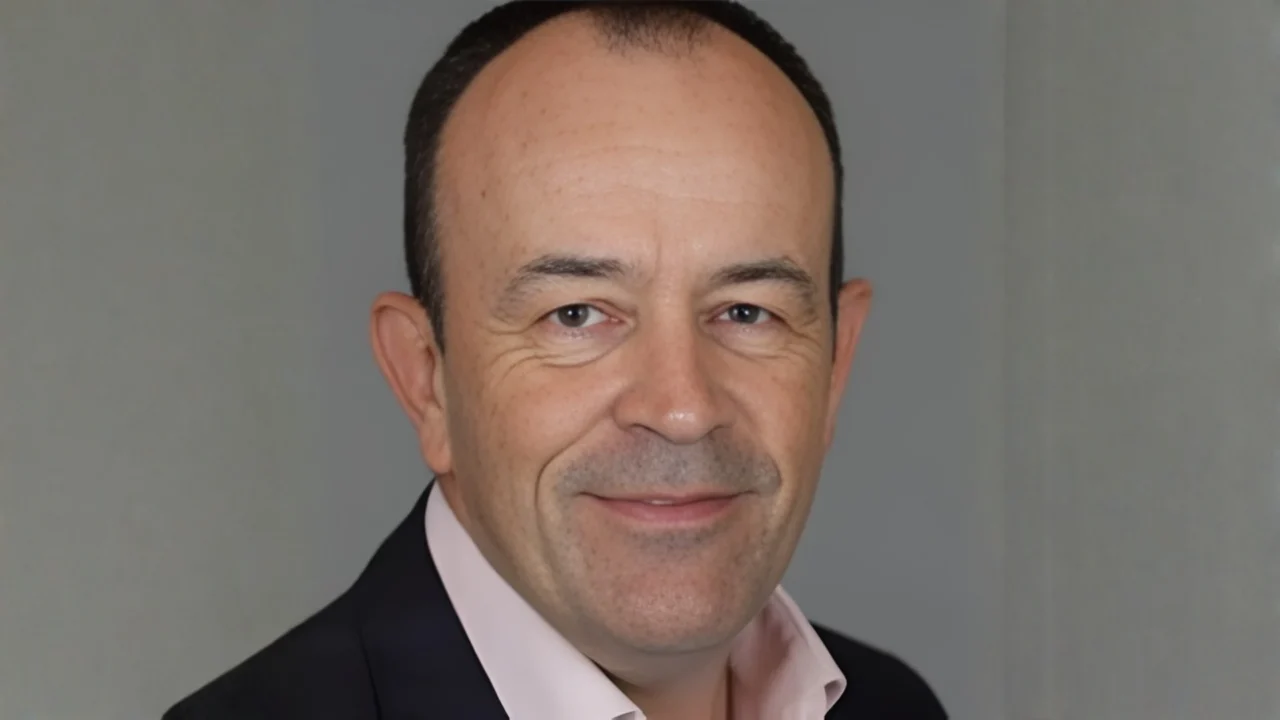
Tony Gordon: Understanding PGT-A Through New Embryo Imaging Insights
Tony Gordon, Senior Director of Clinical Strategy and Market Development at CooperSurgical Fertility Solutions, shared a post on LinkedIn about a paper by Ahmed Abdelbaki et al. published in Nature Biotechnology and about a paper by David Cansfield et al. published in PET:
“‘PGT-A may overestimate impact of embryo abnormalities’ (Progress Educational Trust), ‘Imaging of Live Human Embryos Points Towards Flaws in Common Aneuploidy Genetic Testing’ (GenomeWeb).
Some pretty dramatic headlines that point to serious issues with PGT-A I think you will agree. So what is behind these headlines?
Well actually a great paper from Abdelbaki et al (Nature Biotechnology) that used a very sensitive and low level cytotoxic, high resolution imaging protocol to image live blastocyst embryos, down to the individual cell level, whereby events such as individual chromosomes could be see lining up at metaphase. As a cytogeneticist (although it’s been a while since I looked at any cyto metaphases!) I find this fascinating.
Different errors in segregation ‘including multipolar
spindle formation, lagging chromosomes, misalignment and mitotic
slippage’ were observed and errors were observed in the trophectoderm (TE) rather than the inner cell mass (that goes on to form the embryo). Actually confirming the presence of tripolar mitosis (multipolar spindle formation) that was reported by Christian Ottolini et al in 2017 via SNP PGT-A.
Most of these errors will result in a mosaic TE biopsy result. So do we seen mitotic errors with PGT-A? Of course. We recently presented the results from 140K TE biopsies with 7% mosaicism rate, incidentally not far off the rate in this paper ‘Misaligned chromosomes were observed in 8% of human cells’.
What the paper and the commentaries of the paper seem to not mention is that we are getting a good understanding of the impact of mosaic PGT-A results. Manuel Viotti presented at the recent ASRM2025 the results of 4,500 transfer of mosaic transfers as part of the IRMET International Transfer of Mosaic Embryos. Embryos with mosaic results do produce live births, at a lower level than euploid embryos, albeit with more miscarriage and with <2% mosaic live births. Aneuploid embryos with full copy changes (assumed to be meiotic) are reported to extremely rarely produce live births.
Mosaicism is well known to be more present in the placenta (confined placental mosaicism, as mentioned in the paper) and this paper beatifically shows this is also true at the blastocyst stage, with TE presenting more miss-segregation than inner cell mass. Although indirectly PGT-A had already shown this to be the case via mosaic embryo transfer outcomes.
So are miss-segregation errors an issue for PGT-A? Yes we have to deal with the impact of mosaic results but do we have a understanding of mosaic results and their impact on the accuracy of PGT-A? Yes we do. Are these ‘flaws’ in PGT-A. I don’t think so.”
Title: Live imaging of late-stage preimplantation human embryos reveals de novo mitotic errors
Authors: Ahmed Abdelbaki, Afshan McCarthy, Anita Karsa, Leila Muresan, Kay Elder, Athanasios Papathanasiou, Phil Snell, Leila Christie, Martin Wilding, Benjamin J. Steventon, Kathy K. Niakan
Read the full article. 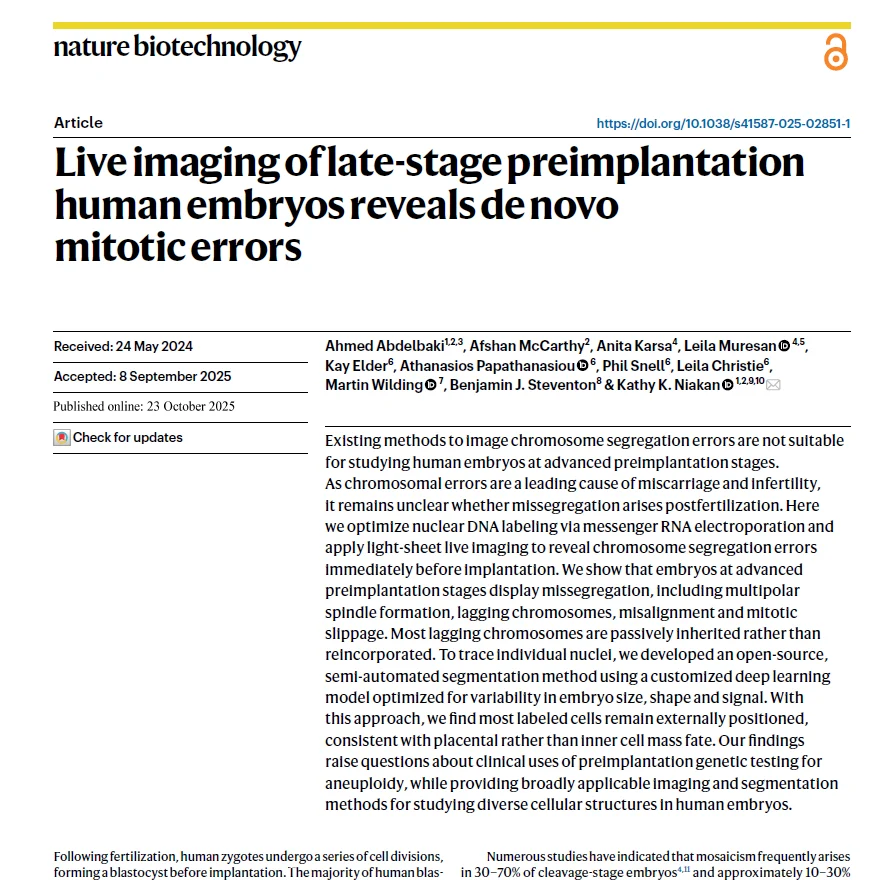
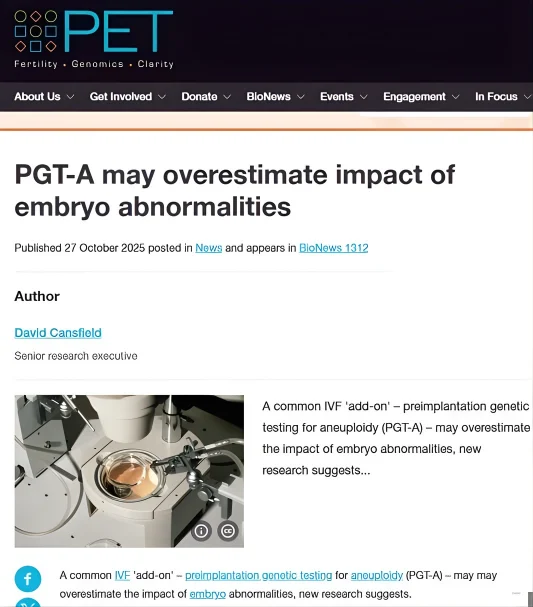
Title: PGT-A may overestimate impact of embryo abnormalities
Author: David Cansfield
Read the full article.
Stay updated on all scientific advances in the field of fertility with Fertility News.
-
Oct 11, 2025, 06:44The Global IVF Market Is Set to Reach $65B by 2032 – Meddilink
-
Mar 16, 2026, 13:30Simon Meagher and Rabih Chaoui Discuss Fetal Heart Scanning in the Latest ISUOG Podcast – ISUOG
-
Mar 16, 2026, 12:58Exploring the Link Between Adenomyosis and Proliferative Endometrial Disorders – Fertility and Sterility
-
Mar 16, 2026, 12:55Nicola Pozzi: A New Mechanism to Reduce Thrombus Formation Without Increasing Bleeding Risk
-
Mar 16, 2026, 12:44Endometriosis Awareness Month Virtual Issue! – ISUOG
-
Mar 16, 2026, 12:30Jeanne Conry: When the Government Intervenes, Women Die
-
Mar 16, 2026, 12:23Magdalena Simonis Highlights the Need to Change the Rhetoric on Endometriosis
-
Mar 16, 2026, 12:00Julia Chain Highlights Fertility Preservation as Part of Women’s Health Campaign – HFEA
-
Mar 15, 2026, 15:26Watching Life Begin: Scientists Track Embryo Implantation in Real Time! – Science Magazine
-
Mar 15, 2026, 15:03Reem Abu-Rustum Spotlights Fetal Situs in New ISUOG Quiz – ISUOG