

Vitamin K Shot Refusal Sees Alarming Rise Among Newborns – Unbiased Science
Unbiased Science shared a post on LinkedIn:
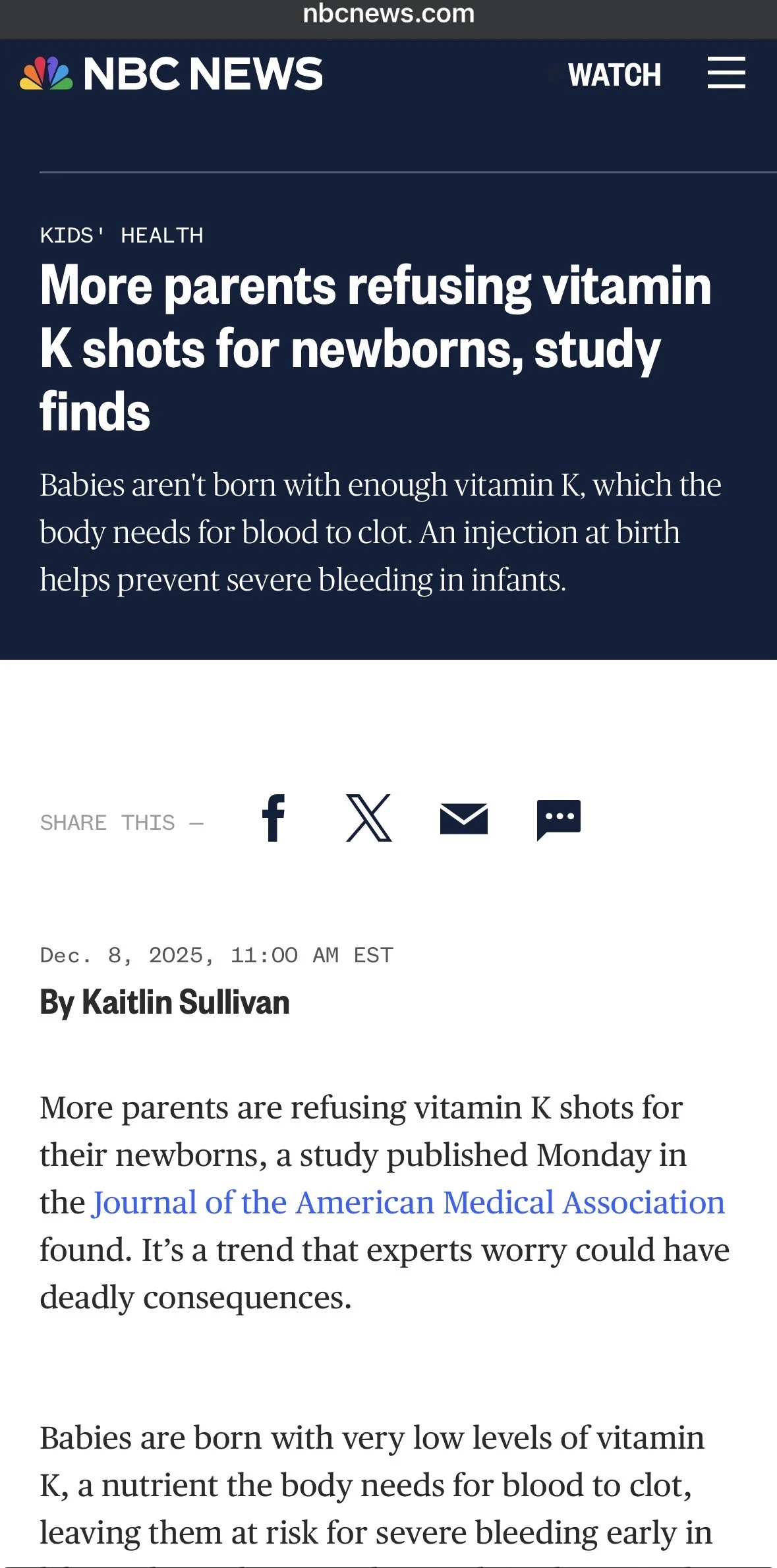
“A new study in JAMA shows that vitamin K shot refusal has nearly doubled since 2017. About 200,000 babies born between 2017-2024 didn’t receive this simple, life-saving intervention.
Just yesterday, a pediatric ER physician shared a case with me. A 16-day-old girl brought in for seizures. Bulging fontanelle. A brain scan showing massive bleeding into the ventricles and brain tissue. Her parents had declined the vitamin K shot at birth. Despite emergency vitamin K administration and neurosurgery to evacuate the bleeding, she didn’t survive. (Some details have been changed to protect the family’s privacy.)
This is not fearmongering. This is reality.
The vitamin K shot is not a vaccine. It’s a vitamin supplement – the same vitamin K found in spinach and kale. It simply gives babies a nutrient they critically lack at birth.
Babies are born with dangerously low vitamin K levels. Very little crosses the placenta during pregnancy, and breast milk contains almost none. This isn’t a flaw in breastfeeding; it’s just biology.
No, mom can’t fix this through diet or supplements. I know this feels counterintuitive, but even when breastfeeding mothers eat tons of leafy greens or take vitamin K supplements, it barely changes the amount in their breast milk. Our bodies just don’t transfer it efficiently that way.
Without enough vitamin K, babies can’t clot their blood properly. This can lead to bleeding anywhere in the body – but bleeding in the brain is what we really worry about. It can happen suddenly, without warning, anytime in the first six months of life.
Babies who don’t receive the shot are 81 times more likely to develop late-onset bleeding. And late-onset vitamin K deficiency bleeding has a mortality rate of 20-50%.
The reason most of us have never seen this is precisely because the shot works. It’s been standard practice since 1961. We’ve prevented this tragedy so effectively that people have forgotten it exists.
What about oral vitamin K drops? I get why this sounds appealing – drops instead of a shot. But there are real problems. First, newborns’ digestive systems are immature and absorption is unpredictable – some babies absorb it well, others don’t, and you have no way of knowing which category your baby falls into. Second, babies can spit up the drops or not swallow the full dose. Third – oral vitamin K requires multiple doses over several weeks or months. Miss even one dose and protection drops significantly. Studies from Europe found that while oral vitamin K might help prevent early bleeding, it’s far less effective at preventing late-onset bleeding, which is the most deadly kind.
I understand the instinct to question everything when it comes to your newborn. That protective instinct is good. But this particular intervention – one shot, one time, of a vitamin – has been protecting babies for over 60 years.
The consequences of refusing it are rare. But when they happen, they’re catastrophic.”
Stay updated on all scientific advances in the field of fertility with Fertility News.
-
Oct 11, 2025, 06:44The Global IVF Market Is Set to Reach $65B by 2032 – Meddilink
-
Mar 16, 2026, 13:30Simon Meagher and Rabih Chaoui Discuss Fetal Heart Scanning in the Latest ISUOG Podcast – ISUOG
-
Mar 16, 2026, 12:58Exploring the Link Between Adenomyosis and Proliferative Endometrial Disorders – Fertility and Sterility
-
Mar 16, 2026, 12:55Nicola Pozzi: A New Mechanism to Reduce Thrombus Formation Without Increasing Bleeding Risk
-
Mar 16, 2026, 12:44Endometriosis Awareness Month Virtual Issue! – ISUOG
-
Mar 16, 2026, 12:30Jeanne Conry: When the Government Intervenes, Women Die
-
Mar 16, 2026, 12:23Magdalena Simonis Highlights the Need to Change the Rhetoric on Endometriosis
-
Mar 16, 2026, 12:00Julia Chain Highlights Fertility Preservation as Part of Women’s Health Campaign – HFEA
-
Mar 15, 2026, 15:26Watching Life Begin: Scientists Track Embryo Implantation in Real Time! – Science Magazine
-
Mar 15, 2026, 15:03Reem Abu-Rustum Spotlights Fetal Situs in New ISUOG Quiz – ISUOG