

Vipin Chandra: The Emotional Burden of IVF We Still Overlook
Vipin Chandra, Director at Matcare Maternity, shared a post on LinkedIn:
“The Silent Burden of IVF: The Emotional Pain We Rarely Talk About
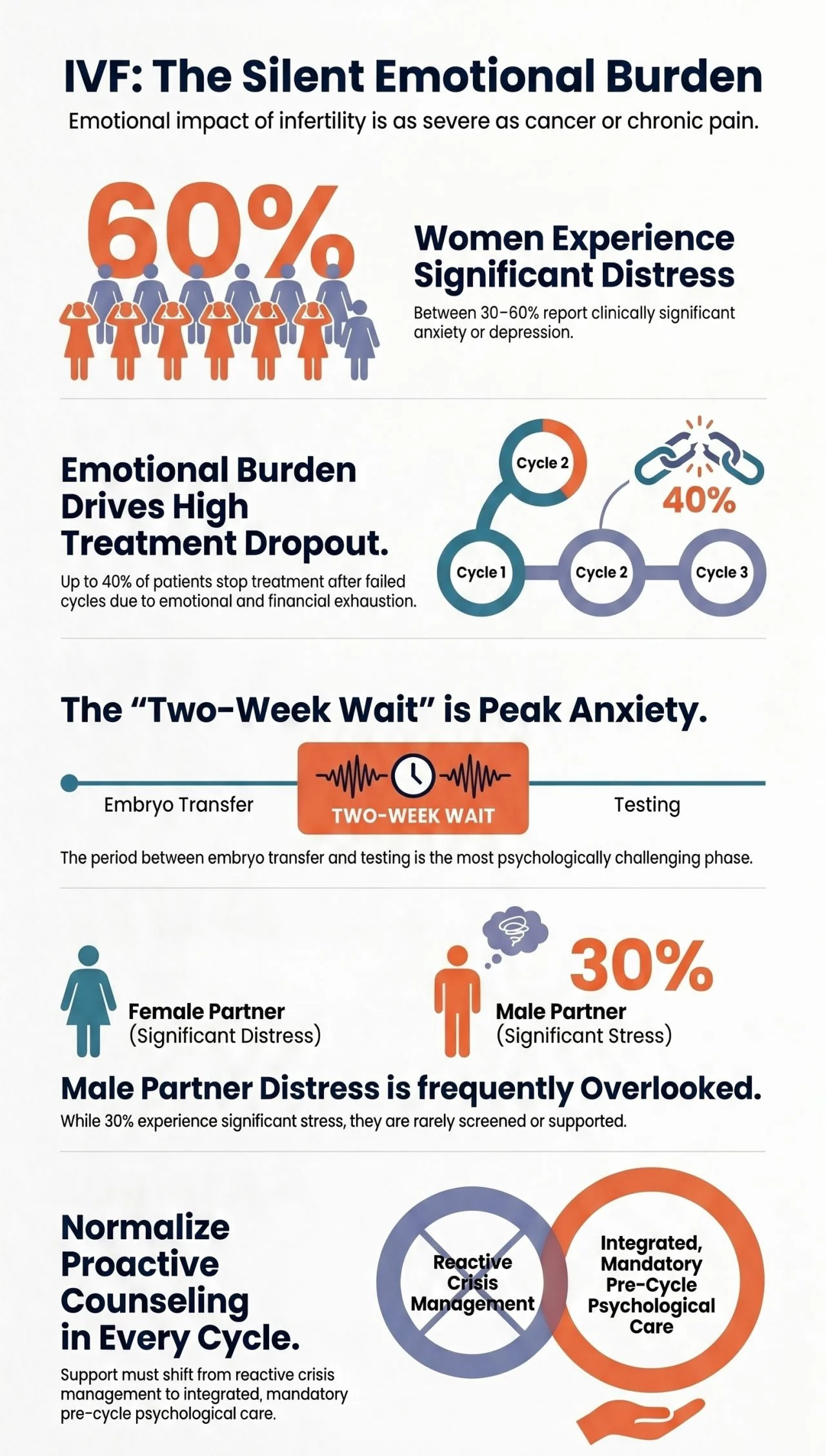
The emotional burden of IVF.
IVF is not just a procedure. It is a prolonged psychological journey, often marked by:
- Hope → anticipation → uncertainty
- Repeated cycles of optimism followed by disappointment
- A constant negotiation between science and emotion
Unlike many other medical treatments, IVF outcomes are:
- Uncertain
- Time-sensitive
- Deeply personal
Prevalence of psychological distress
- 30–60% of women undergoing IVF experience clinically significant anxiety or depression (ESHRE Guidelines, 2023; Boivin et al.)
- Emotional distress in infertility has been shown to be comparable to that seen in cancer, cardiac disease, and chronic pain conditions (Domar et al., Harvard Medical School)
Impact of treatment failure
- After a failed IVF cycle: Up to 50% of patients report moderate to severe emotional distress
- Dropout rates after 1–2 failed cycles can reach 25–40%, largely driven by emotional and financial burden (ESHRE, ASRM data)
Does Emotional Stress Affect IVF Outcomes?
This remains complex,
Some studies suggest: High stress → lower implantation rates
Others show: No direct causal relationship
(ASRM, ESHRE consensus)
But what is clear: Emotional well-being significantly impacts treatment continuation, compliance, and overall patient experience
Where We Fall Short as a System
Despite clear evidence: Psychological care is not uniformly integrated into IVF programs. Counselling is often: Reactive, not proactive or Optional, not standard.
What Needs to Change
1. Normalize Emotional Counselling as Part of IVF
Mandatory pre-cycle counselling
Ongoing psychological support
2. Build Multidisciplinary Care Models : Clinician + embryologist + counsellor + psychologist
3. Measure Emotional Outcomes – Just like: Implantation rates, Pregnancy rates
Clinics must Track: Patient-reported emotional well-being, Dropout due to distress
4. Train IVF Teams in Emotional Sensitivity – Communication matters as much as competence
5. Engage Male Partners More Actively- Structured inclusion of him in counselling
A Perspective We Must Not Lose
IVF is one of the few areas in medicine where success is measured not just in survival – but in creation of life. And yet, in that journey:
- The science is advancing rapidly
- The emotional care is lagging behind
My Take: If we truly want to improve IVF outcomes, we must expand our definition of ‘outcomes.’
Not just:
- Pregnancy rates
But also:
- Patient resilience
- Emotional well-being
- Ability to continue the journey
Because most often, the most difficult part of IVF is not the injections, the procedures, or even the cost – It is carrying hope, repeatedly, in the face of uncertainty.”
Stay updated on all scientific advances in the field of fertility with Fertility News.
-
Sep 18, 2026, 20:27Hrishikesh Pai: Rethinking Male Infertility
-
Sep 18, 2026, 20:25Eric Verdin: Wrapping Up the Reproductive Aging Summit at the Center for Healthy Aging in Women
-
Sep 18, 2026, 20:21Investigating Pregnancy Outcomes in Women with Idiopathic POI – RBMO
-
Sep 18, 2026, 20:18Sue Ritchie: Why Aren’t We Talking About Male Fertility More?
-
Sep 18, 2026, 20:13Salma Yasin: Every Day of BFS Study Week 2026 Has Been an Exceptional Learning Experience
-
Sep 18, 2026, 20:01Qingcai Wang: Over 35 and Torn Between Trying Longer and Starting IVF?
-
Sep 18, 2026, 19:58Bhumika: Can a Woman Become Pregnant Again While Already Pregnant?
-
Sep 18, 2026, 19:5215 More Experts Join the International Fertility Forum Mumbai 2026
-
Sep 18, 2026, 19:50Curious About What Happens Behind the Scenes in the Labs? – Sims IVF