

Arda Lembet: What the Science of the Ovary Reveals About Women’s Longevity
Arda Lembet, President and Cofounder at LaraHealth, shared a post on LinkedIn about a paper by Eliza A. Gaylord et al. published in Science:
“𝐃𝐞𝐜𝐨𝐝𝐢𝐧𝐠 𝐎𝐯𝐚𝐫𝐢𝐚𝐧 𝐀𝐠𝐢𝐧𝐠: 𝐖𝐡𝐚𝐭 𝐭𝐡𝐞 𝐒𝐜𝐢𝐞𝐧𝐜𝐞 𝐨𝐟 𝐭𝐡𝐞 𝐎𝐯𝐚𝐫𝐲 𝐑𝐞𝐯𝐞𝐚𝐥𝐬 𝐀𝐛𝐨𝐮𝐭 𝐖𝐨𝐦𝐞𝐧’𝐬 𝐋𝐨𝐧𝐠𝐞𝐯𝐢𝐭𝐲
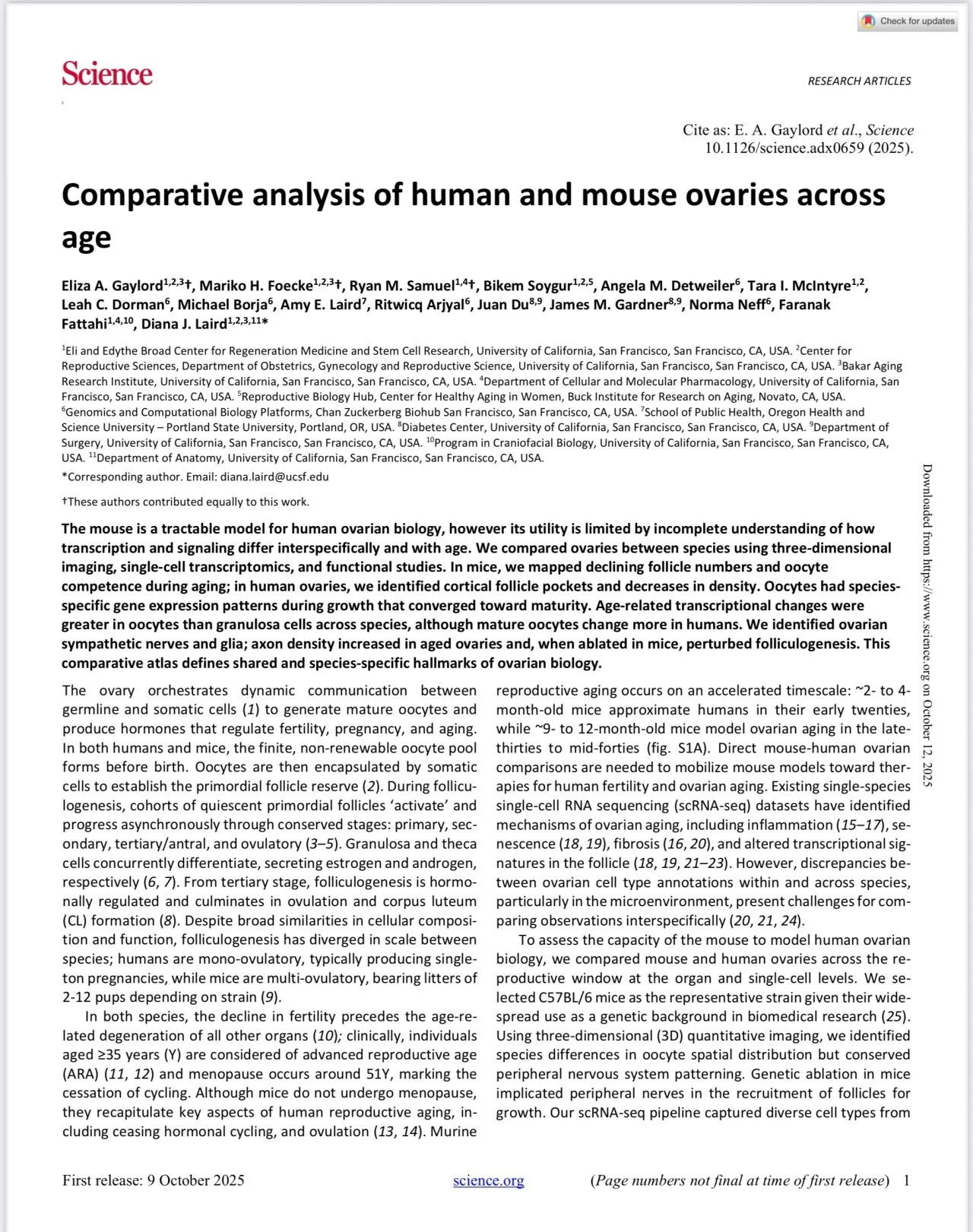
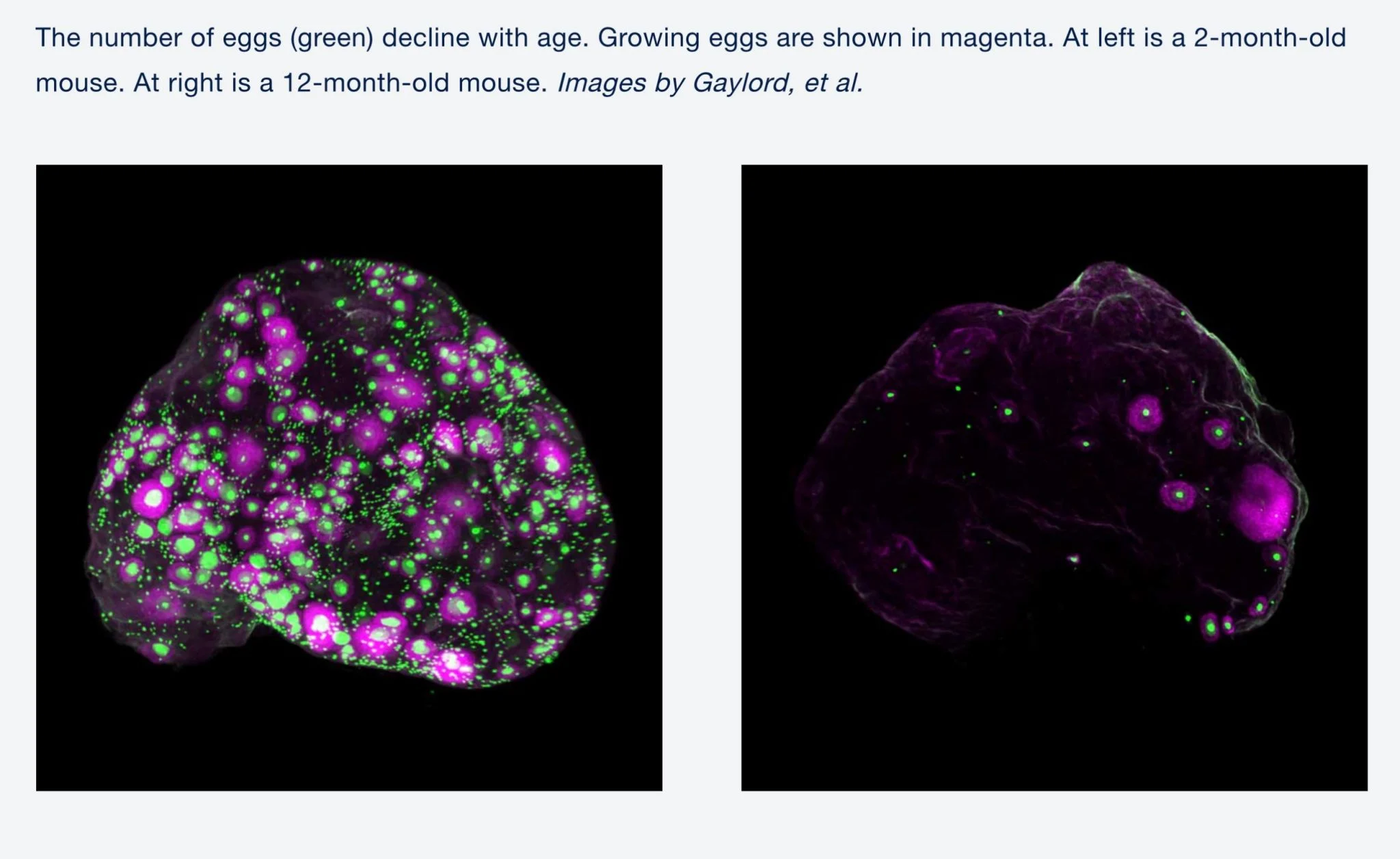
A new Science (2025) study from UCSF and the Buck Institute has just mapped, in unprecedented detail, how the ovary changes from youth to menopause comparing human and mouse ovaries across age with 3D imaging, single-cell sequencing, and neural mapping.
The findings go far beyond fertility. They redefine how we understand women’s aging at the cellular, hormonal, and even neurological level.
The highlights:
- Women are born with a finite number of eggs, but the ovary is far fr2om passive. It’s a living, communicating organ.
- As we age, the ovarian environment itself its nerves, vessels, and connective tissue begins to change long before menopause.
- Researchers discovered that human ovaries contain ‘fertility pockets‘ rich in healthy eggs that shrink with age.
- The ovary has its own sympathetic nerves and glial cells similar to those in the brain which regulate how follicles grow.
- With estrogen decline, these nerves actually increase in density, suggesting a link between neural signaling and menopausal transition.
- Egg cells (oocytes) are the most vulnerable to aging their ability to repair DNA and divide correctly declines, explaining reduced fertility after 35.
- Aging brings more fibrosis and inflammation, changing how cells communicate and how hormones are produced.
Why this matters
The ovary isn’t just about reproduction it’s the command center for longevity.
It influences cardiovascular, cognitive, bone, and metabolic health.
By understanding how it ages, we can start to design interventions that protect ovarian function, delay menopause, and promote healthier aging overall.`1
LaraHealth Perspective
At LaraHealth, we see ovarian biology as the foundation of women’s long-term vitality.
Integrating discoveries like this into reproductive longevity means going beyond hormones to the molecular, neural, and metabolic layers of aging itself.
Because the question isn’t only how long we live, but how long we stay biologically young.
Reference: Gaylord EA et al., Science, October 2025.
Collaboration: UCSF – Buck Institute for Research on Aging”
Title: Comparative analysis of human and mouse ovaries across age
Authors: Eliza A. Gaylord, Mariko H. Foecke, Ryan M. Samuel, Bikem Soygur, Angela M. Detweiler, Tara I. McIntyre, Leah C. Dorman, Michael Borja, Amy E. Laird, Ritwicq Arjyal, Juan Du, James M. Gardner, Norma Neff, Faranak Fattahi, Diana J. Laird
Read the full article.
-
Sep 18, 2026, 20:27Hrishikesh Pai: Rethinking Male Infertility
-
Sep 18, 2026, 20:25Eric Verdin: Wrapping Up the Reproductive Aging Summit at the Center for Healthy Aging in Women
-
Sep 18, 2026, 20:21Investigating Pregnancy Outcomes in Women with Idiopathic POI – RBMO
-
Sep 18, 2026, 20:18Sue Ritchie: Why Aren’t We Talking About Male Fertility More?
-
Sep 18, 2026, 20:13Salma Yasin: Every Day of BFS Study Week 2026 Has Been an Exceptional Learning Experience
-
Sep 18, 2026, 20:01Qingcai Wang: Over 35 and Torn Between Trying Longer and Starting IVF?
-
Sep 18, 2026, 19:58Bhumika: Can a Woman Become Pregnant Again While Already Pregnant?
-
Sep 18, 2026, 19:5215 More Experts Join the International Fertility Forum Mumbai 2026
-
Sep 18, 2026, 19:50Curious About What Happens Behind the Scenes in the Labs? – Sims IVF