
Why Follicle Size Matters More Than You Think? – Fertility Plus
Fertility Plus shared a post on LinkedIn:
“Why Follicle Size Matters More Than You Think?
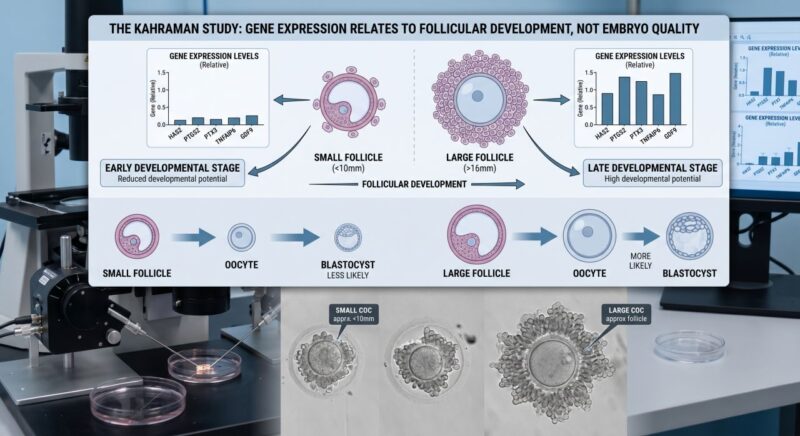
When your ovaries are stimulated during IVF, eggs grow inside fluid-filled sacs called follicles. Bigger follicles tend to produce eggs that are more developmentally ready — and a landmark study of nearly 2,500 eggs confirmed that eggs from larger follicles are more than twice as likely to become a blastocyst (the stage needed for transfer).
The really reassuring part? The differences scientists see between eggs from large and small follicles appear to be about developmental timing, not egg quality. A smaller follicle isn’t producing a defective egg — it’s producing an egg that simply hasn’t quite finished maturing. That’s a very different thing.
It’s one of the reasons your consultant at Fertility Plus pays close attention to how your follicles are growing throughout your cycle — because getting the timing right isn’t just a detail, it’s central to giving every egg its best possible chance.”
Stay updated on all scientific advances in the field of fertility with Fertility News.
-
Sep 18, 2026, 20:27Hrishikesh Pai: Rethinking Male Infertility
-
Sep 18, 2026, 20:25Eric Verdin: Wrapping Up the Reproductive Aging Summit at the Center for Healthy Aging in Women
-
Sep 18, 2026, 20:21Investigating Pregnancy Outcomes in Women with Idiopathic POI – RBMO
-
Sep 18, 2026, 20:18Sue Ritchie: Why Aren’t We Talking About Male Fertility More?
-
Sep 18, 2026, 20:13Salma Yasin: Every Day of BFS Study Week 2026 Has Been an Exceptional Learning Experience
-
Sep 18, 2026, 20:01Qingcai Wang: Over 35 and Torn Between Trying Longer and Starting IVF?
-
Sep 18, 2026, 19:58Bhumika: Can a Woman Become Pregnant Again While Already Pregnant?
-
Sep 18, 2026, 19:5215 More Experts Join the International Fertility Forum Mumbai 2026
-
Sep 18, 2026, 19:50Curious About What Happens Behind the Scenes in the Labs? – Sims IVF