
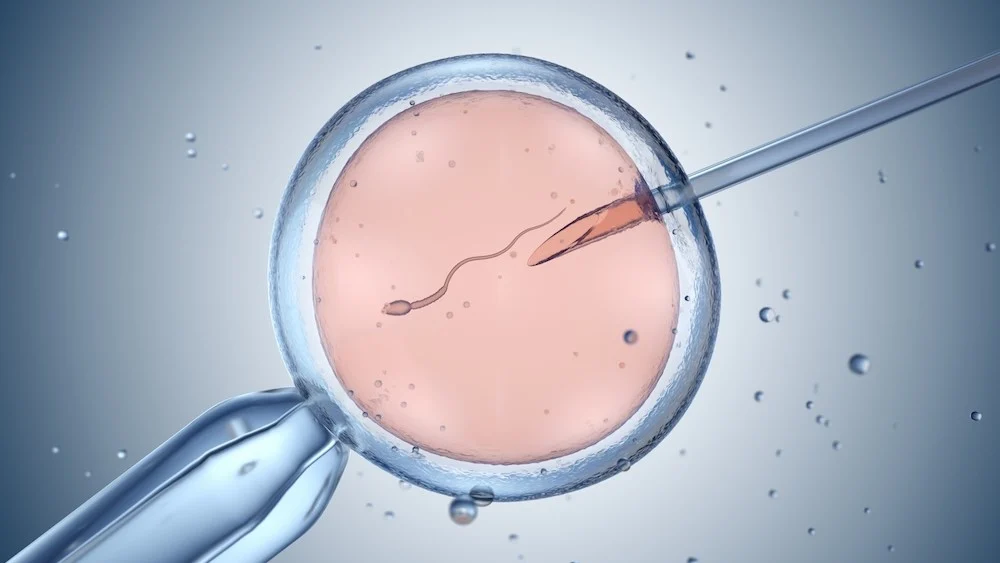
Akansha Negi: Can a Tiny Chip Help Us Select Better Sperm for IVF?
Akansha Negi, Trainee Embryologist at Mata Chanan Devi Hospital, shared a post on LinkedIn:
“Can a tiny chip help us select better sperm for IVF?
When most people think about IVF, they picture embryos.
But every embryo begins with one important step that often goes unnoticed: SPERM SELECTION
In natural conception, millions of sperm start the journey, but only a handful make it close to the egg.
The female reproductive tract naturally filters out many sperm along the way, allowing only the healthiest and most motile ones to reach the final destination.
As embryologists, one of our challenges is to recreate that selection process in the laboratory.
Traditionally, sperm preparation has been performed using techniques like density gradient centrifugation and swim-up.
These methods have been trusted for years and continue to be the backbone of IVF laboratories worldwide.
But what if we could make this process a little more like nature?
That’s the idea behind microfluidic sperm selection.
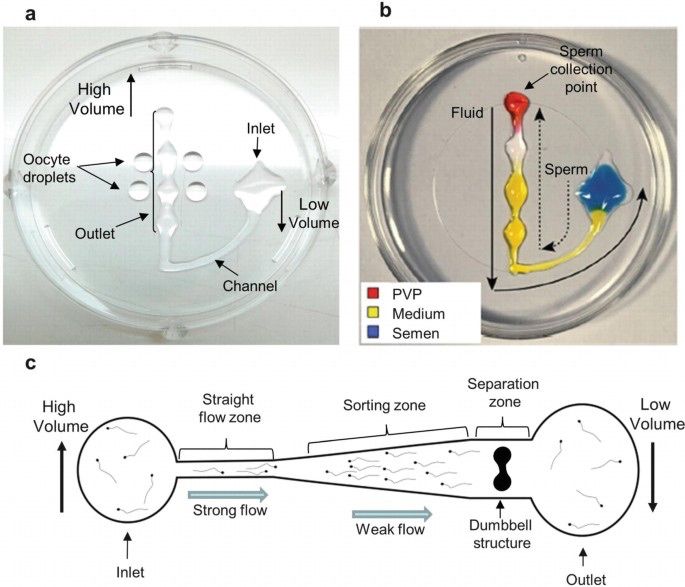
Using tiny channels on a microfluidic chip, sperm are allowed to swim toward the collection chamber on their own.
Instead of being separated mainly by centrifugation, the sperm essentially ‘compete’ based on their motility- much like they would during natural conception.
Why has this technology generated so much interest?
- It minimizes or even eliminates repeated centrifugation, which may reduce oxidative stress.
- It enriches for highly motile sperm that can actively navigate through the microchannels.
- Several studies suggest it may recover sperm with lower DNA fragmentation, although the results are not identical across every study.
- It can also produce a cleaner sperm sample by reducing debris and non-motile cells.
Does this mean microfluidics is the future of every IVF lab?
Not necessarily.
While the laboratory findings are encouraging, the clinical evidence is still evolving.
So far, research has not consistently shown that using microfluidics leads to higher pregnancy or live birth rates for every patient.
That’s an important reminder that in reproductive medicine, innovation is excitingbut evidence matters just as much.
Perhaps the future isn’t about replacing conventional techniques. It’s about knowing which patient is most likely to benefit from which technology.
As our understanding grows, microfluidics may become another valuable tool in the embryologist’s hands not because it’s new, but because it has the potential to make treatment more personalized.
I’d love to hear your thoughts.
Do you think microfluidic sperm selection will become a routine part of IVF practice, or should it remain reserved for selected clinical cases?.”
Stay updated on all scientific advances in the field of fertility with Fertility News.
-
Sep 18, 2026, 20:27Hrishikesh Pai: Rethinking Male Infertility
-
Sep 18, 2026, 20:25Eric Verdin: Wrapping Up the Reproductive Aging Summit at the Center for Healthy Aging in Women
-
Sep 18, 2026, 20:21Investigating Pregnancy Outcomes in Women with Idiopathic POI – RBMO
-
Sep 18, 2026, 20:18Sue Ritchie: Why Aren’t We Talking About Male Fertility More?
-
Sep 18, 2026, 20:13Salma Yasin: Every Day of BFS Study Week 2026 Has Been an Exceptional Learning Experience
-
Sep 18, 2026, 20:01Qingcai Wang: Over 35 and Torn Between Trying Longer and Starting IVF?
-
Sep 18, 2026, 19:58Bhumika: Can a Woman Become Pregnant Again While Already Pregnant?
-
Sep 18, 2026, 19:5215 More Experts Join the International Fertility Forum Mumbai 2026
-
Sep 18, 2026, 19:50Curious About What Happens Behind the Scenes in the Labs? – Sims IVF