

Sean Lauber: Does Transferring a Cleavage or Blastocyst Stage Embryo Affect the Chance of Having a Boy?
Sean Lauber, Healthcare newsletter writer at SmartBrief, shared a post on LinkedIn:
“Does transferring a cleavage stage or blastocyst stage embryo affect the chance of having a boy?
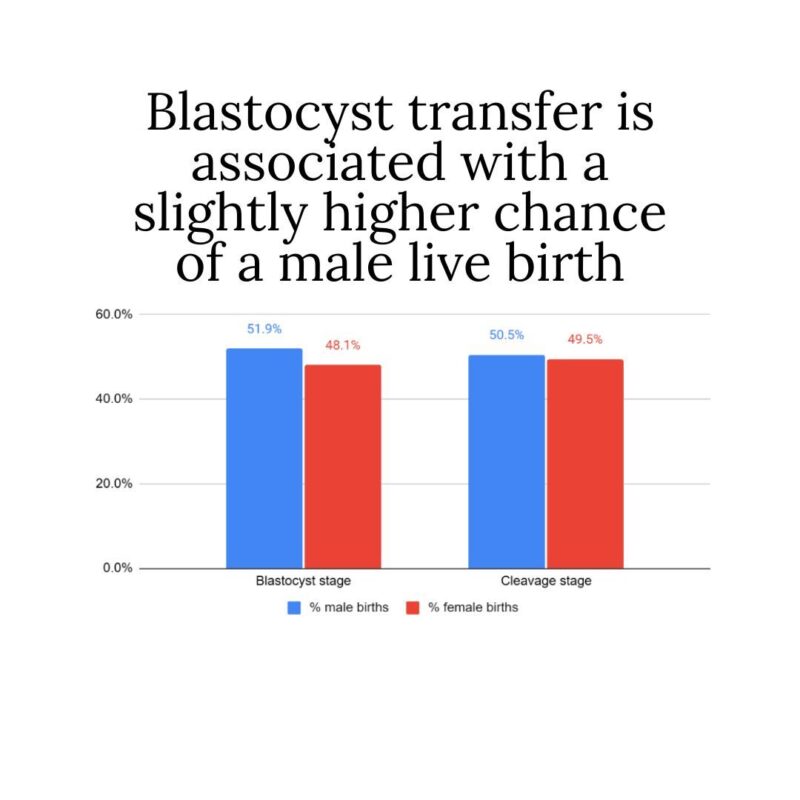
Perlman et al. (2021) analyzed nearly 100,000 frozen embryo transfers (FETs) from the US SART registry to see whether embryo stage affected the baby’s sex.
Cleavage stage transfers resulted in 50.5% male births, while blastocyst stage transfers resulted in 51.9% male births.
Although the difference was statistically significant, it was small (corresponding to 1.4 additional boys per 100 live births after blastocyst transfer). This isn’t enough to influence embryo selection, but it does suggest that blastocyst transfer is associated with a slightly higher chance of having a boy.
Other studies, including a 2022 meta-analysis, have reported similar findings.
Researchers aren’t sure why this happens. One possibility is that male embryos develop slightly faster than female embryos, making them more likely to reach the blastocyst stage first. Since clinics generally transfer the most advanced embryo first, this could slightly increase the chance of transferring a male embryo. However, the exact reason isn’t clear.
Check out more details on Remembryo
Like this post? Get a free weekly summary of the latest IVF research.”
Stay updated on all scientific advances in the field of fertility with Fertility News.
-
Sep 18, 2026, 20:27Hrishikesh Pai: Rethinking Male Infertility
-
Sep 18, 2026, 20:25Eric Verdin: Wrapping Up the Reproductive Aging Summit at the Center for Healthy Aging in Women
-
Sep 18, 2026, 20:21Investigating Pregnancy Outcomes in Women with Idiopathic POI – RBMO
-
Sep 18, 2026, 20:18Sue Ritchie: Why Aren’t We Talking About Male Fertility More?
-
Sep 18, 2026, 20:13Salma Yasin: Every Day of BFS Study Week 2026 Has Been an Exceptional Learning Experience
-
Sep 18, 2026, 20:01Qingcai Wang: Over 35 and Torn Between Trying Longer and Starting IVF?
-
Sep 18, 2026, 19:58Bhumika: Can a Woman Become Pregnant Again While Already Pregnant?
-
Sep 18, 2026, 19:5215 More Experts Join the International Fertility Forum Mumbai 2026
-
Sep 18, 2026, 19:50Curious About What Happens Behind the Scenes in the Labs? – Sims IVF