

Mazen Al-Obaidi: How Pregnancy Reshapes the Maternal Brain
“The maternal brain changes in structure during pregnancy, not just in hormones or mood. Scientists now use detailed brain scans to follow these changes, from before pregnancy through the months after birth. Gray matter shrinks in certain regions, and some of that shrinking lasts well past the birth.
Studies between 2023 and 2026 tie these changes to bonding with the baby and to the mother’s mental health. Here we look at what happens to the maternal brain, whether it bounces back, and what it all means.
What happens to the maternal brain in pregnancy?
Brain scans show a clear pattern throughout pregnancy:
- Gray matter decreases across many brain regions (Pritschet et al., 2023).
- The biggest changes happen in the brain networks we use to understand other people and to think about ourselves. Scientists call these the default mode and frontoparietal networks (Paternina-Die et al., 2024).
- White matter, the brain’s wiring, becomes stronger and better organised (Niu et al., 2025).
- The hypothalamus, which controls hormones, also drops in volume (Spalek et al., 2024).
Hormones drive this pattern. The size of the brain changes track with estrogen and progesterone levels (Servin-Barthet et al., 2025; Niu et al., 2025).
Gray matter is the outer layer of the brain, full of nerve cells. When it shrinks, the brain is tuning up its connections, as the next section explains.
Do the changes reverse after birth?
The changes follow a curve, not a one-way drop:
- Gray matter falls in late pregnancy and then partly returns after birth. This makes a U-shaped path, down and then back up (Servin-Barthet et al., 2025).
- One detailed brain-scan study found changes that lasted up to two years after birth (Pritschet et al., 2023).
- A second pregnancy causes similar changes, but smaller ones (Straathof et al., 2026).
Is ‘baby brain’ a sign the brain is getting weaker?
‘Baby brain’ is the everyday name for the forgetfulness and mental fog that some women feel during and after pregnancy. Losing gray matter does not mean the brain is getting weaker. It means the brain is getting better at certain jobs:
- Most of these changes happen in the parts of the brain we use to understand other people. These same changes help the mother feel close to her baby and read what the baby needs (Paternina-Die et al., 2024; Servin-Barthet et al., 2025).
- Changes in the mother’s amygdala, a brain area for emotion, in the weeks after birth help shape how she cares for and bonds with her baby (Nehls et al., 2024).
- Changes in the hypothalamus are linked to maternal-fetal attachment and nesting behaviour (Spalek et al., 2024).
Mental health is part of the picture too:
- After birth, mothers who feel mentally well tend to bond more closely with their baby, and their brain also gets back more of its gray matter (Servin-Barthet et al., 2025).
- Pregnancy also changes how the brain ages later in life (Puri et al., 2023).
Why does the maternal brain matter for reproductive care?
Put together, these findings show that pregnancy is a big change for the brain, not just for the body:
- They link these brain changes to a mother’s mood and bonding after birth. That is a good reason to keep a close eye on her mental health.
- They help explain the memory and attention changes that many pregnant women notice.
- They raise fresh questions about recovery, repeat pregnancies, and brain health in the long run.
The evidence still has limits:
- The studies measure brain structure. How much this affects everyday thinking is still being worked out.
- Imaging of the maternal brain is still a research tool, not a clinical test.”
Written by Mazen Al-Obaidi
Assistant Professor, University of Technology and Applied Sciences
References
Title: Time-sensitive changes in the maternal brain and their influence on mother-child attachment
Authors: Susanne Nehls, Elena Losse, Christian Enzensberger, Thomas Frodl, Natalia Chechko
You can read the Full Article in Translational Psychiatry.
Title: Longitudinal investigation of neurobiological changes across pregnancy
Authors: Yanbin Niu, Benjamin N. Conrad, M. Catalina Camacho, Sanjana Ravi, Hannah A. Piersiak, Lauren G. Bailes, Whitney Barnett, Mary Kate Manhard, David A. Cole, Ellen Wright Clayton, Sarah S. Osmundson, Seth A. Smith, Autumn Kujawa, Kathryn L. Humphreys
You can read the Full Article in Communications Biology.
Title: Women’s neuroplasticity during gestation, childbirth and postpartum
Authors: María Paternina-Die, Magdalena Martínez-García, Daniel Martín de Blas, Inés Noguero, Camila Servin-Barthet, Clara Pretus, Anna Soler, Gonzalo López-Montoya, Manuel Desco, Susana Carmona
You can read the Full Article in Nature Neuroscience.
Title: Neuroanatomical changes observed over the course of a human pregnancy
Authors: Laura Pritschet, Caitlin M. Taylor, Daniela Cossio, Joshua Faskowitz, Tyler Santander, Daniel A. Handwerker, Hannah Grotzinger, Evan Layher, Elizabeth R. Chrastil, Emily G. Jacobs
You can read the Full Article in Nature Neuroscience.
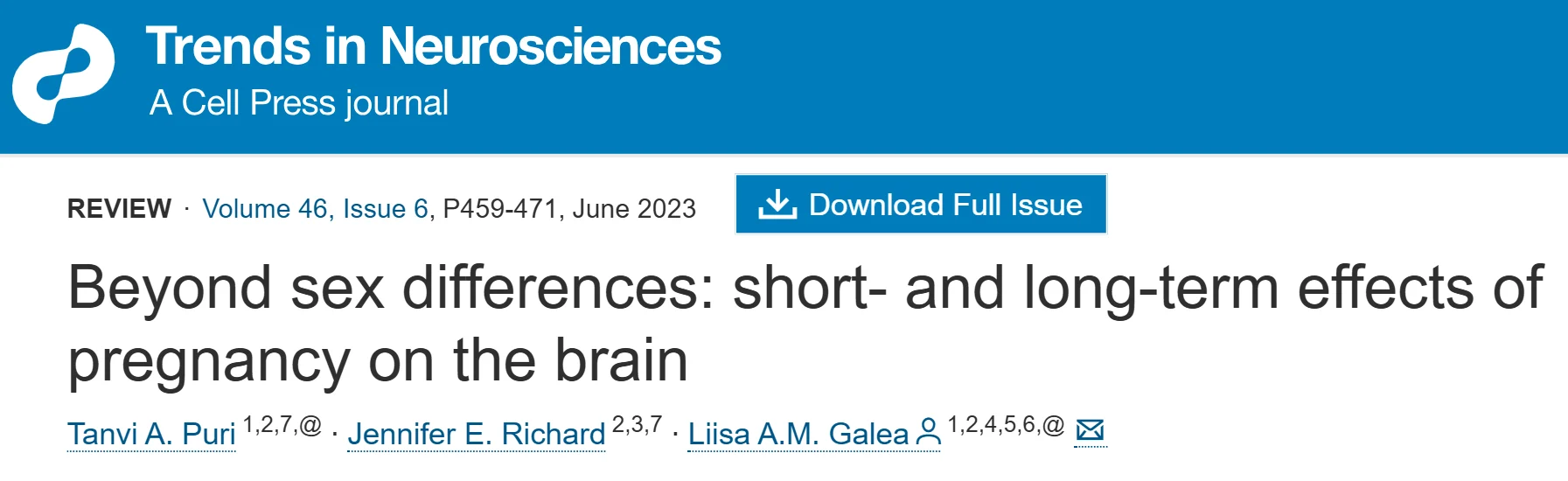
Title: Beyond sex differences: short- and long-term effects of pregnancy on the brain
Authors: Tanvi A. Puri, Jennifer E. Richard, Liisa A.M. Galea
You can read the Full Article in Trends in Neurosciences.
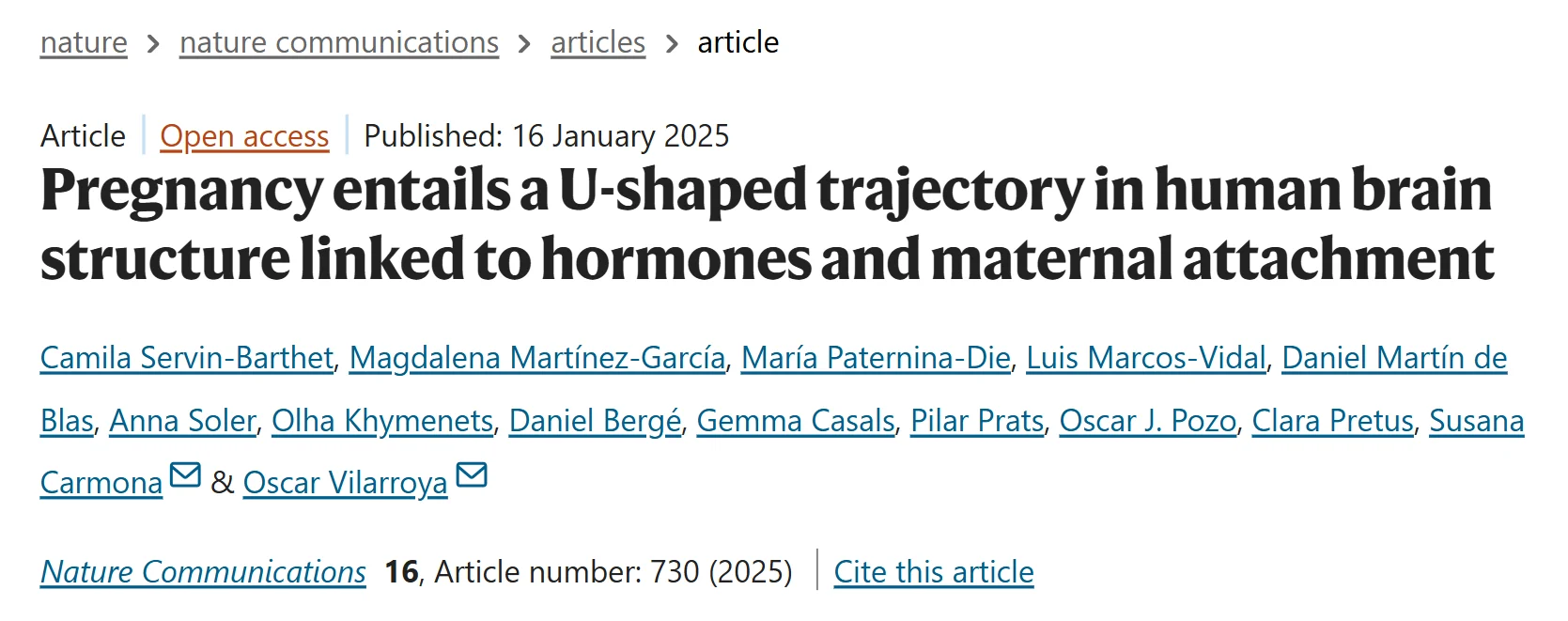
Title: Pregnancy entails a U-shaped trajectory in human brain structure linked to hormones and maternal attachment
Authors: Camila Servin-Barthet, Magdalena Martínez-García, María Paternina-Die, Luis Marcos-Vidal, Daniel Martín de Blas, Anna Soler, Olha Khymenets, Daniel Bergé, Gemma Casals, Pilar Prats, Oscar J. Pozo, Clara Pretus, Susana Carmona, Oscar Vilarroya
You can read the Full Article in Nature Communications.
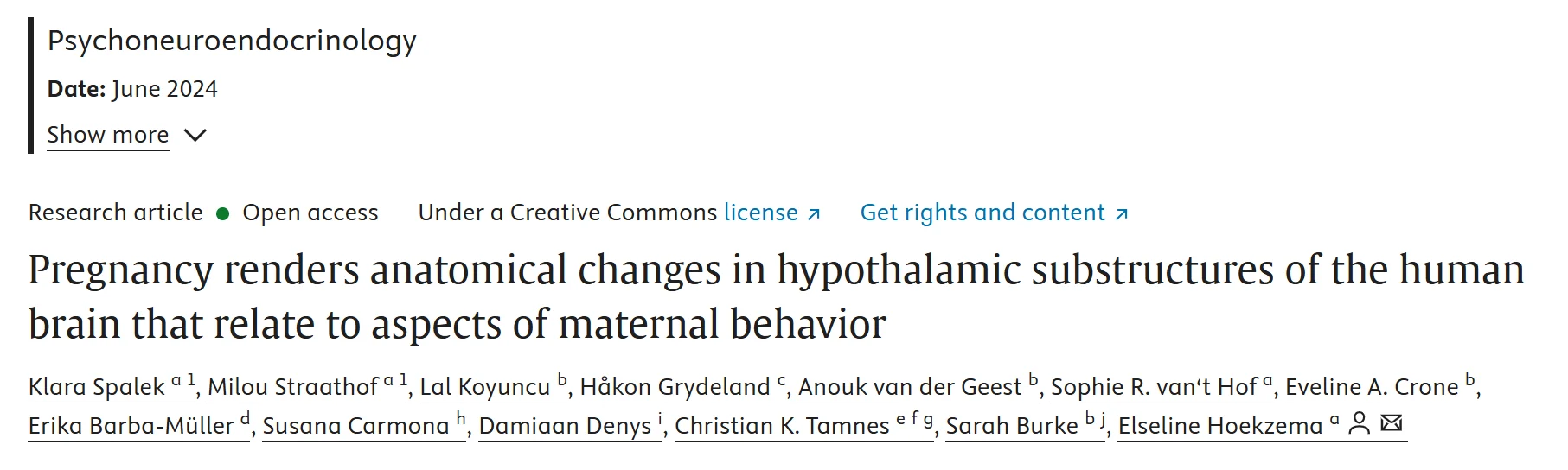
Title: Pregnancy renders anatomical changes in hypothalamic substructures of the human brain that relate to aspects of maternal behavior
Authors: Klara Spalek, Milou Straathof, Lal Koyuncu, Håkon Grydeland, Anouk van der Geest, Sophie R. van‘t Hof, Eveline A. Crone, Erika Barba-Müller, Susana Carmona, Damiaan Denys, Christian K. Tamnes, Sarah Burke, Elseline Hoekzema
You can read the Full Article in Psychoneuroendocrinology.
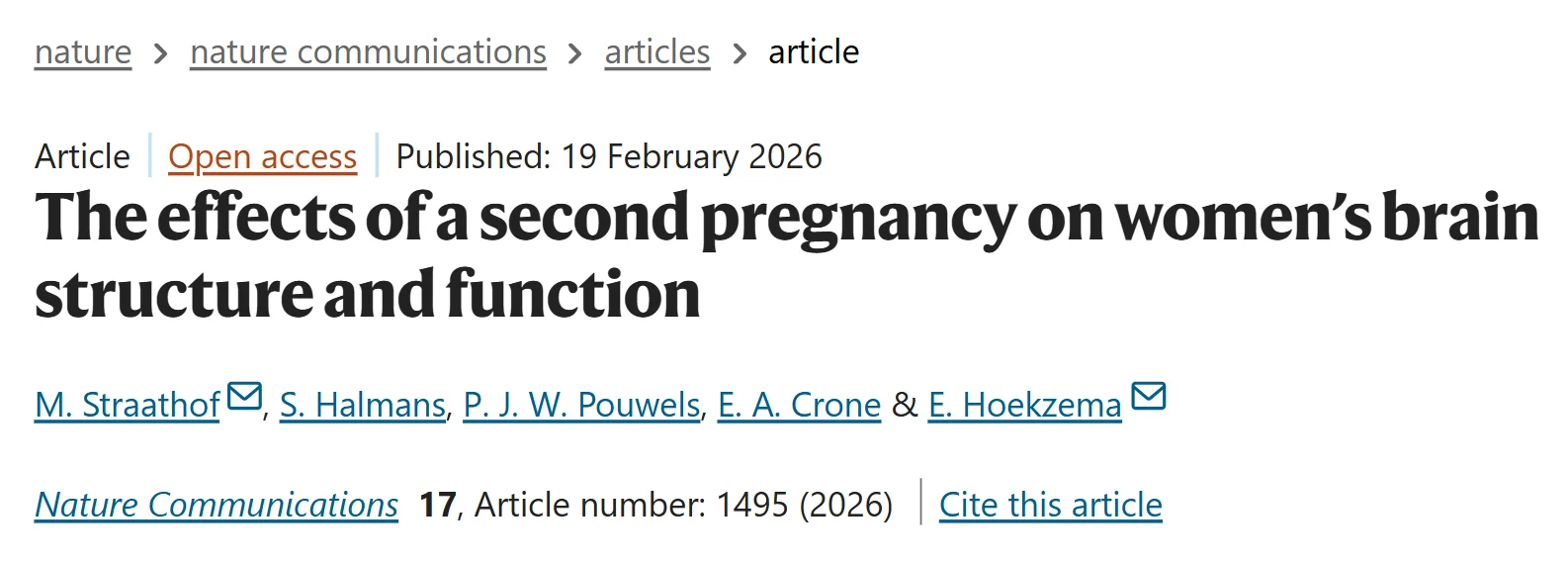
Title: The effects of a second pregnancy on women’s brain structure and function
Authors: M. Straathof, S. Halmans, P. J. W. Pouwels, E. A. Crone, E. Hoekzema
You can read the Full Article in Nature Communications.
Other articles featuring Mazen Al-Obaidi on Fertility News.
FAQ
Does pregnancy change the brain's structure?
Yes. During pregnancy, gray matter shrinks across several regions.
Is "baby brain" a sign of a weaker brain?
No. The drop in gray matter means the brain is fine-tuning the areas we use to understand other people. It is a sign of bonding, not decline.
Do the brain changes reverse after birth?
In part. Gray matter follows a U-shaped path and partly recovers, though some regions stay changed for months or even years.
Does a second pregnancy change the brain again?
Yes. The changes look similar to a first pregnancy but come on a smaller scale.
Do these brain changes relate to mental health?
Yes. After birth, mothers who feel mentally well tend to bond more closely with their baby and get back more of their gray matter.
Is brain imaging part of maternity care now?
No. Imaging of the maternal brain is still at the research stage and is not a routine clinical test.
-
Oct 24, 2026, 18:15Laura Marqueta: Pleased to Participate in the 9th ART Fertility Conference as a Speaker
-
Oct 24, 2026, 18:09Lucy Froese: Your Life Matters Now, Not Just When You Finally See Those Two Lines
-
Oct 24, 2026, 18:07Alejandro González: PGT-A May Improve Embryo Selection, but Does It Increase Live Births?
-
Oct 24, 2026, 18:02PGT-A and EMMI: 2 Complementary Views of the Same Embryo – Noor Sciences
-
Oct 24, 2026, 17:59Mark Amols: Took the Next Step and Built TacoBoutFertility.com
-
Oct 24, 2026, 17:43Michael Rimmer: Extracellular Vesicles in Reproductive Physiology and Pathology
-
Oct 24, 2026, 17:34Looking Forward to ASRM 2026 – NYU Langone Fertility Center
-
Oct 24, 2026, 17:28Donating Sperm Could Help Someone Achieve Their Dream of Becoming a Parent – Complete Fertility
-
Oct 24, 2026, 17:26Arshhita A.: 3PN Oocytes – Why Does Fertilization Go Wrong?