

Bhumika: What Happens If 2 Sperm Fertilize 1 Oocyte?
Bhumika, Intern Embryologist at Indira IVF Group, shared on LinkedIn։
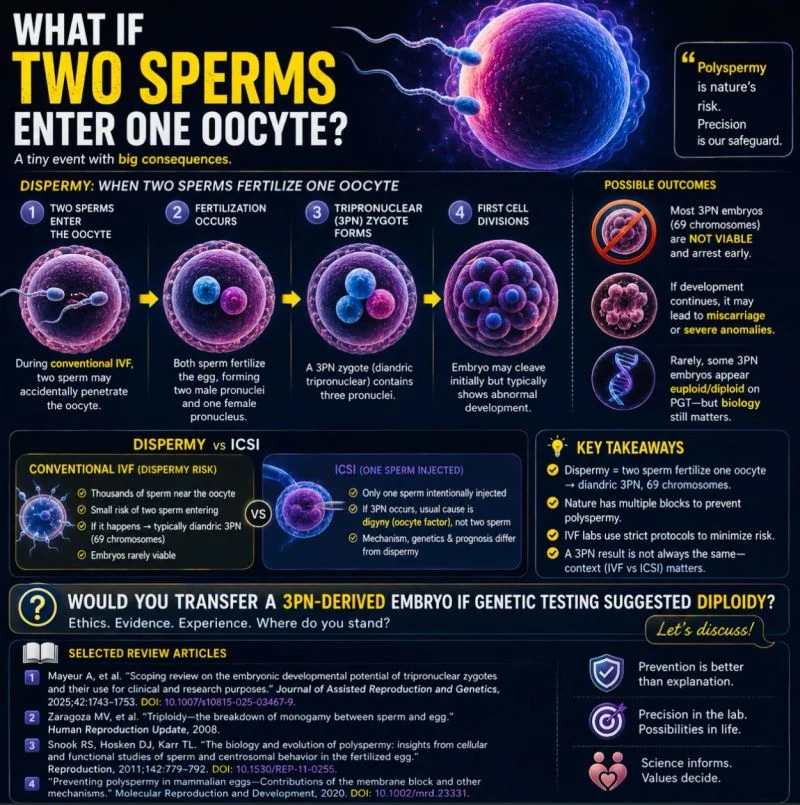
“What Happens If Two Sperm Fertilize One Oocyte?
It sounds like a simple ‘what if?’ – but in reproductive biology, this tiny event can have a major genetic consequence.
Normally:
1 oocyte + 1 sperm – 2 pronuclei – diploid embryo (46 chromosomes)
But when two sperm fertilize the same oocyte, we can get dispermy.
The classic consequence is a tripronuclear (3PN) zygote:
1 maternal pronucleus
2 paternal pronuclei
69 chromosomes (triploidy)
And this is where the biology becomes fascinating.
The embryo may initially continue cleavage, but abnormal chromosome constitution can profoundly affect its developmental potential.
Most abnormal embryos do not develop normally, and triploidy is generally associated with pregnancy loss or severe developmental abnormalities.
But here’s the interesting part…
Not every 3PN zygote has exactly the same biological story.
Recent literature suggests that the origin of the third pronucleus, fertilization method, subsequent chromosome segregation, and possible ‘autocorrection’ mechanisms can influence developmental potential.
A 2025 scoping review of human 3PN zygotes found that their developmental potential differs depending on the mechanism of abnormal fertilization, and that rare cases of diploidization and continued development have been reported.
However, important genetic questions remain unanswered.
Nature normally has several layers of protection against this problem.
The oocyte uses mechanisms involving the zona pellucida and plasma membrane to prevent polyspermy. These safeguards are crucial because fertilization by multiple sperm can result in triploidy.
So here’s my question for embryologists, IVF specialists, and reproductive geneticists:
If a 3PN-derived embryo later appeared to be chromosomally diploid/euploid after appropriate genetic assessment, should its developmental potential be investigated further – or should a 3PN origin itself remain an absolute reason for exclusion?
What is your opinion?
Would you consider it:
- Too risky to ever consider
- Worth investigating under strict genetic criteria
- A fascinating research opportunity
- Something else?
Drop your answer in the comments – I’d genuinely love to hear perspectives from embryology, IVF, genetics and reproductive medicine.
Selected reviews/further reading.”
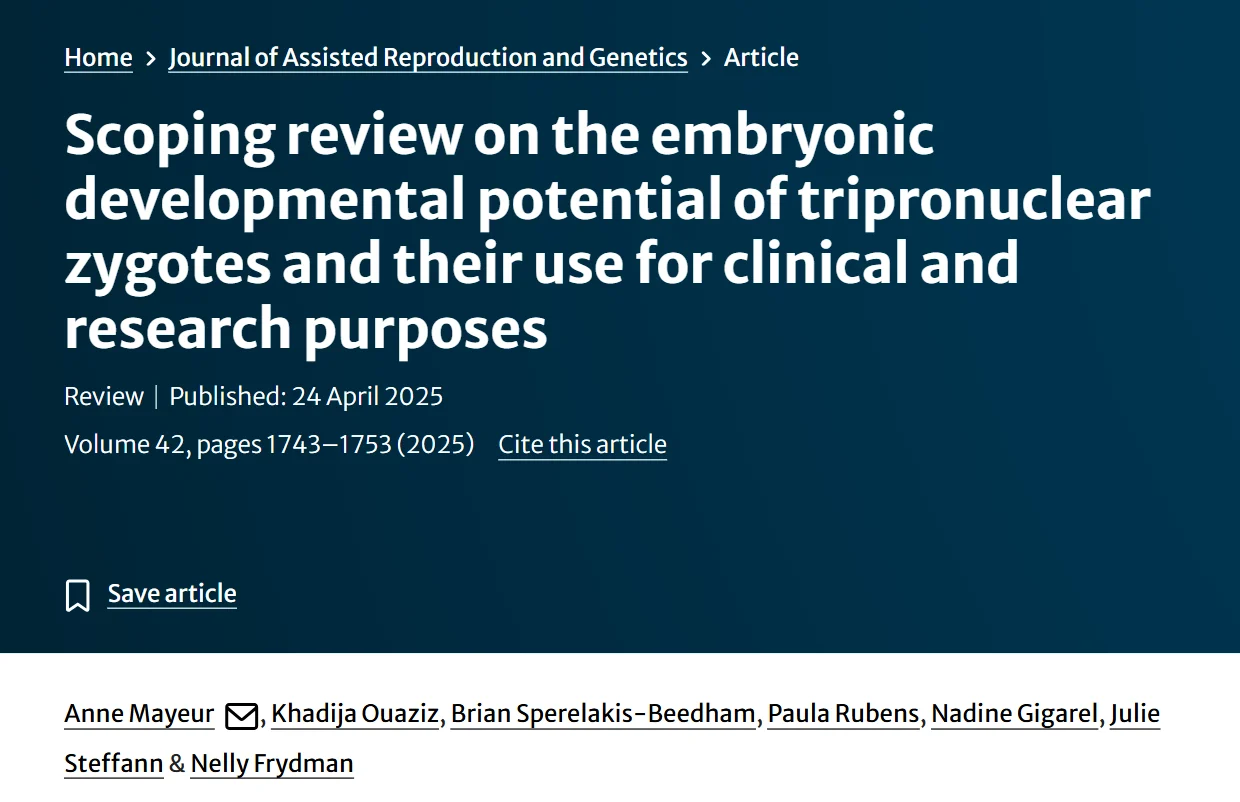
Title: Scoping review on the embryonic developmental potential of tripronuclear zygotes and their use for clinical and research purposes.
Authors: Anne Mayeur, Khadija Ouaziz, Brian Sperelakis-Beedham, Paula Rubens, Nadine Gigarel, Julie Steffann, Nelly Frydman
You can read the Full Article in the Journal of Assisted Reproduction and Genetics.
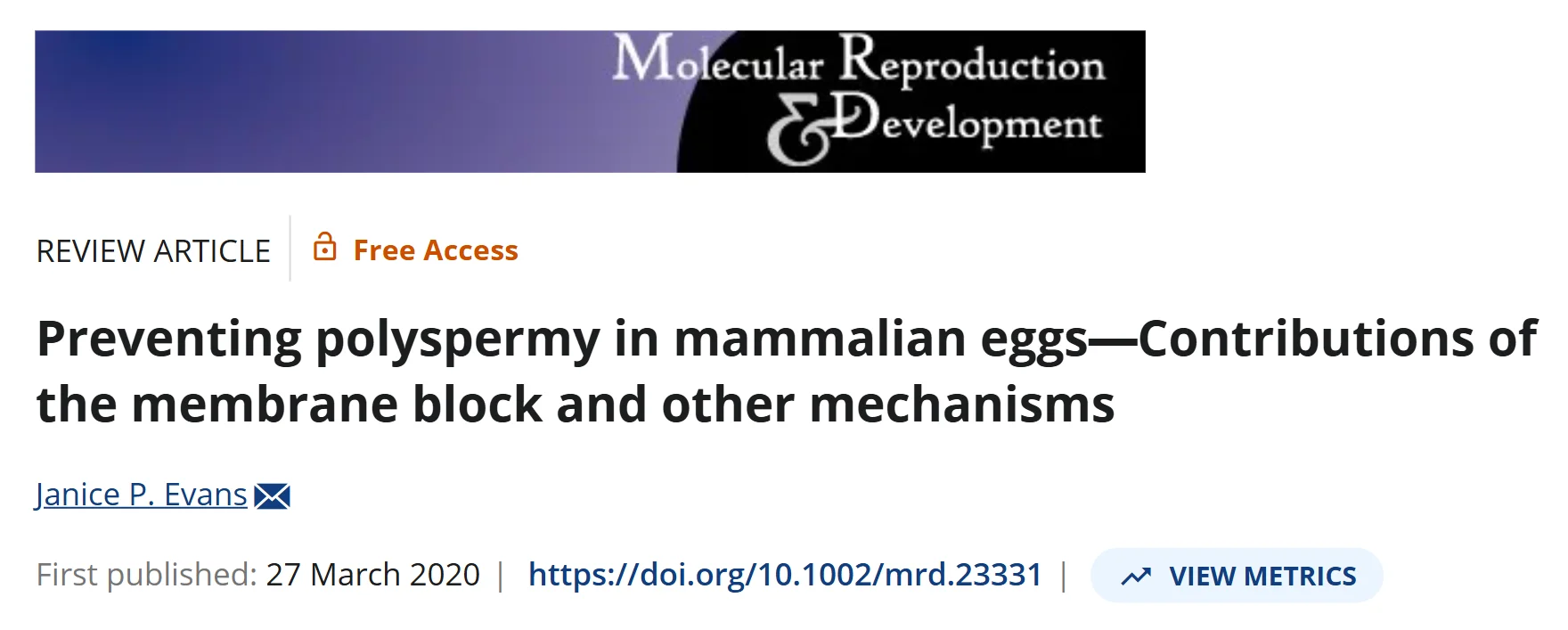
Title: Preventing polyspermy in mammalian eggs – Contributions of the membrane block and other mechanisms.
Author: Janice P. Evans
You can read the Full Article in Molecular Reproduction and Development.
Other articles featuring Bhumika on Fertility News.
-
Sep 14, 2026, 18:11Mahantesh Karoshi: Any Deep Myometrial Scar Needs Obstetric Planning in a Later Pregnancy
-
Sep 14, 2026, 18:08Smita Rana: Can Stress Affect Female Fertility?
-
Sep 14, 2026, 18:05Lucy Froese: Accepting That IVF Could Be My Path to Becoming a Mum Felt Enormous…
-
Sep 14, 2026, 18:01Jeffrey Deaton: 17-Minute Episode of Becker’s Healthcare Podcast on Leadership and the Future of Fertility Care
-
Sep 14, 2026, 17:58Esther Eleboh: 1 of the Most Mind-Blowing Things I’ve Witnessed in the IVF Laboratory…
-
Sep 14, 2026, 17:48Khalil Faaed: We Can Grade an Embryo, but Can We Really Predict Its Future?
-
Sep 14, 2026, 17:45Akanksha Khubbar: A Small Step Towards Smarter IVF Laboratories
-
Sep 14, 2026, 17:43Karthik Raj: Fertility Preservation Beyond Egg Freezing
-
Sep 14, 2026, 17:39Fertility Deserves to Be Part of the Conversation When Diagnosing Gynecologic Cancer – IGCS