

Mahnaz Fida: Beyond IVF – A Patient-Centred Journey from Fertility Assessment to Parenthood
Mahnaz Fida, Registrar at the IVF and Obstetrics and Gynecology Department at AlHayat Medical Center, shared on LinkedIn:
”Is IVF always the first answer to infertility?
Every fertility journey is different, and the path to parenthood should begin with understanding the cause of difficulty conceiving-not simply choosing an IVF protocol.
In my latest article, Beyond IVF: A Patient-Centred Journey from Fertility Assessment to Parenthood, I explore the different pathways to conception, from ovulation assessment and stimulation to timed intercourse, IUI and, when clinically appropriate, IVF.
I also discuss emerging developments in reproductive medicine, including artificial intelligence, time-lapse embryo imaging, precision ovarian stimulation and the importance of evidence-based innovation.
Because fertility care is not only about achieving pregnancy. It is about choosing the right treatment, protecting patient safety and supporting people through one of the most important journeys of their lives.
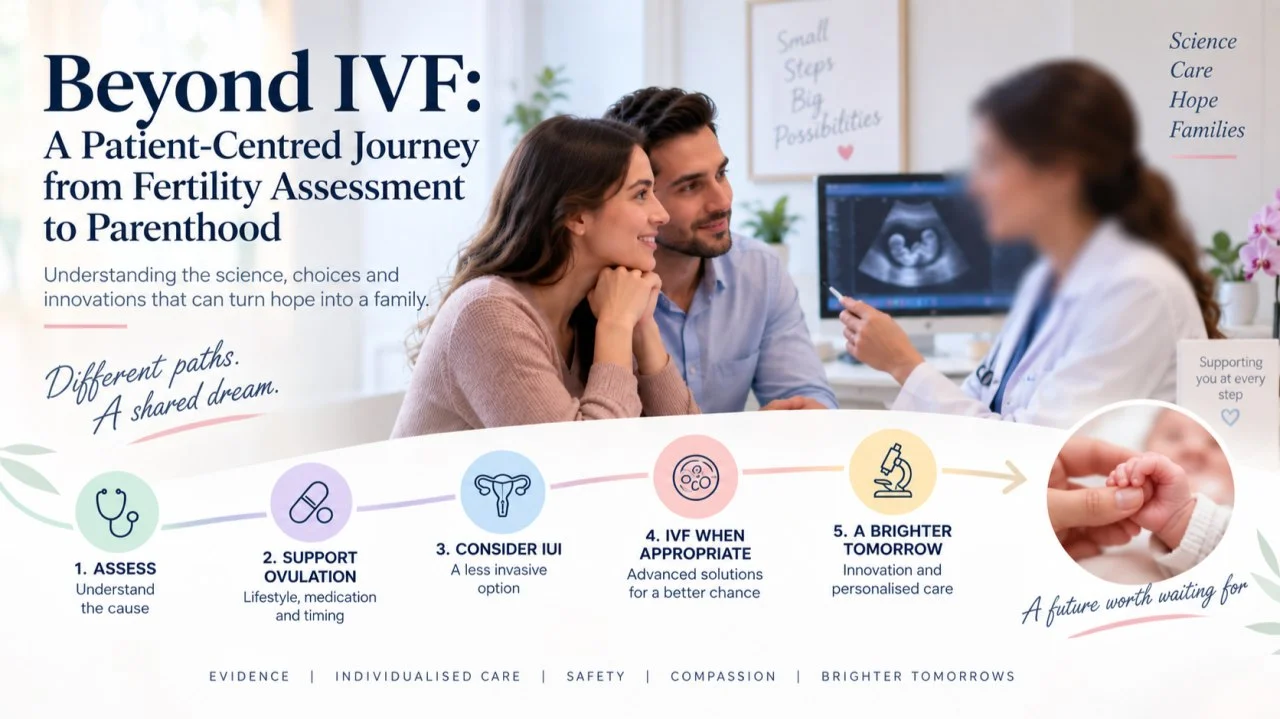
The journey begins long before IVF
For many women and couples, the decision to seek fertility treatment begins with a simple but deeply emotional question: Why am I not becoming pregnant?
Sometimes, conception has not occurred despite months of trying. Sometimes, menstrual cycles are irregular. There may be concerns about ovulation, sperm quality, age-related changes in fertility, endometriosis, tubal disease or previous medical treatment. In other situations, all the initial investigations appear reassuring, yet pregnancy remains elusive.
At this stage, one word often dominates the conversation: IVF.
In the public imagination, fertility treatment can seem like a straight road. First, a couple tries naturally. Then, perhaps, medicines are prescribed. If these do not work, IVF becomes the final destination.
But fertility care is not a single road. It is a journey with several possible pathways, and the most appropriate route depends on the individual.
The first question should not always be, ‘Which IVF protocol should we use?’
It should be:
‘What might be preventing conception, and what is the most appropriate, safe and evidence-based way forward for this person or couple?’
That change in perspective can transform fertility treatment from a procedure-centred experience into a patient-centred partnership.
1. Understanding the cause before choosing the treatment
The foundation of fertility care is a careful assessment of both partners, where applicable.
For the woman, this may include a detailed medical and reproductive history, menstrual-cycle assessment, evaluation of ovulation, pelvic ultrasound and selected hormonal investigations.
Ovarian reserve tests, including AMH and antral follicle count, can help clinicians understand how the ovaries may respond to stimulation. They do not, however, provide a complete prediction of whether a woman will become pregnant naturally or through IVF.
Assessment of the male partner is equally important. Semen analysis may identify issues involving sperm concentration, movement or morphology. In some circumstances, further assessment is needed.
The fallopian tubes, uterine cavity, previous pelvic surgery, endometriosis, medications, lifestyle factors and reproductive history may all influence the treatment plan.
There is no single investigation that explains every case of infertility.
Sometimes the cause is identifiable. Sometimes several factors coexist. Sometimes, after appropriate assessment, no clear explanation is found. This does not mean that the patient’s symptoms or experience are imaginary; it means that fertility biology is complex.
Good fertility care begins by acknowledging that complexity while avoiding unnecessary tests and treatments.
2. The ovulation pathway: Supporting conception without IVF
For some women, the principal difficulty is irregular or absent ovulation.
Ovulation is the release of an egg from the ovary. In a regular menstrual cycle, it occurs approximately once per cycle, although the precise timing varies. Pregnancy requires the availability of a viable egg, sperm capable of fertilisation, suitable reproductive anatomy and the right biological conditions.
When ovulation is absent or irregular, treatment may focus on restoring or supporting ovulation.
Lifestyle, timing and medical assessment
Where appropriate, clinicians may discuss weight, nutrition, exercise, smoking, alcohol, medications and other factors that can influence reproductive health. These conversations should be individualised and should never imply that infertility is simply a lifestyle failure.
Understanding the menstrual cycle can also help. The fertile window is not necessarily the same on every calendar date, and ovulation-prediction methods have limitations. A personalised approach may involve cycle tracking, ovulation-prediction testing, ultrasound or hormonal assessment.
Oral ovulation-induction medicines
For selected patients with anovulatory infertility, oral medicines such as letrozole may be used to support ovulation. The choice depends on the underlying diagnosis, contraindications, clinical guidance and the patient’s circumstances.
Treatment is not simply about prescribing a tablet. It involves assessing the response, explaining possible side effects, discussing the chance of multiple pregnancy where relevant, and determining when further investigation or a different treatment is appropriate.
Injectable stimulation and follicular monitoring
In selected situations, injectable gonadotrophins may be used to stimulate follicular development.
Follicles are fluid-filled structures in the ovary that contain developing eggs. Ultrasound monitoring allows the clinical team to observe follicular growth and assess the response to treatment.
A trigger injection may be used in an appropriate clinical setting to help coordinate ovulation. Timed intercourse may then be advised according to the treatment plan.
The goal is not to produce as many follicles as possible. The goal is to achieve an appropriate response while minimising avoidable risks, including ovarian hyperstimulation and multiple pregnancy.
This is an important distinction: more stimulation does not automatically mean better fertility care.
3. IUI: Another pathway between ovulation treatment and IVF
Intrauterine insemination, or IUI, is another option for selected patients.
In IUI, prepared sperm are introduced into the uterus around the time of ovulation. Depending on the clinical circumstances, IUI may be performed in a natural cycle or alongside ovarian stimulation.
It may be considered in particular cases of unexplained infertility, selected ovulatory disorders, some forms of mild male-factor infertility, or when donor sperm is appropriate and permitted under the relevant regulatory framework.
IUI is less invasive than IVF, but it is not suitable for everyone. Tubal factors, ovarian reserve, age, sperm quality and previous treatment history all influence whether it is a reasonable option.
It is also important to explain its limitations. IUI cannot overcome every cause of infertility, and it does not guarantee pregnancy.
For some couples, it can be a reasonable step before IVF. For others, proceeding directly to IVF may be more appropriate. The decision should be based on evidence, individual circumstances and informed discussion-not on the assumption that every patient must follow the same sequence.
4. When the laboratory becomes necessary
IVF is an important treatment, but it is not a universal final step after every other treatment has failed.
In conventional IVF, ovarian stimulation is used to develop follicles. Eggs are collected and brought together with sperm in the laboratory, where fertilisation may occur. Embryos are then cultured and assessed before an appropriate embryo-transfer plan is made.
In ICSI, a single sperm is injected directly into an egg. ICSI can be useful in selected circumstances, particularly certain forms of male-factor infertility or previous fertilisation difficulties. It is not automatically superior to conventional IVF for every patient.
Depending on the patient’s needs, the wider treatment pathway may also include:
- Fresh or frozen embryo transfer.
- Fertility preservation through egg or embryo freezing.
- Donor eggs or donor sperm.
- Treatment involving a gestational carrier where legally and clinically appropriate.
- Genetic counselling and selected forms of preimplantation genetic testing when indicated.
The decision to use one of these approaches should be based on a clear clinical rationale.
Embryo transfer and the importance of safety
A successful fertility service should not define success only by the number of eggs collected, embryos created or positive pregnancy tests.
The more meaningful questions include:
- Was the patient treated safely?
- Was the treatment appropriate for her age and clinical circumstances?
- Was the patient fully informed?
- Was the risk of multiple pregnancy considered?
- Was the embryo-transfer strategy consistent with good clinical practice?
- Did the treatment support a healthy pregnancy and, ultimately, a live birth?
When appropriate, single embryo transfer is an important strategy for reducing the risks associated with multiple pregnancy.
5. The hidden science of timing
One of the most fascinating aspects of reproductive medicine is that timing is both essential and individual.
Follicular development, hormonal changes, ovulation, fertilisation, embryo development and implantation occur through a sequence of highly coordinated biological events.
A treatment plan therefore cannot be based only on a fixed calendar.
Follicular monitoring may help clinicians assess the response to stimulation. Hormonal findings, ultrasound appearances and the patient’s clinical circumstances can influence decisions about treatment timing.
In frozen embryo transfer, the endometrial preparation strategy and the relationship between embryo development and endometrial receptivity must be considered carefully.
This is why fertility medicine requires more than technical skill. It requires observation, interpretation, communication and the ability to adapt a plan as new information becomes available.
6. The future of fertility: From protocols to precision
The next phase of reproductive medicine may not be defined by one revolutionary procedure. It may be defined by the gradual integration of better data, safer laboratory systems, more individualised stimulation and improved decision-making.
Some developments are already used in clinical practice. Others are promising but still require stronger evidence. A responsible fertility specialist should be able to distinguish between the two.
Artificial intelligence in embryology
Artificial intelligence is being explored as a tool to analyse embryo images, identify developmental patterns and support embryo assessment.
The potential is considerable. AI may help standardise aspects of image analysis, assist embryologists in reviewing large amounts of information and support more consistent decision-making.
However, an algorithm that predicts embryo appearance or developmental potential is not necessarily an algorithm that improves live-birth rates.
The critical question is not:
‘Can AI classify embryos?’
It is:
‘Can AI improve meaningful outcomes for patients while remaining reliable, transparent and clinically accountable?’
Future research should focus on prospective validation, diverse patient populations, independent assessment and outcomes that matter to families.
AI should support-not replace-the expertise, judgement and responsibility of the clinical and embryology team.
Time-lapse embryo imaging
Time-lapse systems allow embryos to be observed continuously within a specialised incubator environment.
This may provide detailed information about embryo development without the need for repeated removal from the incubator for observation.
The technology offers an attractive opportunity to study embryo development and potentially support selection. Nevertheless, more detailed images do not automatically translate into better live-birth outcomes.
The future value of time-lapse imaging will depend on how effectively the information is interpreted and whether its use improves patient outcomes in well-designed studies.
Precision ovarian stimulation
Ovarian stimulation is already individualised to some extent. In the future, treatment may become increasingly refined through the integration of age, ovarian reserve, previous response, clinical history, ultrasound findings and other validated information.
The aim should be to select an appropriate stimulation strategy for the individual patient-not to maximise medication, follicle numbers or egg yield at any cost.
Precision stimulation could help clinicians balance response, safety, patient experience and treatment efficiency.
The most valuable progress will be measured by appropriate treatment, reduced complications and improved cumulative outcomes-not by stimulation intensity alone.
Laboratory quality, culture and traceability
The IVF laboratory is central to reproductive medicine.
Embryo culture, cryopreservation, environmental stability, equipment monitoring, quality assurance and traceability all contribute to patient safety.
Technological improvements in incubators, environmental monitoring and laboratory information systems may help reduce avoidable variation and strengthen quality management.
The future laboratory may be more automated in selected processes, but automation must be accompanied by robust validation, contingency planning, staff training and human oversight.
In reproductive medicine, a small laboratory error can have profound consequences for a family. Therefore, innovation must always be connected to quality, accountability and safety.
Non-invasive approaches to embryo assessment
Researchers are investigating whether information from the embryo’s surrounding culture environment could help provide additional insights into embryo development or biological characteristics.
These approaches are scientifically interesting because they may offer ways to obtain information without requiring some forms of invasive embryo testing.
However, promising laboratory findings are not the same as proven clinical benefit. The reliability, accuracy, clinical utility, and ethical implications of such approaches require careful evaluation before widespread adoption.
Reproductive genetics and embryo testing
Genetic testing has an important role in selected fertility pathways, particularly where there is a known inherited genetic condition or a specific clinical indication.
At the same time, genetic testing is not a universal solution for infertility. It cannot guarantee implantation, pregnancy or a healthy baby, and its usefulness depends on the test, the indication and the clinical context.
Future developments in reproductive genetics may improve the understanding of inherited disease and embryo biology. They will also require careful consideration of counselling, consent, regulation and ethical responsibility.
7. Potential developments to watch in 2026 and 2027
The period ahead may bring meaningful progress in several areas of fertility care.
1. More clinically validated AI tools. Rather than relying on impressive retrospective performance alone, future studies may increasingly examine whether AI improves embryo selection, laboratory workflow and patient outcomes in real-world clinical settings.
2. Better integration of clinical and laboratory data. Combining ovarian-response information, ultrasound findings, embryology observations and patient characteristics may support more coherent decision-making, provided that data quality, privacy and clinical validation are maintained.
3. More refined ovarian stimulation. Treatment protocols may become better adapted to individual ovarian response, with continued emphasis on safety, prevention of complications and patient experience.
4. Smarter laboratory quality systems. Digital traceability, automated monitoring, equipment alerts and improved quality-management processes may strengthen the reliability of IVF laboratories.
5. Improved fertility preservation. Continued development in cryopreservation, counselling and patient selection may help individuals make more informed decisions about preserving reproductive potential.
6. Advances in reproductive genetics. Better understanding of genetic disease and embryo biology may expand selected clinical applications, while raising important questions about interpretation and ethical boundaries.
7. Research into in-vitro gametogenesis. Scientists are investigating whether eggs or sperm might one day be generated from other cell types. This could have profound implications for reproductive medicine, but it remains an experimental field. It should not be presented as a routine fertility treatment available to patients today.
The most important development may be a cultural one: moving away from the idea that technological sophistication automatically means better care.
The future of fertility medicine should combine innovation with humility.
8. Beyond pregnancy rates: What should success mean?
A fertility journey can be physically demanding, emotionally exhausting and financially difficult.
Patients may experience uncertainty, disappointment, anxiety, grief after treatment failure and fear about the future. These experiences deserve recognition within clinical care.
A modern fertility service should therefore consider more than pregnancy rates.
It should consider patient-reported experience, emotional wellbeing, informed consent, treatment burden, safety, financial transparency and cumulative outcomes.
The language used by clinicians matters. A patient should not feel that she has failed because a treatment did not work. Nor should a clinician imply that IVF is a guarantee or that a more expensive intervention is automatically a better intervention.
A compassionate consultation should explain the options clearly, acknowledge uncertainty honestly and allow the patient to participate meaningfully in decisions.
Scientific knowledge and emotional support are not competing priorities. They are essential parts of good fertility care.
9. A shared decision about the next step
Every fertility journey is different.
For one woman, restoring ovulation may be the most appropriate first step. For another, IUI may offer a reasonable treatment option. For someone with significant tubal disease, severe male-factor infertility or another specific indication, IVF may be the most appropriate pathway without unnecessary delay.
Some patients may need fertility preservation. Others may require donor treatment, genetic counselling or a more specialised multidisciplinary approach.
There is no single definition of the ‘right’ treatment that applies to everyone.
The responsibility of the fertility team is to understand the patient’s circumstances, explain the available evidence, identify the risks and benefits, and develop a plan that is clinically appropriate and personally meaningful.
10. IVF Add-Ons: When Hope Meets Evidence
Fertility treatment is an area where scientific innovation and patient hope often meet. When a couple has experienced repeated unsuccessful treatment, it is understandable that they may explore additional procedures that promise to improve implantation, ovarian function or the chance of pregnancy.
Some of these approaches are biologically interesting. Others have been investigated in clinical trials for many years. However, a plausible biological mechanism does not automatically mean that a treatment improves the chance of a healthy baby.
Two frequently discussed examples are endometrial scratching and intraovarian platelet-rich plasma (PRP).
Endometrial scratching: Can an injury to the uterine lining improve implantation….???? many pt asked this question.
Endometrial scratching, also called endometrial injury, involves making a small mechanical injury to the lining of the uterus, usually with a specialised catheter.
The proposed theory is that a local injury might trigger tissue repair, inflammatory signalling or changes in the endometrial environment that could support embryo implantation.
It is an intriguing hypothesis. However, the important clinical question is whether this procedure consistently improves outcomes for patients undergoing IVF.
Current evidence does not support offering endometrial scratching routinely to every IVF patient. The UK National Institute for Health and Care Excellence (NICE) reviewed the evidence in 2026 and highlighted continuing uncertainty about its effectiveness. The Human Fertilisation and Embryology Authority also emphasises the importance of understanding the evidence behind fertility treatment add-ons.
Endometrial scratching may be discussed in selected circumstances, but it should not be presented as a proven solution for recurrent implantation failure or unsuccessful IVF.
The lesson is important: a treatment can be scientifically interesting without being routinely beneficial.
Ovarian PRP: Regeneration, rejuvenation or an unanswered question?
Platelet-rich plasma is prepared from a patient’s own blood. The blood is processed to concentrate platelets and their associated growth factors.
Intraovarian PRP involves introducing this preparation into ovarian tissue. Researchers have proposed that the growth factors may influence local tissue signalling, the ovarian microenvironment or follicular activity.
Conclusion: IVF is one tool in a much bigger journey
IVF has transformed reproductive medicine and has helped many families achieve parenthood. It remains one of the most important tools available to fertility specialists.
But IVF should not overshadow the many other pathways that may support conception.
The journey may begin with understanding the menstrual cycle, assessing ovulation, supporting natural conception, using oral medicines, monitoring follicular development, considering IUI or investigating a specific underlying condition.
When IVF is appropriate, it should be offered not as a symbol of failure, but as a carefully considered treatment that may provide a valuable opportunity for parenthood.
The future of fertility medicine will depend on clinicians who can combine scientific knowledge with sound judgement, laboratory teams who place safety at the centre of innovation, and healthcare services that understand the emotional meaning of every treatment decision.
Ultimately, the goal is not simply to perform more procedures.
It is to provide the right care, for the right patient, at the right time-with evidence, compassion and hope.”
Stay informed with the latest updates in fertility and reproductive medicine on Fertility News.
-
Sep 19, 2026, 17:48Gaurav Gangwani: 40% of Infertile Men Have Varicocele, but Some Fertility Doctors Don’t Screen for It Routinely
-
Sep 19, 2026, 17:45Steven Leist: No One Should Have to Navigate the Path to Parenthood Alone
-
Sep 19, 2026, 17:43Gautam Allahbadia: An Embryo’s Journey Doesn’t Always Follow a Perfectly Predictable Path
-
Sep 19, 2026, 17:41Aumatma Simmons: Fertility Progress Isn’t Always All-or-Nothing
-
Sep 19, 2026, 17:37Emre Seli: Useful Information for Counseling Patients After an IVF Cycle with Complete Embryo Developmental Arrest
-
Sep 19, 2026, 17:34Lucas Almoño: When a Team Is Built with Outstanding People, the Impact Is Even Greater
-
Sep 19, 2026, 17:31MEFS 2026 Is Where Knowledge Moves Forward
-
Sep 19, 2026, 17:30Baroness Geeta Nargund: Speaking About the Urgent Need for Fertility Education in the UK House of Lords
-
Sep 19, 2026, 17:16Thought-Provoking Start to the Day in Birmingham at the Annual ARCS Symposium