
Post-Warming Embryo Culture: Does Every Embryo Need More Time?
“After vitrification and warming, one of the most practical questions in the IVF laboratory is whether an embryo should be transferred soon after warming or given additional time in culture.
The answer is increasingly difficult to reduce to a single number of hours.
A Day-2 embryo, a Day-3 embryo and an established Day-5/6 blastocyst do not enter the post-warming environment at the same developmental state. The purpose of additional culture may therefore differ substantially between them.
A 2026 systematic review and meta-analysis by Cahen-Peretz et al. examined 14 studies involving 17,415 vitrified frozen embryo-transfer cycles and evaluated post-thaw culture according to developmental stage. The analysis compared extended culture, generally defined as 18–48 hours, with shorter post-warming strategies across Day-2, Day-3, and Day-5/6 embryos (Cahen-Peretz et al., 2026).
The findings provide an important message for clinical embryology: post-warming culture should be considered according to embryo stage rather than applied as a uniform laboratory habit.
Why does embryo stage matter after warming?
Warming reverses the physical state of vitrification, but it does not reset embryonic development.
A cleavage-stage embryo continues through developmental transitions after warming. Additional culture can therefore provide an opportunity to observe further cleavage or, in selected Day-3 strategies, development toward the blastocyst stage.
An already established blastocyst is different. Major developmental transitions have already occurred before cryopreservation, so additional culture after warming serves a different biological purpose.
The 2026 meta-analysis separated the evidence into four stage-specific comparisons:
- Day-2 extended culture: 3 studies, 879 cycles
- Day-3 extended culture: 3 studies, 11,204 cycles
- Day-3 embryos cultured to Day 5/6: 4 studies, 1,449 cycles
- Day-5/6 blastocyst extended culture: 4 studies, 3,883 cycles
The evidence included randomized and prospective as well as retrospective studies. Consequently, the size of the pooled dataset is impressive, but the findings still require interpretation according to study design and potential confounding (Cahen-Peretz et al., 2026).
This distinction becomes particularly important when translating statistical associations into laboratory policy.
What does the 2026 evidence show for Day-2 and Day-3 embryos?
The findings for cleavage-stage embryos are not uniform.
For Day-2 embryos, extended culture was associated with a lower clinical pregnancy rate than shorter post-warming culture. Across three studies involving 879 cycles, the pooled relative risk was 0.689 (95% CI 0.569–0.835) (Cahen-Peretz et al., 2026).
This does not mean that every Day-2 embryo must automatically be transferred immediately. The evidence base is relatively small, and laboratory and clinical characteristics may influence outcomes.
For Day-3 embryos, the direction was different. Extended culture was associated with a higher live birth rate, with a pooled RR of 1.076 (95% CI 1.034–1.119) across three studies involving 11,204 cycles (Cahen-Peretz et al., 2026).
The largest pooled association was observed in the Day-3-to-Day-5/6 comparison, where four studies involving 1,449 cycles reported a live-birth RR of 1.229 (95% CI 1.008–1.499) (Cahen-Peretz et al., 2026).
However, this finding needs particular care.
It is not simply a comparison of ‘more hours versus fewer hours’ in otherwise identical embryos. The intervention involved embryos cryopreserved at the cleavage stage and subsequently cultured to the blastocyst stage, whereas the comparator involved embryos already cryopreserved at the blastocyst stage.
Developmental stage at cryopreservation, embryo selection, and the biological process of reaching the blastocyst stage are therefore all part of the comparison.
This matters because culturing a Day-3 embryo for additional hours and culturing a Day-3 embryo until blastocyst formation are biologically different strategies.
The former provides additional recovery time. The latter introduces an additional developmental checkpoint.
That distinction is easy to lose when a pooled relative risk is presented without its clinical context.
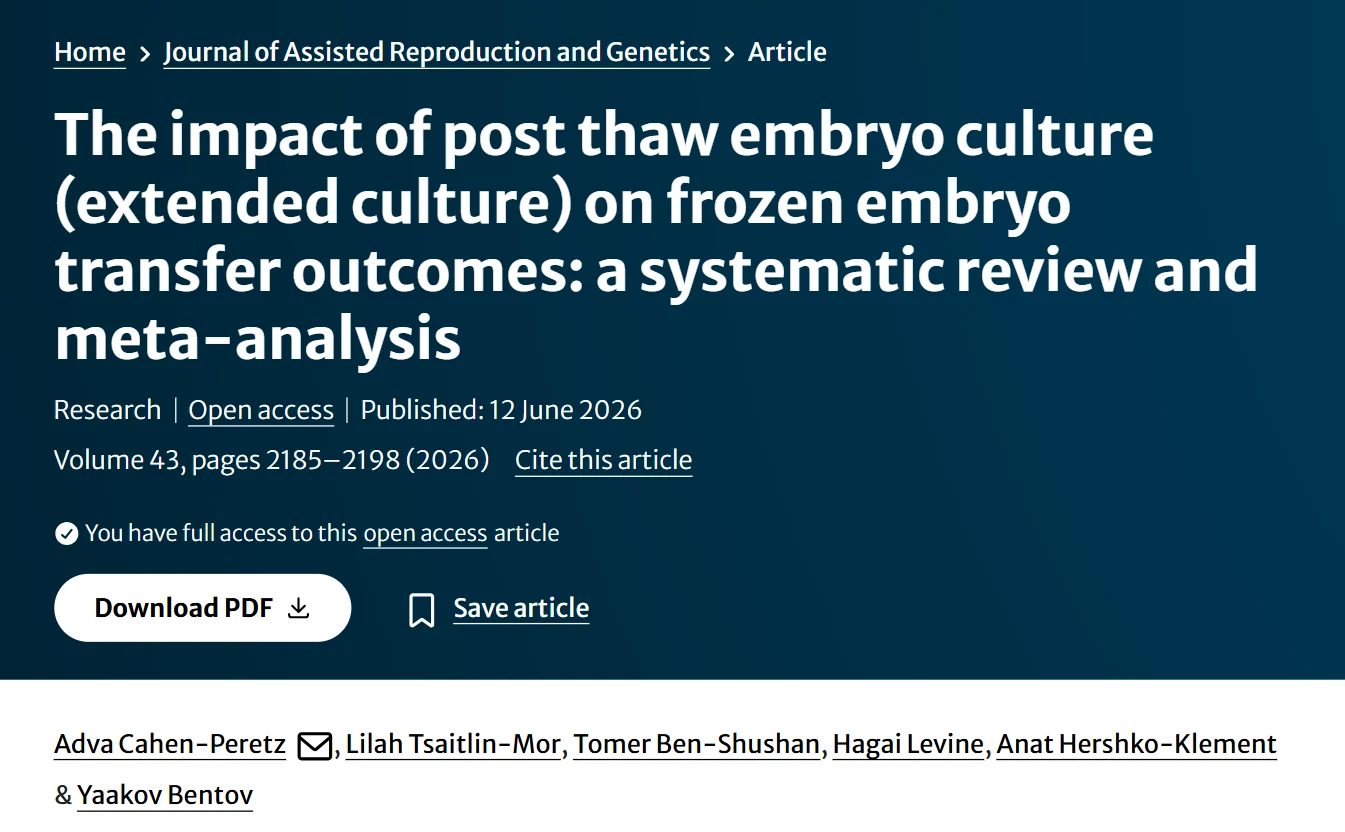
The evidence is also not exclusively observational. Earlier randomized evidence provides an important counterpoint. In a randomized study of vitrified-warmed Day-3 embryos, Jin et al. compared approximately 16–18 hours of extended culture with approximately 2 hours of culture and found no significant differences in clinical pregnancy, implantation or live birth (Jin et al., 2013).
The broader lesson is therefore not that longer culture is universally beneficial for Day-3 embryos. Rather, the clinical purpose and developmental endpoint of the culture strategy matter.
Does an established blastocyst benefit from prolonged culture?
The evidence becomes considerably less supportive of prolonged culture once the embryo has already reached the blastocyst stage.
In the 2026 meta-analysis, extended culture of Day-5/6 blastocysts showed no significant improvement in live birth, with a pooled RR of 1.004 (95% CI 0.858–1.175) (Cahen-Peretz et al., 2026).
This finding is particularly interesting because additional culture can visibly demonstrate further blastocyst recovery.
Re-expansion and hatching may increase during post-warming culture, but these observations do not necessarily translate into improved reproductive outcomes.
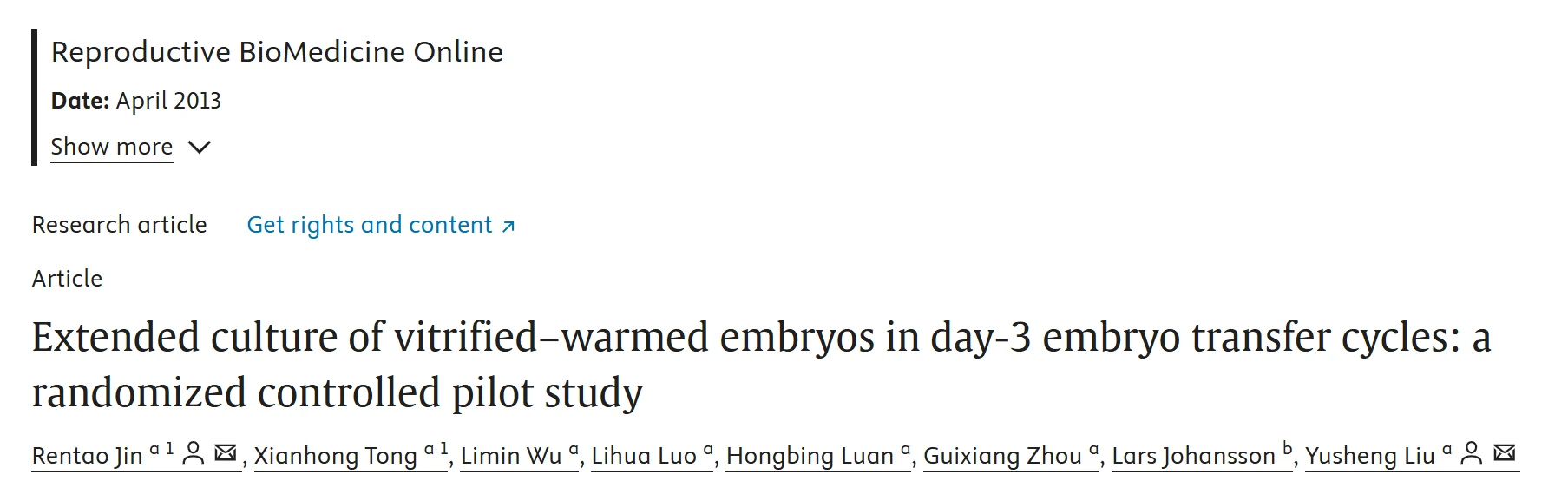
This distinction was illustrated by randomized evidence from Herbemont et al. In their prospective randomized study of vitrified good-quality blastocyst transfers, longer post-warming culture increased re-expansion and hatching, but implantation and live birth were similar between groups (Herbemont et al., 2018).
Therefore: Post-warming morphological recovery is not equivalent to reproductive benefit.
An embryo that re-expands more rapidly or begins hatching during additional culture is demonstrating a laboratory phenotype. Live birth is a clinical endpoint.
Those endpoints should not be treated as interchangeable.
Contemporary observational evidence also supports caution. Park et al. evaluated 1,551 vitrified-warmed blastocyst transfer cycles and found no overall statistically significant association between post-warming culture duration and major clinical outcomes after adjustment (Park et al., 2025).
Taken together, the evidence does not support prolonged post-warming culture as a routine strategy for every established blastocyst.
How should laboratories translate the evidence into practice?
The most useful implication of the current evidence is not a universal culture timetable.
It is a stage-specific decision framework.
For cleavage-stage embryos, additional culture can provide developmental information that is not available immediately after warming. For Day-3 embryos, culture through to blastocyst formation may provide an additional selection point, but it also introduces the possibility that an embryo does not progress sufficiently for transfer.
That potential attrition is important.
An apparent benefit among embryos that successfully reach blastocyst stage does not necessarily mean that every patient has a higher probability of reaching transfer. The denominator changes when embryos are exposed to an additional developmental selection point.
For established blastocysts, the rationale for prolonged culture is different. Additional time may demonstrate recovery, re-expansion or hatching, but current evidence does not demonstrate a corresponding live-birth advantage (Cahen-Peretz et al., 2026).
Laboratory practice must also remain connected to the quality of the culture system itself.
The 2026 ESHRE Good Practice recommendations address IVF-laboratory organization, quality management, traceability, handling of biological material, embryo culture and transfer, cryopreservation and other core laboratory procedures. The recommendations provide a framework for good laboratory practice rather than a single universal post-warming culture duration for every embryo (ESHRE Good Practice in the IVF Lab Working Group et al., 2026).
This is an important distinction.
Evidence should inform laboratory protocols, but protocols also require local validation, quality monitoring and consistency of implementation.
The 2026 evidence therefore moves the discussion beyond the simple question of whether post-warming culture should be ‘short’ or ‘long’.
For Day-2 embryos, the pooled evidence favors shorter culture with respect to clinical pregnancy. For Day-3 embryos, extended culture is associated with improved live birth in the pooled analysis, while the Day-3-to-blastocyst comparison shows the largest association. For established Day-5/6 blastocysts, prolonged culture does not demonstrate a significant live-birth benefit (Cahen-Peretz et al., 2026).
The evidence is consequently better understood as stage-specific rather than time-specific.
The modern laboratory question is not simply:
‘How long should we culture after warming?’
It is:
‘What are we expecting additional culture to reveal or achieve for this embryo—and does the evidence justify the additional time?’
That may be the more useful way to think about post-warming embryo culture in 2026.”
Written by Saadat Hassan
Senior Clinical Embryologist/IVF and Embryology
BSc (Hons) Medical Laboratory Technology
King Edward Medical University, Lahore, Pakistan
References
Title: The impact of post-thaw embryo culture (extended culture) on frozen embryo transfer outcomes: a systematic review and meta-analysis
Authors: Adva Cahen-Peretz, Lilah Tsaitlin-Mor, Tomer Ben-Shushan, Hagai Levine, Anat Hershko-Klement, Yaakov Bentov
You can read the Full Article in the Journal of Assisted Reproduction and Genetics.
Title: Extended culture of vitrified-warmed embryos in day-3 embryo transfer cycles: a randomized controlled pilot study
Authors: Rentao Jin, Xianhong Tong, Limin Wu, Lihua Luo, Hongbing Luan, Guixiang Zhou, Lars Johansson, Yusheng Liu
You can read the Full Article in Reproductive BioMedicine Online.
Title: Impact of post-warming culture duration on clinical outcomes of vitrified good-quality blastocyst transfers: a prospective randomized study
Authors: Charlène Herbemont, Sarah Chekroune, Sarah Bonan, Isabelle Cedrin-Durnerin, Alexandre Vivot, Charlotte Sonigo, Jeremy Boujenah, Michael Grynberg, Christophe Sifer
You can read the Full Article in Fertility and Sterility.
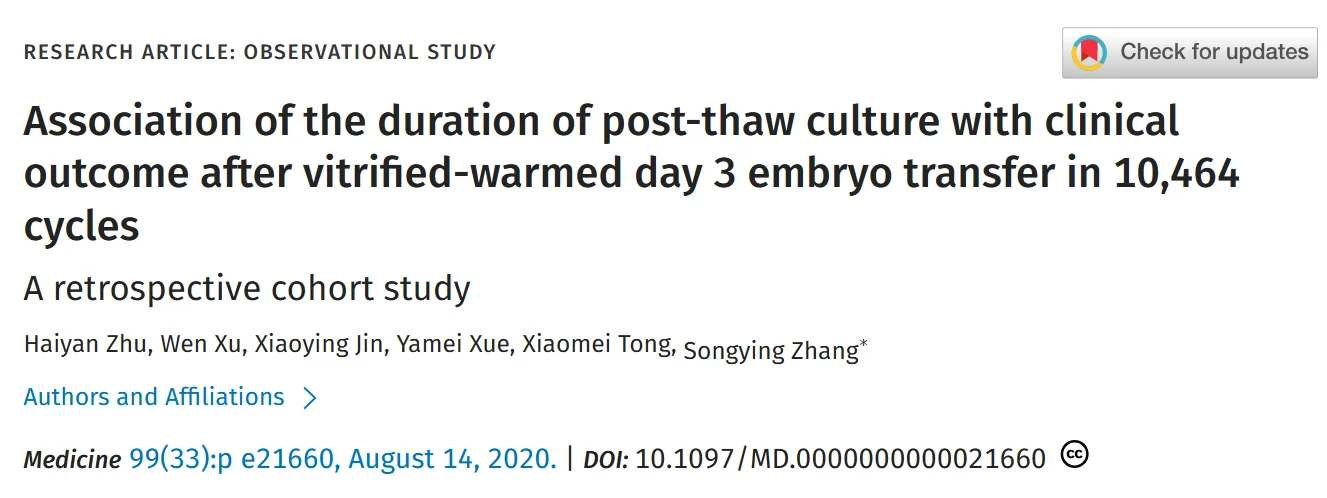
Title: Association of the duration of post-thaw culture with clinical outcome after vitrified-warmed day 3 embryo transfer in 10,464 cycles
Authors: Haiyan Zhu, Wen Xu, Xiaoying Jin, Yamei Xue, Xiaomei Tong, Songying Zhang
You can read the Full Article in Medicine (Baltimore).
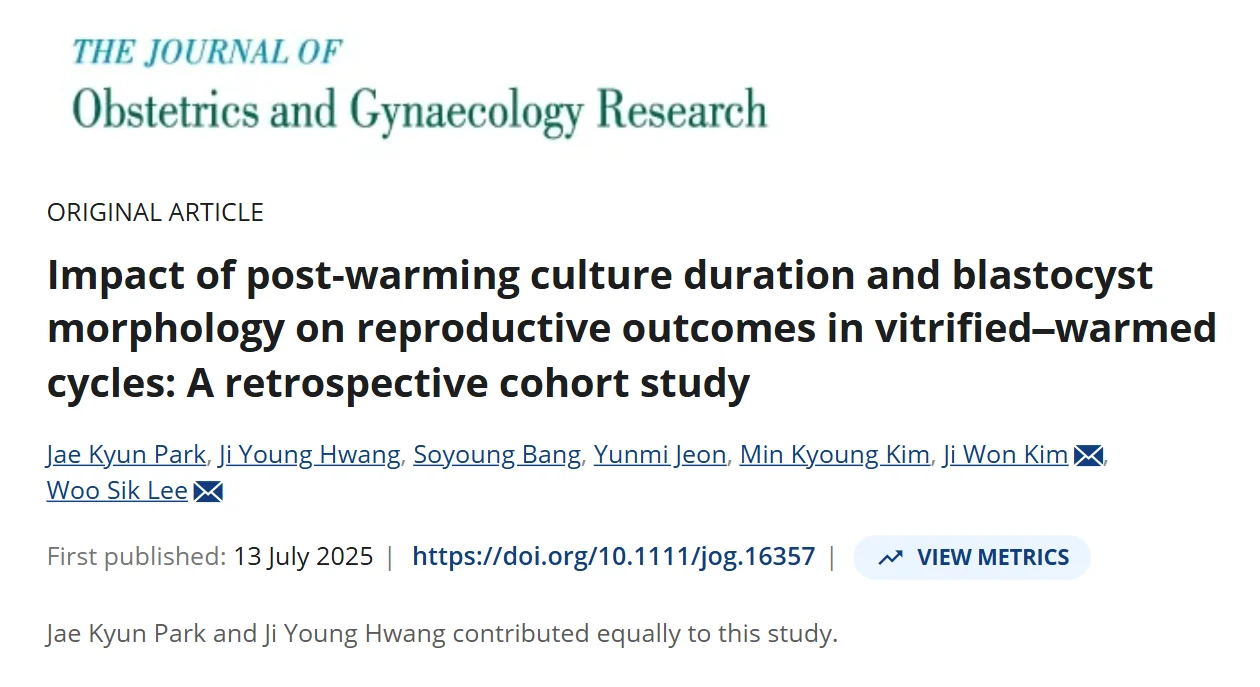
Title: Impact of post-warming culture duration and blastocyst morphology on reproductive outcomes in vitrified–warmed cycles: A retrospective cohort study
Authors: Jae Kyun Park, Ji Young Hwang, Soyoung Bang, Yunmi Jeon, Min Kyoung Kim, Ji Won Kim, Woo Sik Lee
You can read the Full Article in the Journal of Obstetrics and Gynaecology Research.
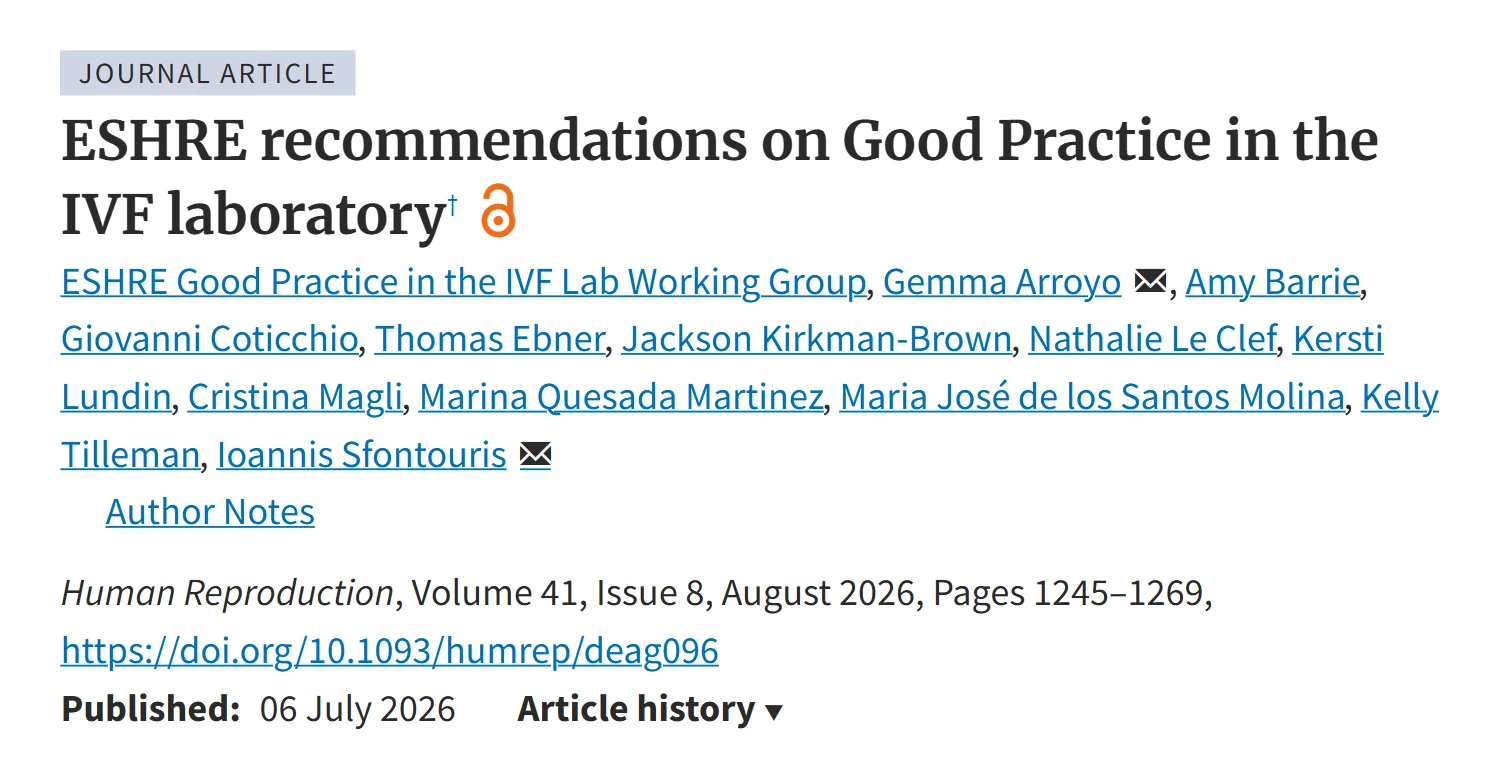
Title: ESHRE recommendations on Good Practice in the IVF laboratory
Authors: ESHRE Good Practice in the IVF Lab Working Group, Gemma Arroyo, Amy Barrie, Giovanni Coticchio, Thomas Ebner, Jackson Kirkman-Brown, Nathalie Le Clef, Kersti Lundin, Cristina Magli, Marina Quesada Martinez, Maria José de los Santos Molina, Kelly Tilleman, Ioannis Sfontouris
You can read the Full Article in Human Reproduction.
Other articles featuring Saadat Hassan on Fertility News.
-
Oct 3, 2026, 18:27Non-Invasive Prenatal Testing: Science, Counselling, Global Access and Equity – IJGO
-
Oct 3, 2026, 18:19Erica Marsh: Congratulations to the 4 Doctors Who Were Named 2026 Top Docs by Hour Detroit Magazine
-
Oct 3, 2026, 18:16Shizuko Takahashi: What about the “Biological Clock” in Men?
-
Oct 3, 2026, 18:11Devyanshi Dixit: Call for Speakers for GFWH 2026
-
Oct 3, 2026, 18:06Shaun Greenaway: The More We Understand Male Fertility, the Better Decisions We Can Make
-
Oct 3, 2026, 17:55Reproductive BioMedicine Online’s Latest Issue, 53.4, Is Out
-
Oct 3, 2026, 17:50Ananya Anand Kumar: Excited to Share that My Cryopreservation Abstract Was Accepted for Fertility 2027
-
Oct 3, 2026, 17:48Pregnancy of the Future: Predicting, Preventing, and Treating the Great Obstetric Syndromes – SMFM
-
Oct 3, 2026, 17:46PMOS Was Never Just About the Ovaries… – PCOS Awareness Association