

Devyanshi Dixit: What If Chronic Pelvic Pain Isn’t Just an Organ Problem?
Devyanshi Dixit, Program Manager at CLS Event and Publication and Conference Manager at the 12th Global Summit on Gynecology, Fertility and Women’s Health, shared on LinkedIn:
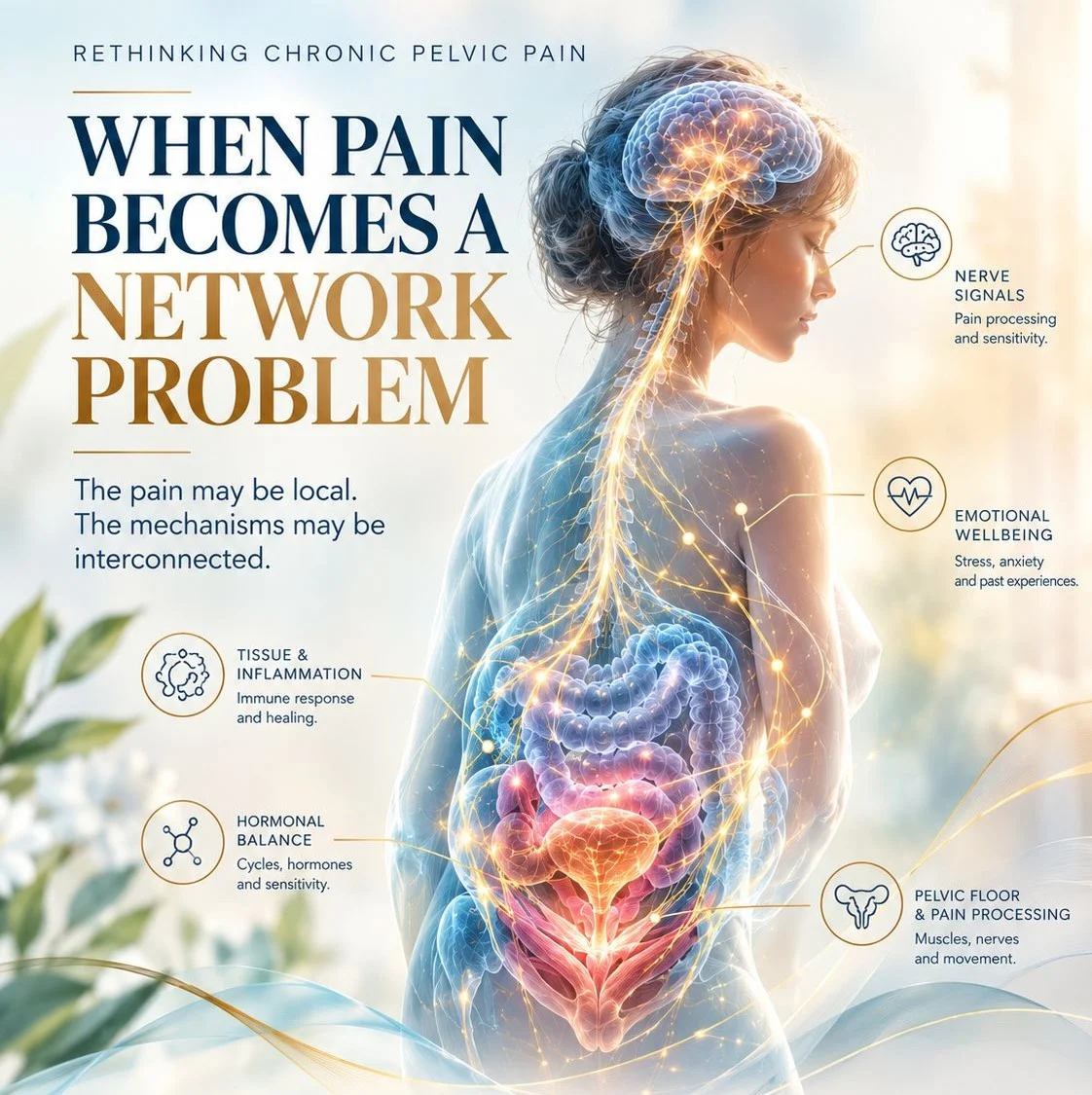
“What if chronic pelvic pain isn’t just an organ problem – but a network problem?
- The uterus.
- The bladder.
- The bowel.
- The pelvic floor.
- The brain.
What if the key to understanding persistent pelvic pain lies in the connections between them?
Here’s a fascinating possibility: pain can continue not only because of what is happening in the body, but also because of how the nervous system processes those signals.
How does the network work?
1. The signals overlap
Pelvic organs share and interact through complex nerve pathways.
That’s one reason pain from different structures can feel similar and why endometriosis, bladder pain, bowel symptoms, and pelvic floor dysfunction may overlap.
2. The alarm can become amplified
In some people, the nervous system becomes more sensitive to pain signals, a process known as central sensitization. Pain may persist or feel more intense even after the original trigger has improved.
3. The brain influences the experience
The brain interprets incoming signals in the context of sleep, stress, previous pain, and other experiences. This does not mean the pain is imaginary. It means pain is a real, complex experience shaped by the entire nervous system.
4. One problem can reinforce another
Pain may cause pelvic muscles to tighten. Muscle tension can create more discomfort. Poor sleep can make pain harder to manage. Over time, these factors may reinforce one another.
And suddenly, treating just one part of the system may not be enough.
Depending on the underlying causes, care may involve:
- Investigating conditions such as endometriosis or bladder disorders
- Assessing pelvic floor muscles and nerve-related symptoms
- Using appropriate medical and pain-management strategies
- Addressing sleep, function, and psychological wellbeing as part of comprehensive care
The goal isn’t to replace one explanation with another. It’s to understand the full picture.
- GFWH 2026
- November 23-24
- Bangkok, Thailand and Virtual Participation.”
Other articles featuring Devyanshi Dixit on Fertility News.
-
Oct 21, 2026, 17:57Ula Sankowska: What I’ll Bring to ASRM INNOVATE in Baltimore
-
Oct 21, 2026, 17:40Robert Borowczyk: The Invisible Waiting Room
-
Oct 21, 2026, 17:35Fereshteh Safian: Behind the Scenes of Reproductive Medicine
-
Oct 21, 2026, 17:20The Relationship Between Trophectoderm Biopsy and Early Pregnancy Outcomes – RBMO
-
Oct 21, 2026, 17:09Jules McDonald: The Future of Fertility Is Happening in Abu Dhabi
-
Oct 21, 2026, 16:53Ashley Evans: I Never Imagined I’d Be a Fertility Story with a Group of People Whom I Have Never Met…
-
Oct 21, 2026, 16:41Karthik Raj: Asherman’s Syndrome – When the Endometrium Cannot Regenerate Normally
-
Oct 21, 2026, 16:36Katy Encalade: A Few Misconceptions I Think Every Woman Considering Egg Donation Deserves to Understand
-
Oct 21, 2026, 16:21The FeRGI Working Group 2026-2027 – ESHRE SIG Reproductive Genetics