
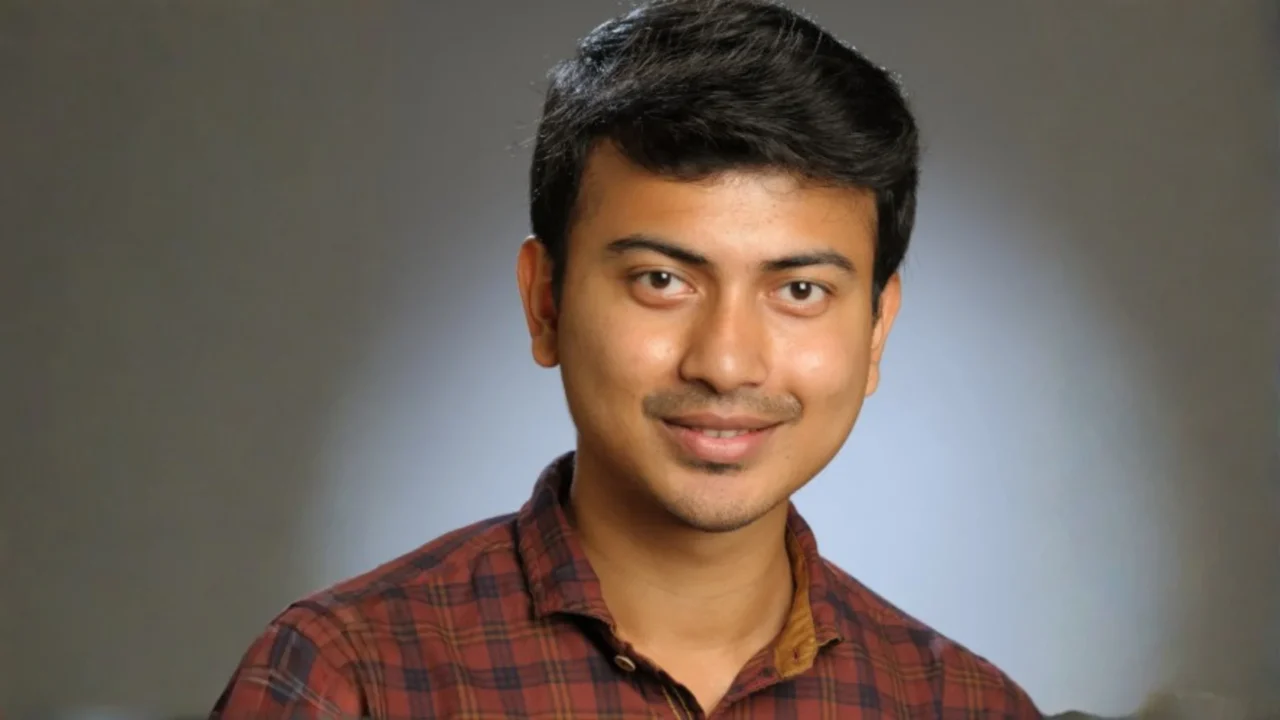
Debojit Saha: Unraveling Chromosomal Errors in Aging Human Eggs
Debojit Saha, Postdoctoral researcher at Max Planck Institute for Multidisciplinary Sciences, shared a post by Melina Schuh, Director at Max Planck Institute for Multidisciplinary Sciences, on LinkedIn:
“I am thrilled to see my first-author PhD work online as a preprint! So excited to share this work, a major milestone from my years of research in the Schuh Lab and Max Planck Institute for Multidisciplinary Sciences.
Aneuploidy in human eggs rises sharply with age and is a major cause of infertility, IVF failure, and miscarriage. In this study, we show that these chromosome errors are driven by premature sister chromatid separation (PSSC), caused by age-dependent loss of centromeric cohesion.
We uncover a key mechanism: oocytes rely on ongoing transcription at centromeric regions to maintain the cohesion protectors Shugoshin 1 (SGO1) and PP2A at centromeres. With age, this transcription declines, centromeric cohesion protection is lost, leading to PSSC. Importantly, restoring SGO1 in aged mouse and human eggs improves centromeric protection and reduces chromosome errors to youthful levels.
Notably, in patients’ donated human oocytes, SGO1 supplementation nearly halved the proportion of eggs with chromosomal errors, increasing the fraction of error-free eggs from ~47% to ~71%.
I am deeply grateful to Melina Schuh for her mentorship and guidance, and thankful to all my co-authors for the brilliant teamwork and support, especially Saba Manshaei and Agata Zielinska, who are now translating these findings into improved IVF treatments at Ovo Labs, as well as our clinical collaborators at Bourn Hall Infertility Clinic and Reprofit International s.r.o., and all the patients who made this study possible.
Dive into more details here
Preprint.”
Quoting Melina Schuh’s post:
“Every human egg must preserve chromosome cohesion for decades — and when this fails, the consequences are infertility, IVF failure, miscarriage, and aneuploidy.
In our new preprint on bioRxiv we uncover why chromosome cohesion fails in aging human eggs — and how it can be improved.
We discovered that eggs rely on ongoing transcription at centromeric regions to retain the cohesion protector Shugoshin 1 (SGO1). With age, this transcription declines, SGO1 is lost from chromosomes, and sister chromatids separate prematurely.
Importantly, restoring SGO1 levels in aged mouse and human eggs improves centromeric cohesion and reduces abnormal chromosomes to youthful levels.
This identifies centromeric cohesion protection as a determinant of egg quality and provides the first evidence that a targeted molecular intervention can improve chromosome integrity in human eggs – with clear implications for assisted reproduction and IVF.
Huge thanks to Debojit Saha for leading this work, to all our co-authors, including Agata Zielinska and Saba Manshaei who are now translating these findings into improved IVF treatments at Ovo Labs, to our clinical collaborators at Bourn Hall Clinic and Reprofit International, and the patients who made this study possible.
Preprint.”
Stay updated on all scientific advances in the field of fertility with Fertility News.
-
Sep 13, 2026, 15:11Sachintha Alwis: From Impaired Sperm Motility to Microrobotics
-
Sep 13, 2026, 15:08Laurence Orbuch: Before Endometriosis Surgery, Ask…
-
Sep 13, 2026, 15:05Ademola Ayodele: IUI, IVF or Egg Freezing – Which One Is Right for You?
-
Sep 13, 2026, 14:59Fiona Pathiraja-Møller: Tennis Players No Longer Have to Choose Between Career and Family
-
Sep 13, 2026, 14:571-Day Virtual Experience for People Impacted by PMOS – PCOS Awareness Association
-
Sep 13, 2026, 14:53Ozor Victor: Behind Every Embryo Is a Story of Science, Precision, and Hope
-
Sep 13, 2026, 14:50Diana Kayal: What They Don’t Tell You About IVF
-
Sep 13, 2026, 14:44Vikram Sinai Talaulikar: A Heartfelt Thank You to All Who Donated and Supported “Menopause and Cancer”
-
Sep 13, 2026, 14:41Nicole McPherson: Changing IVF Practices Is Hard – Integration Needs to Be Easy