
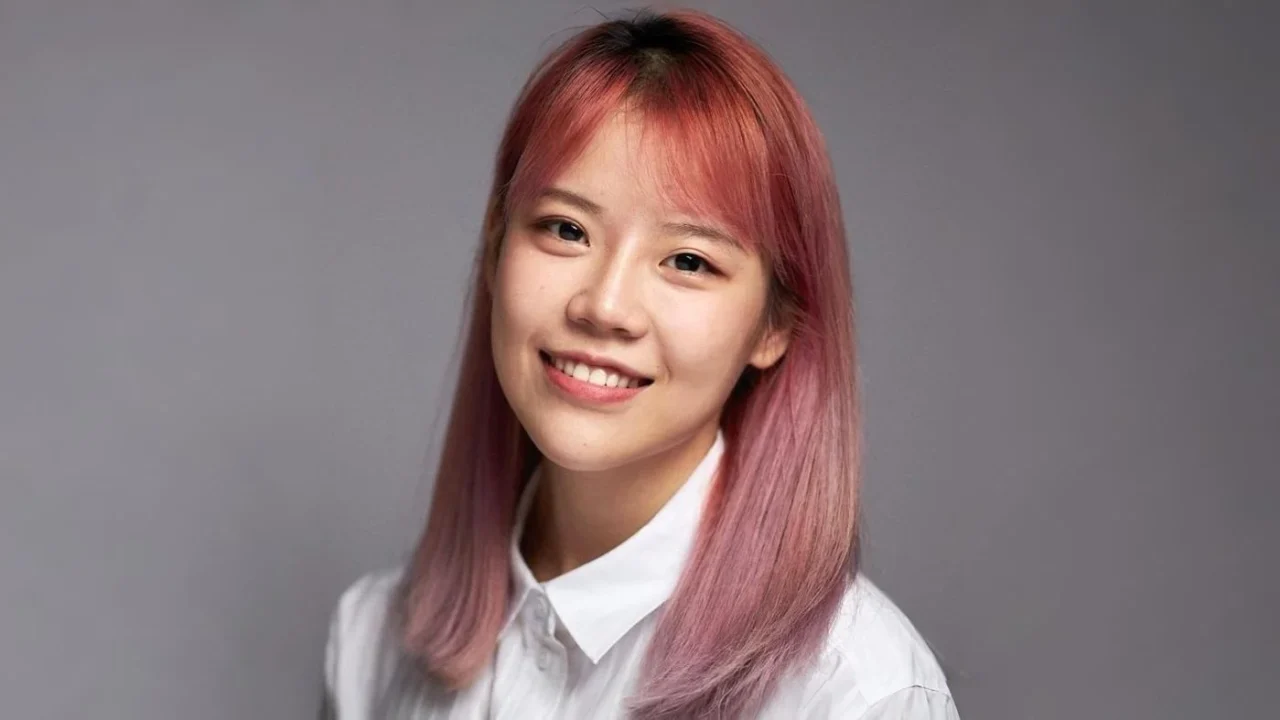
Yifan Wang: New Publications Explore Extracellular Vesicles and Embryo–Endometrium Communication
Yifan Wang, Founding Scientist at Genie Fertility, shared a post on LinkedIn:
“I’m delighted to share two recent publications from my PhD work at the University of Oxford, using human endometrial organoid models (EEOs):
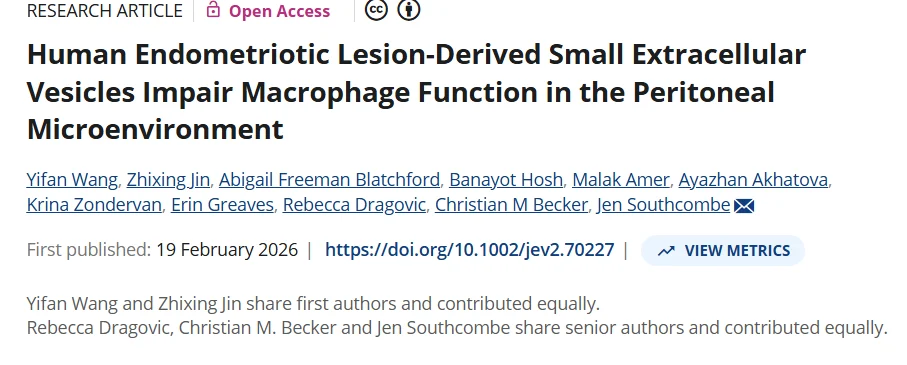
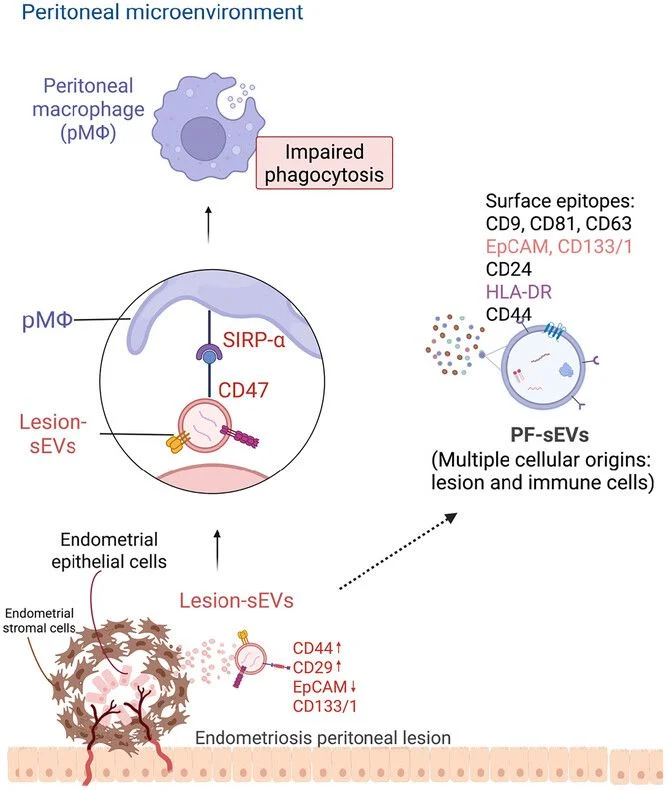
1. Human endometriotic lesion-derived small extracellular vesicles impair macrophage function in the peritoneal microenvironment
Journal of Extracellular Vesicles
In this study, we characterised extracellular vesicle profiles from endometriotic lesions, peritoneal macrophages, and peritoneal fluid. We also established EEO cultures derived from both eutopic and ectopic endometriotic tissues to investigate how lesion-derived small extracellular vesicles influence macrophage phagocytosis within the peritoneal microenvironment.
Titile: Human Endometriotic Lesion-Derived Small Extracellular Vesicles Impair Macrophage Function in the Peritoneal Microenvironment
Authors: Yifan Wang, Zhixing Jin, Abigail Freeman Blatchford, Banayot Hosh, Malak Amer, Ayazhan Akhatova, Krina Zondervan, Erin Greaves, Rebecca Dragovic, Christian M Becker, Jen Southcombe
Read the full article.
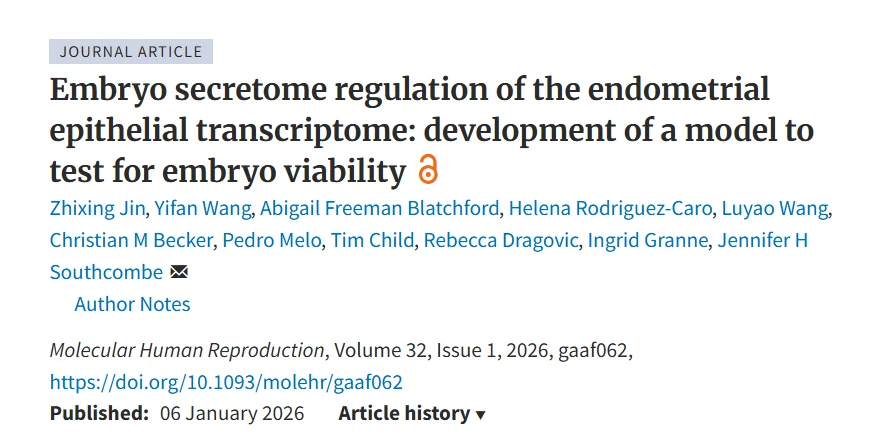
2. Embryo secretome regulation of the endometrial epithelial transcriptome: development of a model to test for embryo viability
Molecular Human Reproduction
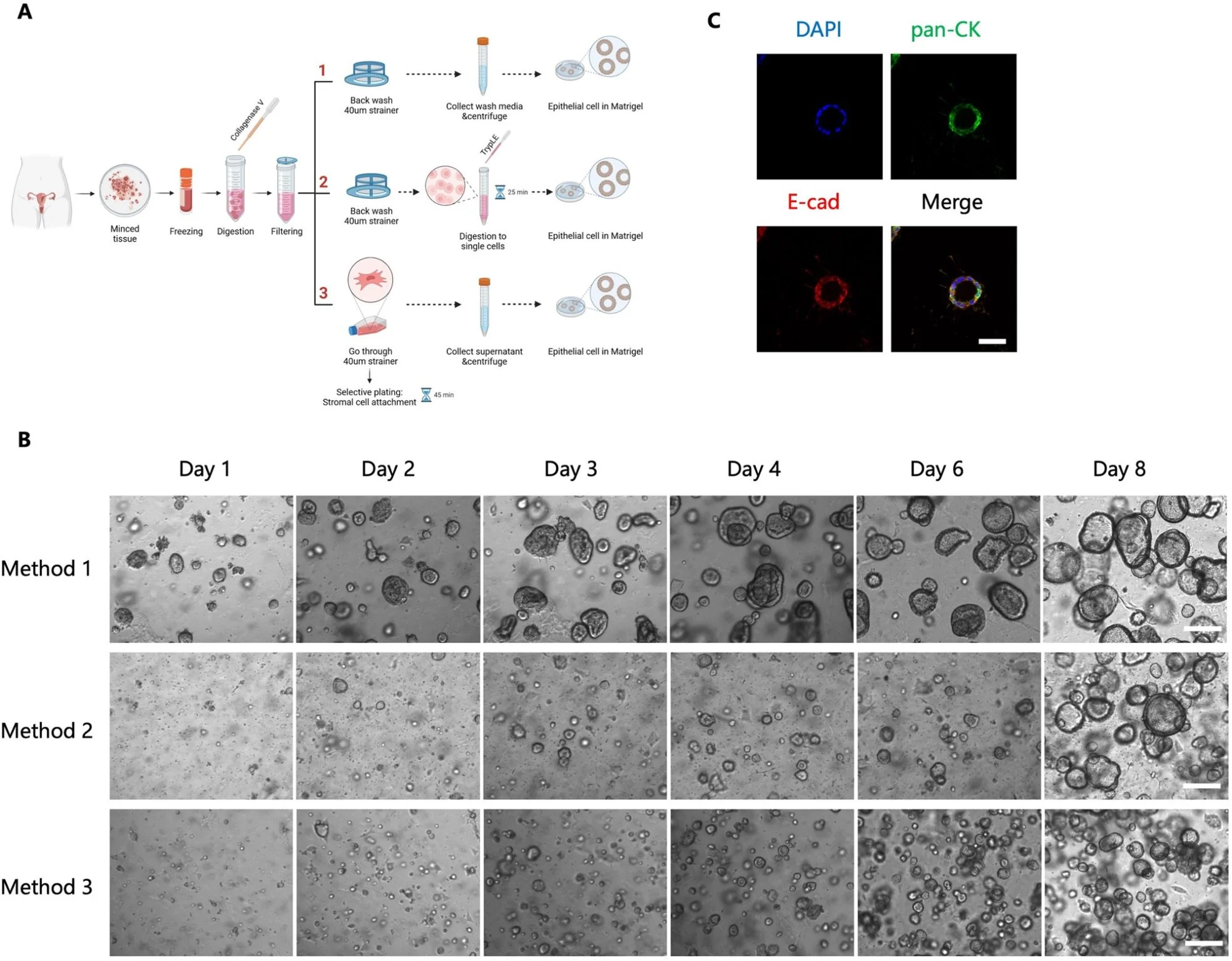
In this work, we optimised organoid culture methodology by establishing single-cell–derived EEOs in a miniaturised 384-well format. This platform allowed co-culture with 20 µL of single-embryo conditioned supernatant to investigate how the human embryo secretome modulates the endometrial transcriptome in the context of implantation failure.
Title: Embryo secretome regulation of the endometrial epithelial transcriptome: development of a model to test for embryo viability
Authors: Zhixing Jin, Yifan Wang, Abigail Freeman Blatchford, Helena Rodriguez-Caro, Luyao Wang, Christian M Becker, Pedro Melo, Tim Child, Rebecca Dragovic, Ingrid Granne, Jennifer H Southcombe
Read the full article.
Huge thanks to EndoCaRe Oxford and my supervisors Jen Southcombe, Rebecca Dragovic and Christian Becker for guidance and support. I am also grateful to Zhixin Jin, Abigail B. and all authors and collaborators who contributed to the work. Thank you to the participants of the ENDOX and FENOX studies for making this research possible.”
Stay updated on all scientific advances in the field of fertility with Fertility News.
-
Oct 24, 2026, 18:15Laura Marqueta: Pleased to Participate in the 9th ART Fertility Conference as a Speaker
-
Oct 24, 2026, 18:09Lucy Froese: Your Life Matters Now, Not Just When You Finally See Those Two Lines
-
Oct 24, 2026, 18:07Alejandro González: PGT-A May Improve Embryo Selection, but Does It Increase Live Births?
-
Oct 24, 2026, 18:02PGT-A and EMMI: 2 Complementary Views of the Same Embryo – Noor Sciences
-
Oct 24, 2026, 17:59Mark Amols: Took the Next Step and Built TacoBoutFertility.com
-
Oct 24, 2026, 17:43Michael Rimmer: Extracellular Vesicles in Reproductive Physiology and Pathology
-
Oct 24, 2026, 17:34Looking Forward to ASRM 2026 – NYU Langone Fertility Center
-
Oct 24, 2026, 17:28Donating Sperm Could Help Someone Achieve Their Dream of Becoming a Parent – Complete Fertility
-
Oct 24, 2026, 17:26Arshhita A.: 3PN Oocytes – Why Does Fertilization Go Wrong?