

Silvana Matassini Eyzaguirre: Reports on Endometriosis Global Fundamental Questions
Silvana Matassini Eyzaguirre, Faculty Lecturer at McGill University, shared a post on LinkedIn:
“March is Endometriosis Awareness Month
To close Endometriosis Awareness Month, I would like to share some relevant insights based on two articles/reports on endometriosis at the global level.
Endometriosis is often described as affecting millions of women worldwide, between 5 and 10% of those of reproductive age, and as having a significant impact on everyday life. However, beyond these figures, it is important to ask: how is this knowledge produced, and who does it actually represent?
Recent research shows that:
- A qualitative systematic review (n = 22 studies) finds that research is predominantly concentrated in high-income countries, with very limited representation from low- and middle-income countries (LMICs)
- These studies are largely based on clinical populations, which shapes who is included, and excluded, from the evidence
A global report (204 countries) suggests worldwide coverage, but relies on uneven data infrastructures: - Some countries contribute direct data, while many others are represented through statistical modelling
- Taken together, this points to a deeper issue. Knowledge on endometriosis is not only incomplete, it is shaped by who is studied, how data are produced, and where evidence comes from. But also by which dimensions of the condition are prioritised.
Despite pain being one of the most disabling symptoms, research and clinical frameworks remain strongly centred on fertility and reproductive health. This emphasis is not neutral: it can render invisible those who do not wish to reproduce, as well as other populations whose experiences fall outside this frame.
What about people living with endometriosis beyond reproductive age?
What about older women?
What about trans and non-binary people?
These questions are fundamental to understanding the current limits of the evidence. If endometriosis is a highly prevalent global condition, why do our data systems remain so unequal?”
I leave the articles here for those who would like to explore further.
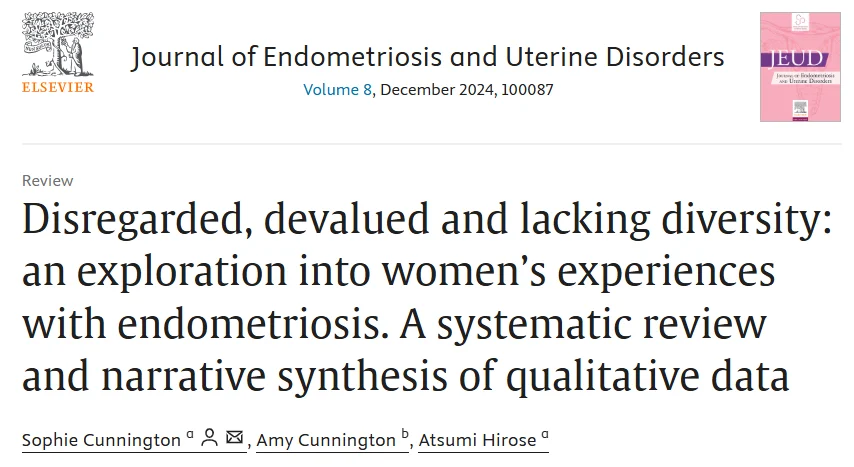
Title: Disregarded, devalued and lacking diversity: an exploration into women’s experiences with endometriosis. A systematic review and narrative synthesis of qualitative data
Authors: Sophie Cunnington, Amy Cunnington, Atsumi Hirose
Read the full article.
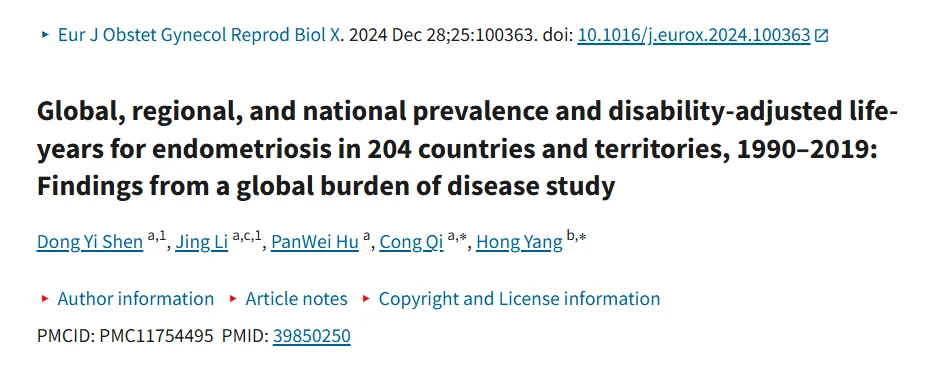
Title: Global, regional, and national prevalence and disability-adjusted life-years for endometriosis in 204 countries and territories, 1990–2019: Findings from a global burden of disease study
Authors: Dong Yi Shen, Jing Li, PanWei Hu, Cong Qi, Hong Yang
Read the full article.
Stay updated on all scientific advances in the field of fertility with Fertility News.

-
Sep 13, 2026, 15:11Sachintha Alwis: From Impaired Sperm Motility to Microrobotics
-
Sep 13, 2026, 15:08Laurence Orbuch: Before Endometriosis Surgery, Ask…
-
Sep 13, 2026, 15:05Ademola Ayodele: IUI, IVF or Egg Freezing – Which One Is Right for You?
-
Sep 13, 2026, 14:59Fiona Pathiraja-Møller: Tennis Players No Longer Have to Choose Between Career and Family
-
Sep 13, 2026, 14:571-Day Virtual Experience for People Impacted by PMOS – PCOS Awareness Association
-
Sep 13, 2026, 14:53Ozor Victor: Behind Every Embryo Is a Story of Science, Precision, and Hope
-
Sep 13, 2026, 14:50Diana Kayal: What They Don’t Tell You About IVF
-
Sep 13, 2026, 14:44Vikram Sinai Talaulikar: A Heartfelt Thank You to All Who Donated and Supported “Menopause and Cancer”
-
Sep 13, 2026, 14:41Nicole McPherson: Changing IVF Practices Is Hard – Integration Needs to Be Easy