
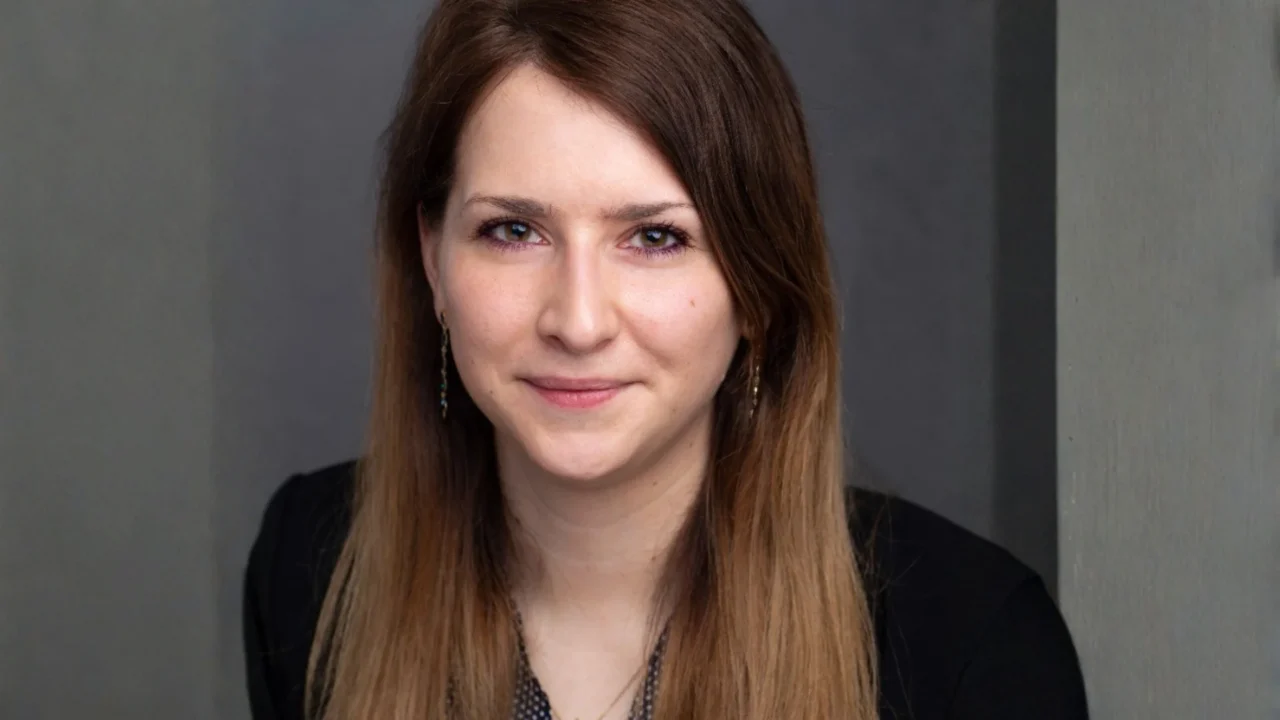
Agata Zielinska: New Perspectives on Age-Related Changes in Human Eggs
Agata Zielinska, Co-founder and co-CEO at Ovo Labs, shared a post on LinkedIn:
“A very special full-circle moment for me.
In 2014, I decided to pursue my MB/PhD in the laboratory of Prof. Melina Schuh, with the aim of understanding at a molecular level how ageing affects human eggs. At that time, it had been known for decades that human egg quality declines with age and that the incidence of conditions such as Down syndrome increases. However, the underlying mechanisms remained unclear, largely due to the lack of large-scale studies in the challenging and delicate system that is the human egg.
Together with Melina, we went on to show precisely how chromosome architecture changes in human eggs as female age advances. This work was published in eLife and Science. What truly shocked us, however, was the magnitude of the effect – both the high incidence of chromosome disintegration and the scale of the age-related changes. Once you see it with your own eyes, you can’t help but question how we, as humans, manage to reproduce successfully at all.
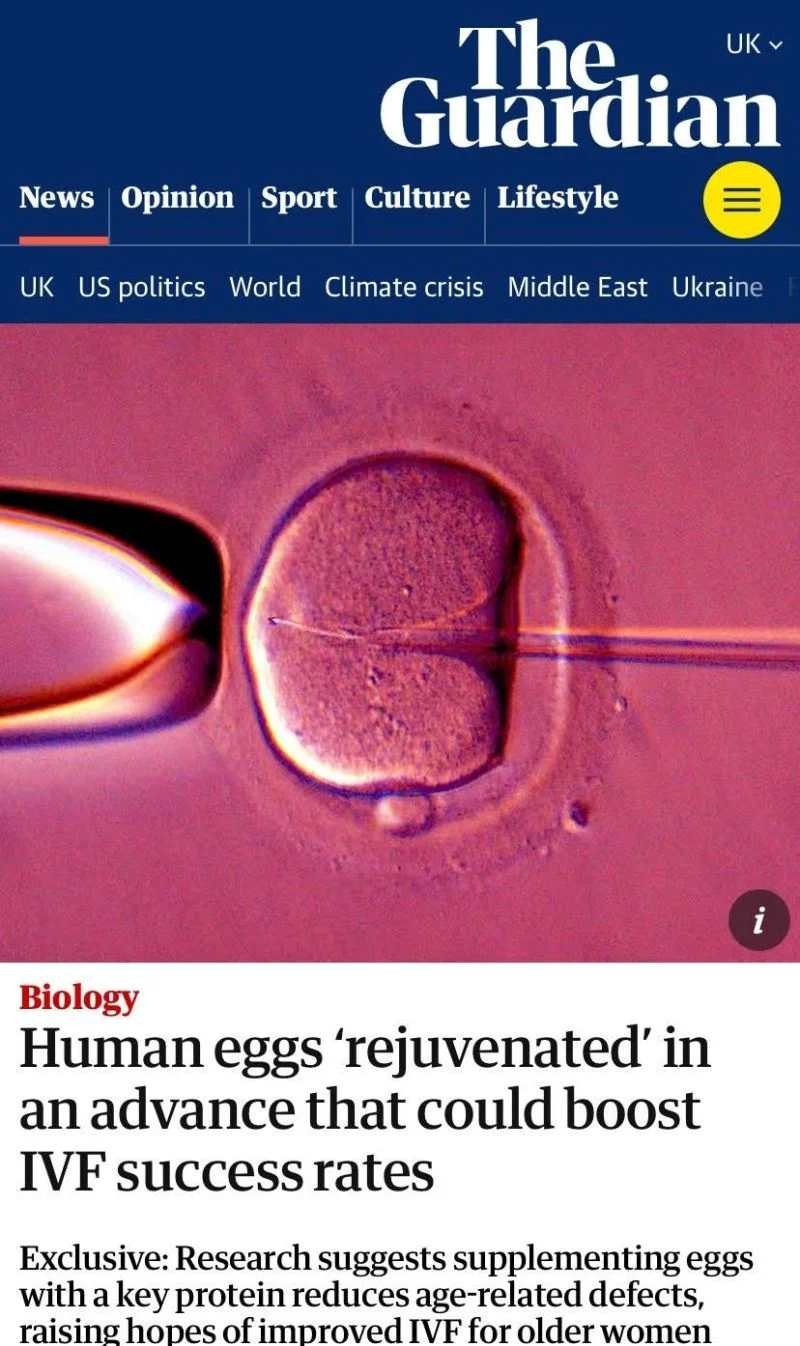
I then followed with great excitement as Melina continued her multi-directional search for strategies to mitigate this problem after her lab moved from the MRC Laboratory of Molecular Biology (LMB) to the Max Planck Institute for Multidisciplinary Sciences. Today is the first day when you can read about the first solution we propose to the poor quality of human eggs: replenishing a single protein in the human egg that declines with age (Shugoshin 1, aka EmbryProtect1) is sufficient to restore correct chromosome architecture and to increase the fraction of chromosomally intact eggs from 47% to 71%. This work was led relentlessly by Dr Debojit Saha with key support from Saba Manshaei at the Max Planck Institute for Multidisciplinary Sciences, where Melina leads her basic science team to advance female fertility research.
What’s next? At Ovo Labs, we feel a strong responsibility to do our very best to bring the solution that EmbryoProtect1 offers to patients. Before we do so, we must carefully evaluate the multi-facet safety of this approach and its efficacy at a larger scale. This is a demanding task that we do not take lightly – but the future is bright.
I very much look forward to the next steps, and to how, together with my co-founders Melina Schuh and Oleksandr Yagensky, and our growing team at Ovo Labs (Saba Manshaei, Hyukjoon Jeon, Mila Zemyarska-Karcheva, Daniel Veselinovic), we will attempt to push the boundaries of IVF success rates.”
Mila Zemyarska-Karcheva, Junior Doctor at NHS and Project Coordinator at Ovo Labs, shared Agata Zielinska’s post, adding:
“So excited to be part of the Ovo Labs team and to have a role in expanding the boundaries of female fertility!
Read about our breakthrough here.”
Stay updated on all scientific advances in the field of fertility with Fertility News.
-
Oct 11, 2025, 06:44The Global IVF Market Is Set to Reach $65B by 2032 – Meddilink
-
Mar 16, 2026, 13:30Simon Meagher and Rabih Chaoui Discuss Fetal Heart Scanning in the Latest ISUOG Podcast – ISUOG
-
Mar 16, 2026, 12:58Exploring the Link Between Adenomyosis and Proliferative Endometrial Disorders – Fertility and Sterility
-
Mar 16, 2026, 12:55Nicola Pozzi: A New Mechanism to Reduce Thrombus Formation Without Increasing Bleeding Risk
-
Mar 16, 2026, 12:44Endometriosis Awareness Month Virtual Issue! – ISUOG
-
Mar 16, 2026, 12:30Jeanne Conry: When the Government Intervenes, Women Die
-
Mar 16, 2026, 12:23Magdalena Simonis Highlights the Need to Change the Rhetoric on Endometriosis
-
Mar 16, 2026, 12:00Julia Chain Highlights Fertility Preservation as Part of Women’s Health Campaign – HFEA
-
Mar 15, 2026, 15:26Watching Life Begin: Scientists Track Embryo Implantation in Real Time! – Science Magazine
-
Mar 15, 2026, 15:03Reem Abu-Rustum Spotlights Fetal Situs in New ISUOG Quiz – ISUOG