
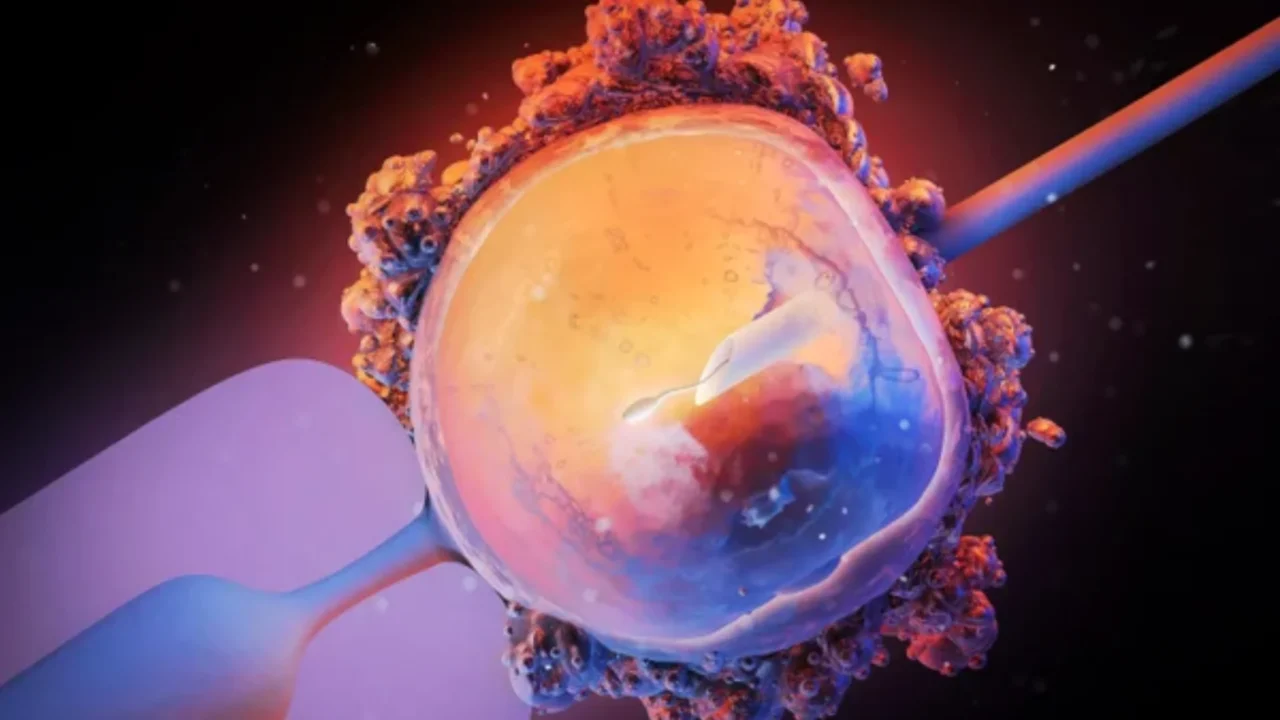
Akansha Negi: The Science Behind Embryo Transfer in IVF
Akansha Negi, Trainee Embryologist – Akanksha Ivf Centre at Mata Chanan Devi Hospital, shared a post on LinkedIn:
“Two Tiny Air Bubbles That Help Deliver an Embryo: The Double Bubble Technique in IVF
When people think about IVF success, they often focus on embryo quality, blastocyst grading, or genetic testing.
But one of the most crucial moments in the entire process happens during embryo transfer, when the embryo is finally placed inside the uterus.
Interestingly, this step relies on a very precise laboratory technique known as the Double Bubble method.
What is the Double Bubble Technique?
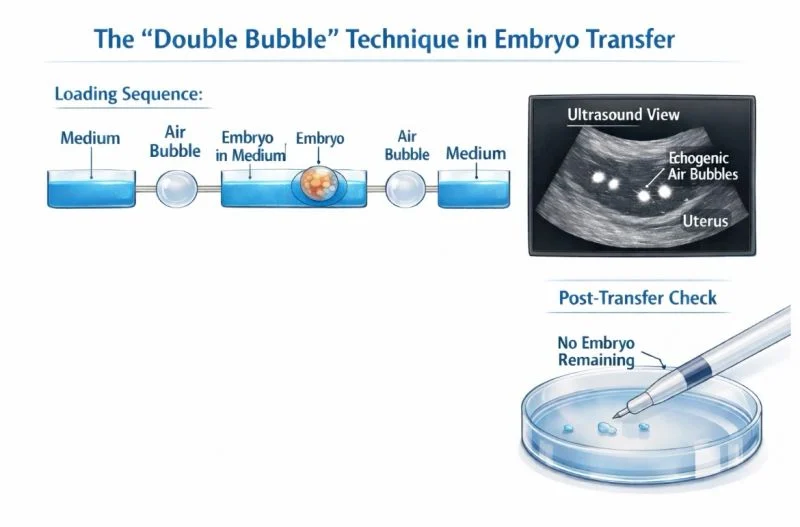
Before embryo transfer, the embryologist loads the embryo into the transfer catheter in a very specific sequence:
Medium → Air → Embryo (in culture medium) → Air → Medium
This creates a controlled fluid column inside the catheter, where the embryo-containing droplet is sandwiched between two air bubbles.
Although these bubbles are tiny, they play several important roles in ensuring a successful embryo transfer.
Why Are the Air Bubbles Used?
1. Visualization during ultrasound-guided transfer
Embryos are microscopic and cannot be seen on ultrasound. However, the air bubbles appear as bright echogenic flashes.
When the embryo is deposited in the uterus, clinicians can see these flashes and confirm that the embryo-containing droplet has been released at the correct position, usually ~1–2 cm below the uterine fundus.
2. Creating a defined embryo droplet
The air bubbles act as boundaries, keeping the embryo-containing medium as a compact droplet instead of dispersing inside the catheter.
3. Preventing embryo adhesion to the catheter
Embryos can sometimes adhere to the catheter walls due to surface tension.
The air bubbles function as spacers, reducing this risk and improving the chances of complete embryo expulsion during transfer.
4. Post-transfer verification
Immediately after transfer, the catheter is returned to the laboratory and examined under the microscope.
This step confirms that no embryo remains inside the catheter, ensuring that the embryo has been successfully delivered into the uterine cavity.
Why Technique Matters in Embryo Transfer?
Even though embryo transfer is sometimes described as the simplest step in IVF, it is actually highly technique-dependent.
Several factors influence implantation success:
- Catheter type (soft vs firm)
- Loading pattern and medium volume
- Uterine contractility
- Distance from the fundus
- Operator skill and atraumatic transfer
The Double Bubble technique helps standardize the loading process and provides visual confirmation of embryo placement, improving procedural reliability.
A Small Detail with Big Significance
Inside a catheter carrying only a few microliters of fluid, the precise arrangement of medium, air bubbles, and embryo ensures that the embryo reaches the uterus safely and accurately.”
Stay updated on all scientific advances in the field of fertility with Fertility News.
-
Sep 18, 2026, 20:27Hrishikesh Pai: Rethinking Male Infertility
-
Sep 18, 2026, 20:25Eric Verdin: Wrapping Up the Reproductive Aging Summit at the Center for Healthy Aging in Women
-
Sep 18, 2026, 20:21Investigating Pregnancy Outcomes in Women with Idiopathic POI – RBMO
-
Sep 18, 2026, 20:18Sue Ritchie: Why Aren’t We Talking About Male Fertility More?
-
Sep 18, 2026, 20:13Salma Yasin: Every Day of BFS Study Week 2026 Has Been an Exceptional Learning Experience
-
Sep 18, 2026, 20:01Qingcai Wang: Over 35 and Torn Between Trying Longer and Starting IVF?
-
Sep 18, 2026, 19:58Bhumika: Can a Woman Become Pregnant Again While Already Pregnant?
-
Sep 18, 2026, 19:5215 More Experts Join the International Fertility Forum Mumbai 2026
-
Sep 18, 2026, 19:50Curious About What Happens Behind the Scenes in the Labs? – Sims IVF