
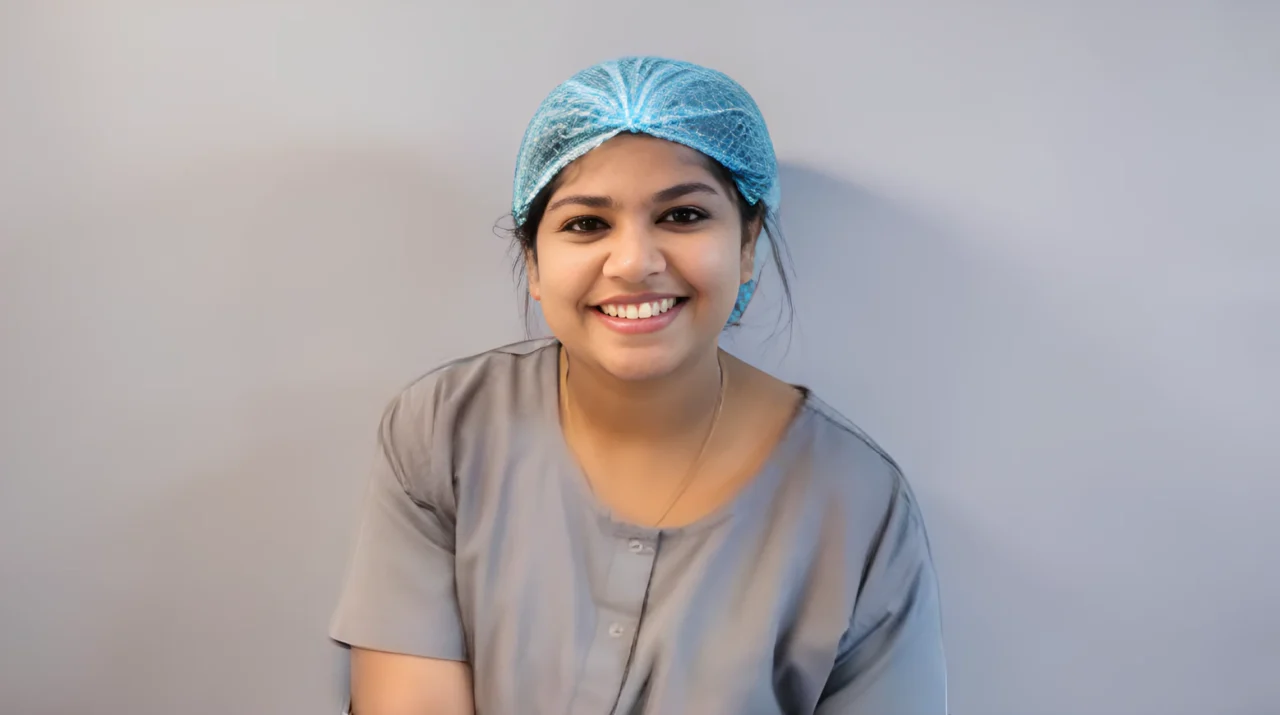
Curline Patricia: From OPU to Blastocyst – What Happens Inside the Embryology Lab
Curline Patricia, Clinical Embryologist (MOH, UAE) with an M.Sc. in Clinical Embryology, shared on LinkedIn:
”From OPU to Blastocyst: What Happens Inside the Embryology Lab
Patients often see two moments – the egg collection and the Embryo transfer.
What happens in between, inside the lab, is where the real story unfolds. Here’s a day-by-day look:
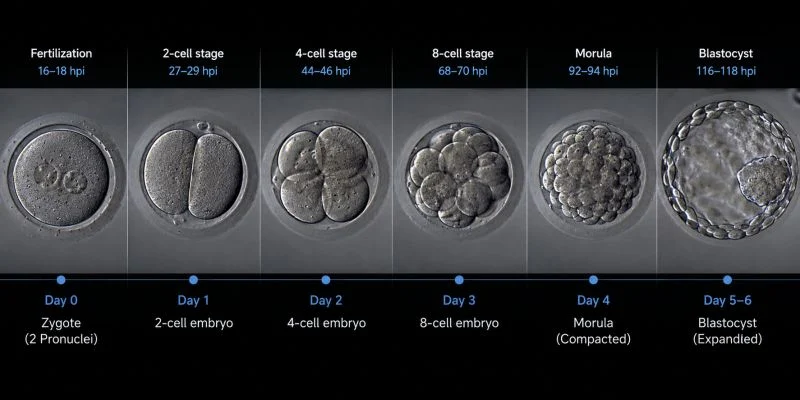
Day 0 – OPU and Fertilization
Eggs are collected during the OPU procedure and fertilized shortly after (via IVF or ICSI). By the next morning, we’re checking for two pronuclei – the first sign of normal fertilization
Day 1 (18 -21 hrs) Confirming Fertilization
The zygote holds genetic material from both egg and sperm in two separate pronuclei, not yet fused. This is our first checkpoint.
Day 2 – Early Cleavage
The single cell divides into 2, then 4 cells. No growth in size yet – just division.
Day 3 – The 8-Cell Milestone
The embryo reaches around 8 cells. Quietly but critically, its own genome switches on here – it stops relying on the egg’s stored instructions and starts driving its own development.
Day 3-4 – Compaction
The cells tighten together and lose their individual borders, forming a solid ball called the morula. This is the embryo’s first step toward deciding which cells will become what.
Day 4-5 – Cavitation Begins
Fluid starts collecting inside the morula, forming a cavity. This marks the first major fate decision: outer cells commit to becoming the placenta, inner cells form the inner cell mass – the future baby.
Day 5 -6 – Blastocyst Stage
A second fate decision unfolds within the inner cell mass, splitting it into the cells that will form the fetus and the cells that will form the yolk sac. This is the stage we grade and often choose to transfer or freeze. Some embryos do start hatching.
Day 6 – Hatching
Some blastocysts are ready to hatch out of their shell (the zona pellucida) by now, preparing to implant. Others take a little longer – and that’s normal too.
By Day 5 or 6, that once-single cell has become a blastocyst ready for its next step – either transferred fresh, or vitrified and frozen to await its moment later. Either way, it’s the culmination of days of quiet, precise work most people never get to see.”
Stay updated on all scientific advances in the field of fertility with Fertility News.
-
Oct 8, 2026, 17:18Khalil Faaed: Vitrification Prevents Ice, but Does It Prevent Oocyte Damage?
-
Oct 8, 2026, 17:16Ritu Anand: Better Conversations Ultimately Lead to Better Care in Fertility
-
Oct 8, 2026, 17:14Mark Trolice: Excited to Speak at Women’s HealthX
-
Oct 8, 2026, 17:12Delighted to Welcome Dr. Róisín Mortimer – Waterstone Clinic-IVF and Fertility
-
Oct 8, 2026, 17:09Deirdre Zander-Fox: Pleased to Be an Invited Speaker at ESHRE Precision ART
-
Oct 8, 2026, 17:06Roohi Jeelani: Is Modern Life Actually Making It Harder to Get Pregnant?
-
Oct 8, 2026, 17:04Robert Borowczyk: We Judge the Newest IVF Consultation Group Too Quickly…
-
Oct 8, 2026, 17:01Carlos Guerrero: Great Couple of Days Visiting the Team at New Leaders in Fertility and Endocrinology
-
Oct 8, 2026, 17:00Sarah Banks: Improving Patient Experience Isn’t Always About Making Huge Changes…