
Esther Eleboh: Challenges That Keep Us Refining How We Select Embryos for Transfer
Esther Eleboh, Reproductive Health Nurse (Head of Nursing Department) at Viva Fertility Clinic, shared on LinkedIn:
“When we look at a blastocyst under the microscope, we see its appearance – its expansion, inner cell mass, and trophectoderm. What we don’t see is its chromosome makeup.
A recent case reminded me why this distinction matters.
A 36-year-old woman with normal semen parameters and a history of three spontaneous pregnancies wanted to complete her family. Given her age, the couple opted for IVF with PGT-A.
The results were thought-provoking.
Some poorly graded blastocysts were euploid, while some beautiful, high-quality blastocysts were aneuploid.
This highlights an important lesson:
- Embryo morphology tells us about how an embryo looks and develops.
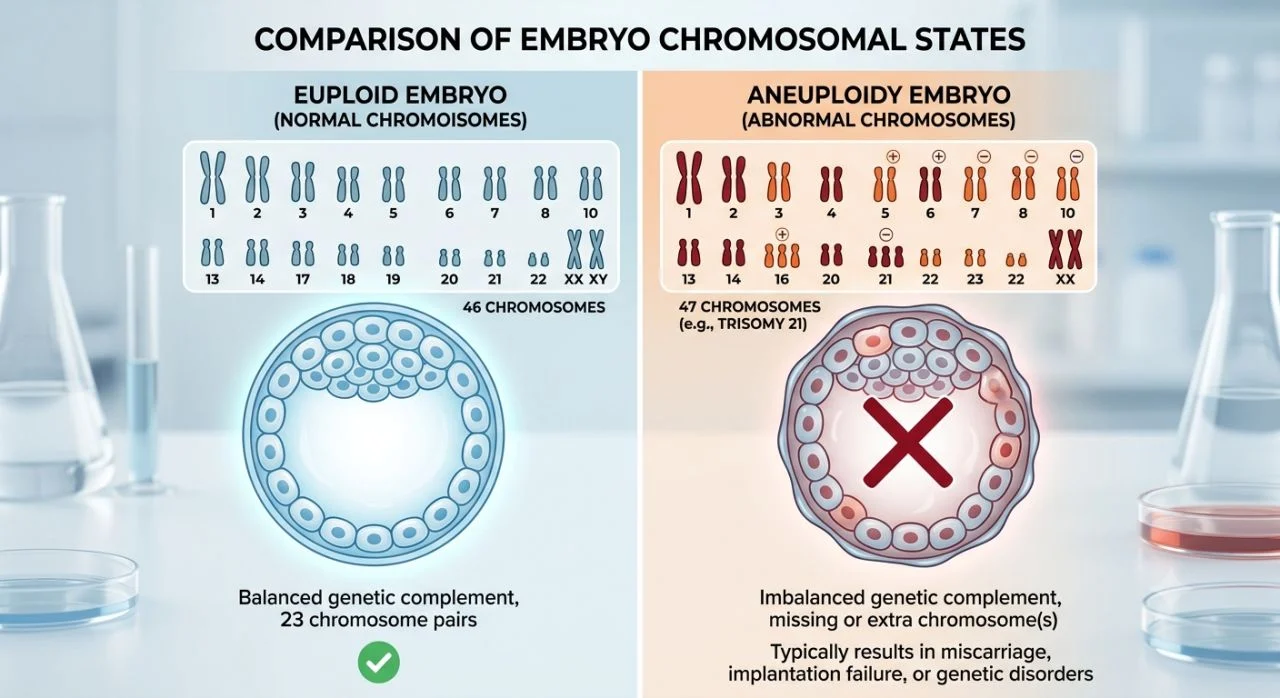
- Euploidy tells us about whether the embryo has the correct number of chromosomes.
The two are related, but they are not the same.
A well-expanded, excellent-looking blastocyst is not always chromosomally normal. Likewise, an average-looking embryo should not be dismissed simply because of its morphology – it may still have normal chromosomes and excellent reproductive potential.
As reproductive medicine continues to evolve, this reinforces the importance of combining morphological assessment with genetic testing where clinically indicated, rather than relying on appearance alone.
Cases like this challenge us to keep asking questions and refining how we select embryos for transfer.
They also remind us that every embryo deserves careful evaluation beyond what the microscope alone can reveal.
Have you encountered cases where embryo morphology did not match PGT-A results? I’d love to hear your experience and thoughts.
I am Nurse Esther, a fertility nurse passionate about helping couples overcome infertility and achieve pregnancy. I am also actively involved in fertility research and reproductive health education.”
Other articles featuring Esther Eleboh on Fertility News.
-
Sep 18, 2026, 20:27Hrishikesh Pai: Rethinking Male Infertility
-
Sep 18, 2026, 20:25Eric Verdin: Wrapping Up the Reproductive Aging Summit at the Center for Healthy Aging in Women
-
Sep 18, 2026, 20:21Investigating Pregnancy Outcomes in Women with Idiopathic POI – RBMO
-
Sep 18, 2026, 20:18Sue Ritchie: Why Aren’t We Talking About Male Fertility More?
-
Sep 18, 2026, 20:13Salma Yasin: Every Day of BFS Study Week 2026 Has Been an Exceptional Learning Experience
-
Sep 18, 2026, 20:01Qingcai Wang: Over 35 and Torn Between Trying Longer and Starting IVF?
-
Sep 18, 2026, 19:58Bhumika: Can a Woman Become Pregnant Again While Already Pregnant?
-
Sep 18, 2026, 19:5215 More Experts Join the International Fertility Forum Mumbai 2026
-
Sep 18, 2026, 19:50Curious About What Happens Behind the Scenes in the Labs? – Sims IVF