

Esther Eleboh: Should We Rethink the Definition of Infertility?
Esther Eleboh, Reproductive Health Nurse (Head of Nursing Department) at Viva Fertility Clinic, shared on LinkedIn:
“Should We Rethink the Definition of Infertility?
There is something that has been on my mind recently.
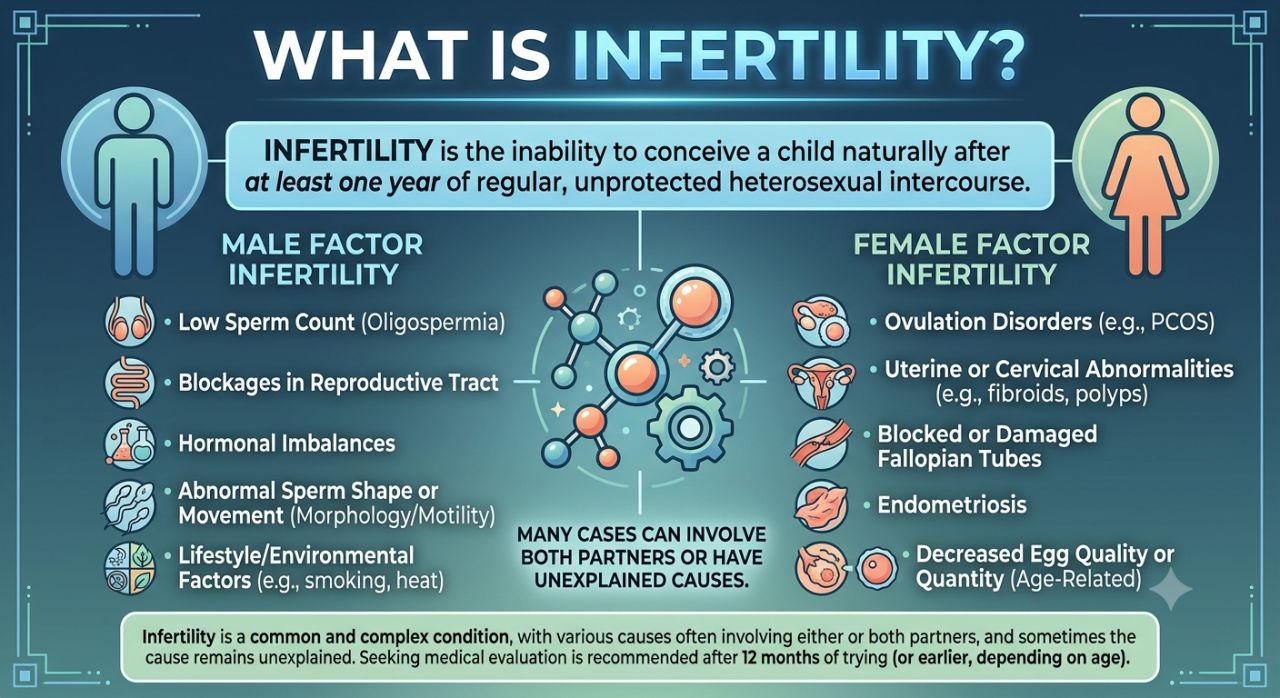
Traditionally, infertility is defined as the inability to achieve pregnancy after 12 months of regular, unprotected sexual intercourse, with evaluation often recommended after 6 months for women aged 35 years and older.
But is a time-based definition always appropriate?
Recently, I encountered a young couple. The woman was 25 years old, and her partner was 29. They had been married for only 7 months and had been having regular, unprotected intercourse for the same period.
They did not wait until the one-year mark before seeking help. And I believe they made the right decision. The male partner had significant semen abnormalities:
- Sperm concentration: approximately 0.7 million/mL
- Rapid progressive motility: 5%
- Morphology: 10%
- History of varicocele
In a situation like this, simply telling the couple, ‘You are young; wait another five months,’ may not necessarily be the most appropriate approach. The question should not only be:
‘How long have you been trying?’
We should also ask:
‘Is there already evidence of a fertility problem?’
When a couple has a clearly identifiable factor that can significantly impair natural conception, early fertility assessment may be more appropriate than simply waiting for an arbitrary period of time.
In severe male-factor infertility, for example, conventional approaches may have a very limited chance of success, and ICSI may be considered depending on the complete clinical assessment.
This means that fertility evaluation should be individualized according to risk factors, age, medical history and clinical findings-not based solely on the duration of trying to conceive.
Perhaps the future of infertility care should move from:
‘Try first, investigate when it fails.’
To:
‘Identify risk factors early, counsel appropriately, and intervene when indicated.’
Why should couples have to experience months or years of unsuccessful attempts before discovering that there was a significant male or female factor that could have been identified earlier?
- A basic fertility assessment can sometimes provide valuable information about:
- Ovulatory function
- Ovarian reserve
- Tubal factors
- Uterine factors
- Semen quality
- Previous reproductive or medical conditions.
Perhaps it is time for us to have a broader conversation about the definition of infertility.
Should infertility continue to be primarily defined by ‘how long you have tried,’ or should the presence of identifiable fertility factors also play a greater role?
What do you think?
Should couples with known or suspected fertility risk factors be evaluated before they reach the traditional 12-month threshold?”
Stay informed with the latest updates in fertility and reproductive medicine on Fertility News.
-
Aug 30, 2026, 17:11Devyanshi Dixit: Can Pregnancy Reveal a Woman’s Future Health Risks?
-
Aug 30, 2026, 17:08Rifana Parveen: IVF is More Than a Medical Journey…
-
Aug 30, 2026, 17:01Mazen Al-Obaidi: Menopause Changes the Brain, Then It Often Bounces Back
-
Aug 30, 2026, 16:58Rajeev Agarwal: 10 Years of Infertility, Yet They Didn’t Need IVF
-
Aug 30, 2026, 16:49Why Paternal Cannabis Causes Miscarriage – Fertility Plus
-
Aug 30, 2026, 16:46Planning to Attend FIGO 2027 in Montréal? – FIGO
-
Aug 30, 2026, 16:44Thrilled to Launch a New Special Issue on Twin Pregnancies – IJGO
-
Aug 30, 2026, 16:38Saadat Hassan: Single vs Double Embryo Transfer
-
Aug 30, 2026, 16:34Huma Sultan: The Placenta – A Temporary Organ with a Huge Job