

Lata Sabarwal: What Happens to Fertility After 35?
Lata Sabarwal, Fertility Advisor, shared on LinkedIn:
“What Happens to Fertility After 35? Understanding the Changes
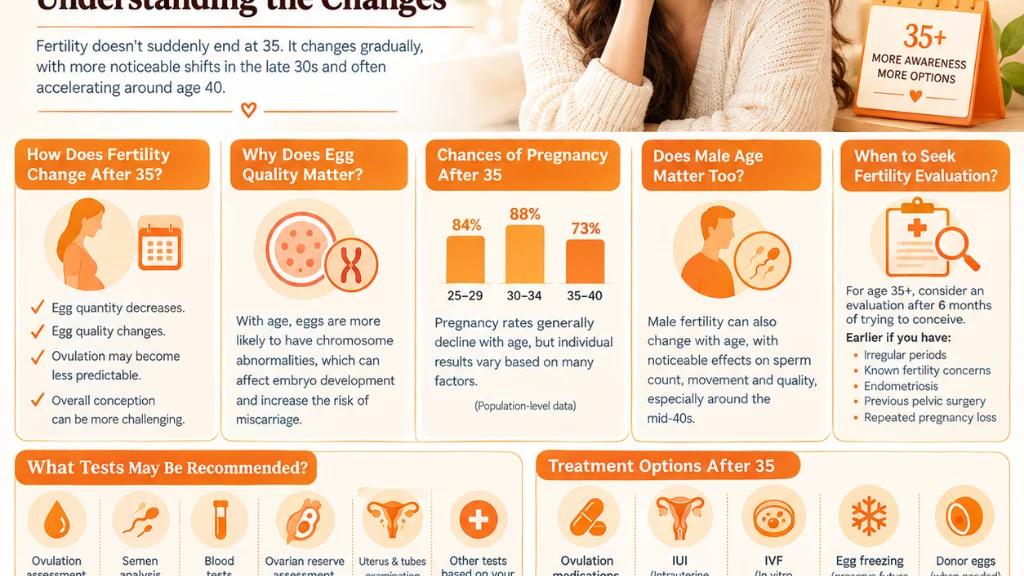
The idea that fertility suddenly declines at age 35 is common, but the biology is more gradual than that.
Fertility generally changes over time, with the decline becoming more noticeable during the late 30s and often accelerating around age 40. Age 35 is therefore better understood as an important point for fertility awareness rather than a sudden end to the ability to conceive.
How Does Fertility Change After 35?
Female fertility is influenced by several factors, including egg quantity, egg quality, overall health, ovulation, and the reproductive health of the other partner.
Egg quantity naturally decreases throughout life, while egg quality also changes with age. As eggs become more likely to have chromosome abnormalities, conception can become more difficult and the risk of miscarriage can increase.
However, many people still conceive naturally in their late 30s. Fertility experiences vary considerably from one person to another.
Why Does Egg Quality Matter?
Egg quantity and egg quality are not the same thing.
A person may have a regular menstrual cycle and still experience age-related changes in egg quality. As age increases, a greater proportion of eggs may have an incorrect number of chromosomes. This can affect embryo development and may contribute to early miscarriage.
This is one reason why age remains an important consideration when planning pregnancy or fertility treatment.
What Are the Chances of Pregnancy After 35?
There is no single pregnancy percentage that applies to everyone over 35.
Research shows that pregnancy rates generally decline with age, but individual outcomes depend on factors such as egg quality, sperm health, ovulation, timing of intercourse, general health, and reproductive history.
For example, one study cited in the source material found conception within 12 menstrual cycles in 84% of women aged 25–29, 88% of women aged 30–34, and 73% of women aged 35–40. These are population-level findings and should not be interpreted as an individual’s personal probability.
This distinction is important because fertility statistics describe groups, not a guarantee or prediction for a particular person.
Does Male Age Matter Too?
Fertility and reproductive outcomes involve both partners.
Male age can also influence sperm count, movement, and sperm quality. The source material notes that sperm-related changes may become more noticeable with increasing paternal age, particularly around the mid-40s.
For this reason, fertility evaluation should not automatically focus on the female partner alone.
When Should Someone Seek Fertility Evaluation After 35?
For people aged 35 or older, fertility evaluation is generally worth discussing with a healthcare professional after six months of trying to conceive without success.
Earlier evaluation may be appropriate when there are known fertility concerns, irregular periods, suspected endometriosis, previous pelvic surgery, repeated pregnancy loss, or concerns about sperm health.
Testing may include:
- Ovulation assessment
- Semen analysis
- Blood tests
- Ovarian reserve assessment
- Examination of the uterus and fallopian tubes
- Other testing based on medical history
The purpose of testing is not simply to determine whether someone is fertile or infertile. It can help identify factors that may influence treatment decisions.
What Fertility Treatment Options Are Available After 35?
Treatment depends on the underlying fertility factors and individual reproductive goals.
Options may include ovulation medications, intrauterine insemination (IUI), or in vitro fertilization (IVF). IVF can be useful for several fertility conditions, although it cannot reverse age-related changes in egg quality.
Egg freezing may also be considered by people who want to preserve reproductive options for the future. However, egg freezing does not guarantee a future pregnancy, and age at the time of freezing is an important consideration.
For some individuals, donor eggs may become an option when using their own eggs is less likely to result in a successful pregnancy. This decision involves medical, emotional, financial, and personal considerations and should be discussed with a qualified fertility specialist.
Why Individualized Fertility Advice Matters
One of the biggest misconceptions about fertility after 35 is that age alone tells the entire story.
Two people of the same age can have very different ovarian reserve, reproductive health, sperm factors, medical histories, and fertility experiences. Tests such as AMH can provide information about ovarian reserve, but they cannot precisely predict whether someone will conceive naturally.
Understanding the different factors involved can help people make decisions based on their individual circumstances rather than relying on age alone.
For additional information, see How Age Affects Fertility and Success Rate.
Final Thoughts
Fertility does not suddenly disappear at 35. Instead, fertility generally declines gradually, with changes becoming more noticeable during the late 30s and often more pronounced around age 40.
Age can affect egg quantity, egg quality, miscarriage risk, and some pregnancy outcomes, but it is only one part of the fertility picture.
For anyone planning pregnancy after 35, understanding these changes and seeking appropriate medical guidance can make it easier to identify available options and make informed reproductive decisions.”
Stay informed with the latest updates in fertility and reproductive medicine on Fertility News.
-
Sep 17, 2026, 19:28Svitlana Yashchenok: Who Is Really Choosing Your Embryo?
-
Sep 17, 2026, 19:20Having PMOS Does Not Mean You Can’t Become Pregnant – Spring Fertility
-
Sep 17, 2026, 19:13Lucy Froese: We Hear Fertility Stories Looking Backwards, But You Have to Live Yours Forward
-
Sep 17, 2026, 19:03Anna Figiel: Fertility Is Biological, But the Decisions Around It Are Not…
-
Sep 17, 2026, 18:49IFFS and ISA Joint Practice Guideline on Implementing Balanced Sexual and Reproductive Health
-
Sep 17, 2026, 18:30RBMO Live Episode 17: The Sperm Standards Session
-
Sep 17, 2026, 18:07Albert Irkaliev: Have We Underestimated the Corpus Luteum in Frozen Embryo Transfer?
-
Sep 17, 2026, 17:55Salma Yasin: A Great Pleasure to Attend BFS Study Week with Dr. Ippokratis Sarris
-
Sep 17, 2026, 17:47Devyanshi Dixit: Genes vs. Environment – What Shapes Women’s Reproductive Health?