

Why Does the Clock Read Older? – Fertility Plus
Fertility Plus shared a post on LinkedIn:
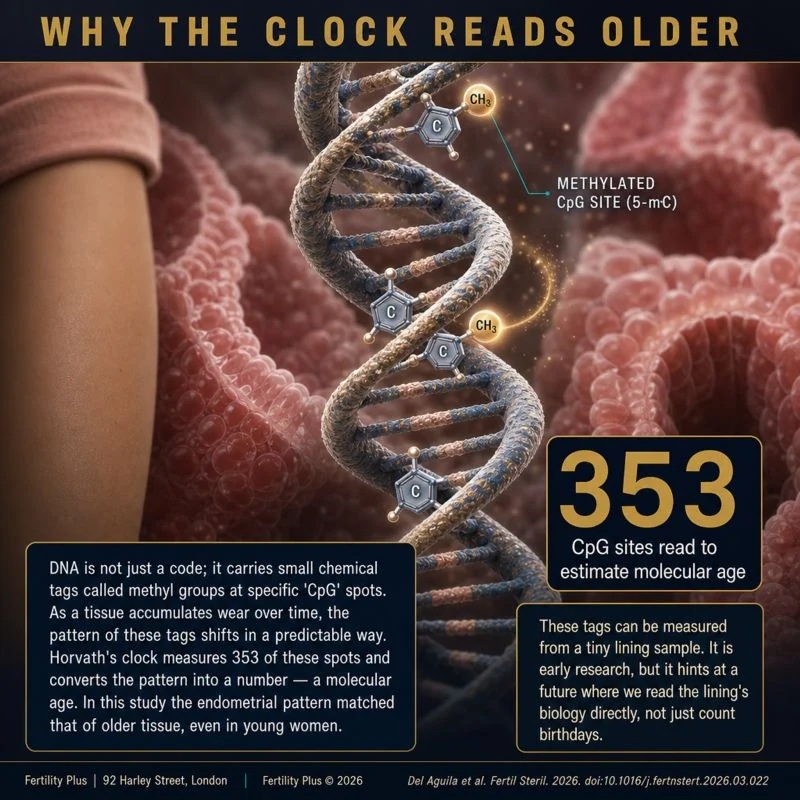
“Why does the clock read older?
Recent research reveals fascinating insights into our biological age through an epigenetic clock that measures methylation patterns on DNA. As tissues age, these tags shift in a predictable manner, allowing scientists to estimate molecular age by analyzing 353 specific CpG sites. Remarkably, this study found that even in young women, the endometrial pattern resembled that of older tissue!
Dive deeper into this groundbreaking study by Del Aguila et al. published in Fertility and Sterility. Understanding the age of our tissues can pave the way for new approaches in health and fertility!”
Stay updated on all scientific advances in the field of fertility with Fertility News.
-
Sep 18, 2026, 20:27Hrishikesh Pai: Rethinking Male Infertility
-
Sep 18, 2026, 20:25Eric Verdin: Wrapping Up the Reproductive Aging Summit at the Center for Healthy Aging in Women
-
Sep 18, 2026, 20:21Investigating Pregnancy Outcomes in Women with Idiopathic POI – RBMO
-
Sep 18, 2026, 20:18Sue Ritchie: Why Aren’t We Talking About Male Fertility More?
-
Sep 18, 2026, 20:13Salma Yasin: Every Day of BFS Study Week 2026 Has Been an Exceptional Learning Experience
-
Sep 18, 2026, 20:01Qingcai Wang: Over 35 and Torn Between Trying Longer and Starting IVF?
-
Sep 18, 2026, 19:58Bhumika: Can a Woman Become Pregnant Again While Already Pregnant?
-
Sep 18, 2026, 19:5215 More Experts Join the International Fertility Forum Mumbai 2026
-
Sep 18, 2026, 19:50Curious About What Happens Behind the Scenes in the Labs? – Sims IVF