
Karen Synesiou: What Happens to Frozen Embryos, Eggs, and Sperm When Intended Parents Disappear
Karen Synesiou, Director at Infertility Portal, shared a post on LinkedIn:
”One fertility issue that is rarely discussed publicly is what happens to frozen embryos, eggs, and sperm when intended parents disappear, move internationally, stop paying storage fees, or pass away.
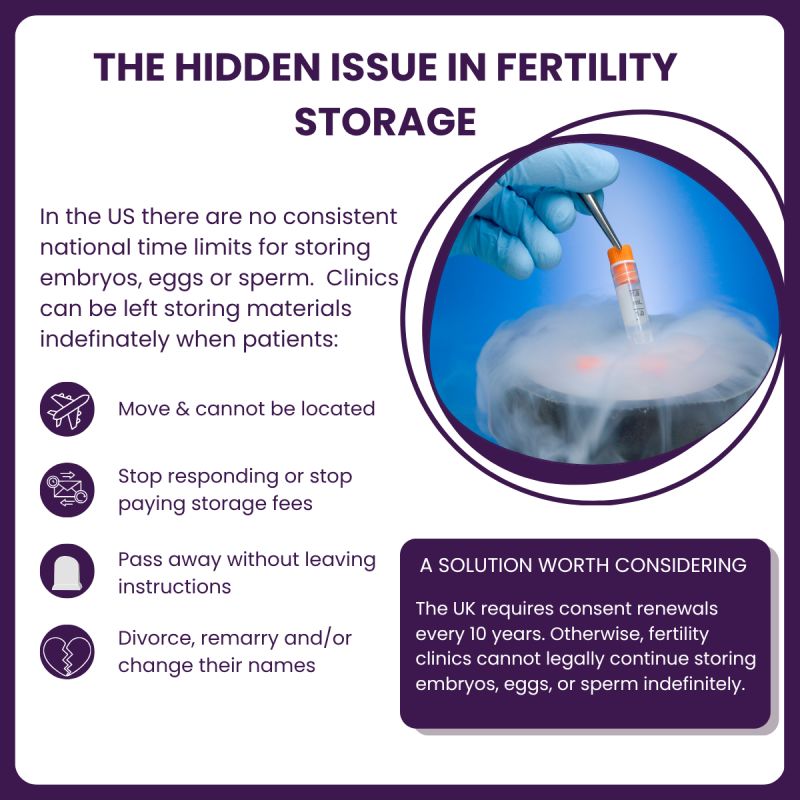
Across the United States, fertility clinics may end up storing reproductive material for decades with little or no contact from the patients involved. Some patients relocate overseas or live internationally, making them difficult to locate. Others divorce, lose interest in treatment, or simply stop responding to emails and invoices.
In some situations, intended parents die without leaving clear instructions, forcing surviving children or heirs to make emotionally difficult decisions about embryos, eggs, or sperm they never expected to inherit responsibility for. If a parent cannot make the decision to destroy their embryos themselves, pushing that responsibility onto their heirs may be unfair and emotionally overwhelming.
Unlike the United Kingdom, the United States has no consistent national storage time limits for reproductive material. As a result, many clinics are left carrying indefinite legal, ethical, logistical, and financial responsibility for long-abandoned specimens.
The UK has attempted to address this issue through laws requiring consent renewals every 10 years. If patients fail to renew consent, clinics cannot legally continue storing the materials.
While these laws have recently generated controversy and emotional court battles, they also raise an important question:
Should fertility clinics be expected to store embryos, eggs, and sperm forever when patients cannot be located, no longer respond, or leave no clear future instructions?
As fertility preservation becomes increasingly common, this conversation will only grow more important for clinics, patients, attorneys, and policymakers alike.”
Stay updated on all scientific advances in the field of fertility with Fertility News.
-
Sep 13, 2026, 15:11Sachintha Alwis: From Impaired Sperm Motility to Microrobotics
-
Sep 13, 2026, 15:08Laurence Orbuch: Before Endometriosis Surgery, Ask…
-
Sep 13, 2026, 15:05Ademola Ayodele: IUI, IVF or Egg Freezing – Which One Is Right for You?
-
Sep 13, 2026, 14:59Fiona Pathiraja-Møller: Tennis Players No Longer Have to Choose Between Career and Family
-
Sep 13, 2026, 14:571-Day Virtual Experience for People Impacted by PMOS – PCOS Awareness Association
-
Sep 13, 2026, 14:53Ozor Victor: Behind Every Embryo Is a Story of Science, Precision, and Hope
-
Sep 13, 2026, 14:50Diana Kayal: What They Don’t Tell You About IVF
-
Sep 13, 2026, 14:44Vikram Sinai Talaulikar: A Heartfelt Thank You to All Who Donated and Supported “Menopause and Cancer”
-
Sep 13, 2026, 14:41Nicole McPherson: Changing IVF Practices Is Hard – Integration Needs to Be Easy