

Immune Regulation Insights from RaFJC Conference – Reproduction and Fertility
Reproduction and Fertility shared a post on LinkedIn:
“Day 5 and the final day of RaFJC – Immune Regulation Across Reproduction: From Mechanisms to Therapies
Over the past five days, we’ve explored the immune and inflammatory continuum in reproduction:
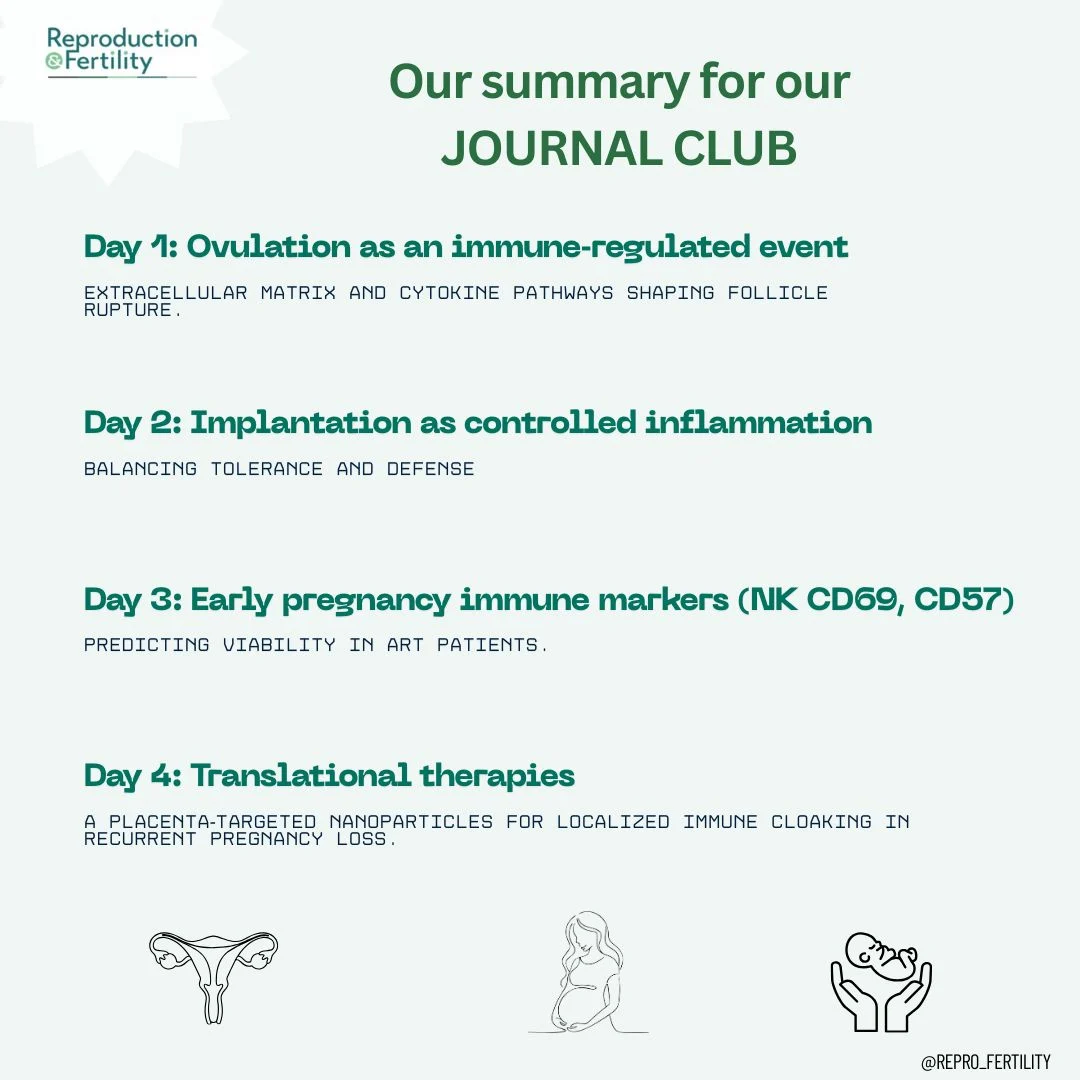
During Day 1, we discussed ovulation as an immune-regulated event, with extracellular matrix and cytokine pathways shaping follicle rupture.
On Day 2, we discussed implantation as a form of controlled inflammation that balances tolerance and defense.
On Day 3, we explored how early-pregnancy immune markers (NK CD69, CD57) may predict viability in ART patients.
On Day 4, we theorised about an innovative translational therapy: placenta-targeted nanoparticles for localised immune cloaking in recurrent pregnancy loss.
Today, we synthesise these insights to highlight future directions in reproductive immunology.
Immune balance is central: too much inflammation leads to implantation failure, while too little results in poor tissue remodeling.
Peripheral biomarkers matter: blood-based immune signatures may offer early diagnostic tools for pregnancy outcomes.
Targeted therapies are the future: moving away from systemic immunosuppression toward site-specific immune modulation (e.g., nanoparticles, ligand-based cloaking).
Cost and scalability: innovative therapies must be affordable and manufacturable at scale to reach patients globally.
Immune pathways guide reproduction from ovulation to delivery.
By integrating basic science, clinical diagnostics, and translational therapies, we can:
- improve fertility treatments
- reduce miscarriage rates
- enhance maternal and fetal health outcomes
This continuum underscores the importance of multidisciplinary collaboration between immunologists, clinicians, and translational researchers.
Share your opinion:
- Which biomarkers should be prioritized for clinical validation?
- How can we ensure equitable access to emerging therapies?
- Which collaborations are needed to accelerate translation from the lab to the clinic?”
Stay updated on all scientific advances in the field of fertility with Fertility News.
-
Oct 11, 2025, 06:44The Global IVF Market Is Set to Reach $65B by 2032 – Meddilink
-
Mar 16, 2026, 13:30Simon Meagher and Rabih Chaoui Discuss Fetal Heart Scanning in the Latest ISUOG Podcast – ISUOG
-
Mar 16, 2026, 12:58Exploring the Link Between Adenomyosis and Proliferative Endometrial Disorders – Fertility and Sterility
-
Mar 16, 2026, 12:55Nicola Pozzi: A New Mechanism to Reduce Thrombus Formation Without Increasing Bleeding Risk
-
Mar 16, 2026, 12:44Endometriosis Awareness Month Virtual Issue! – ISUOG
-
Mar 16, 2026, 12:30Jeanne Conry: When the Government Intervenes, Women Die
-
Mar 16, 2026, 12:23Magdalena Simonis Highlights the Need to Change the Rhetoric on Endometriosis
-
Mar 16, 2026, 12:00Julia Chain Highlights Fertility Preservation as Part of Women’s Health Campaign – HFEA
-
Mar 15, 2026, 15:26Watching Life Begin: Scientists Track Embryo Implantation in Real Time! – Science Magazine
-
Mar 15, 2026, 15:03Reem Abu-Rustum Spotlights Fetal Situs in New ISUOG Quiz – ISUOG