
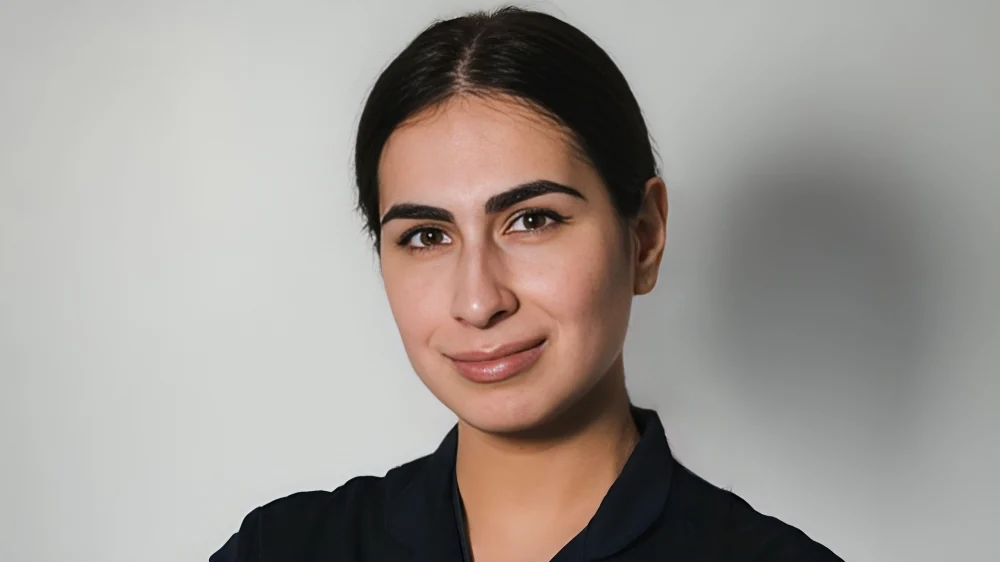
Nargiz Yusifli: What’s the Most Difficult Complication of IVF?
Nargiz Yusifli, shared a post on LinkedIn:
“What’s the most difficult complication of IVF?
The answer might be unexpected.
The hardest complication is not physical – it’s the emotional pain and disappointment.
IVF is not always an easy journey. Its success depends on many factors, subtle details, and, most importantly, the individual characteristics of each couple. We are all different – unique in our genetics, biology, and personal histories.
The most heartbreaking part is going through this long, challenging process… and not seeing the result.
Going through egg retrieval – and getting no eggs.
Getting eggs – and ending up with no embryos.
Getting embryos – and learning after testing that all have chromosomal abnormalities.
Having healthy, high-quality embryos, doing the transfer – and still not seeing a pregnancy.
This is painful – not only for the couple going through it, but also for the doctor walking alongside them.
The success of IVF depends on many elements:
- the woman’s age
- ovarian reserve
- egg quality
- partner’s sperm quality
- overall health
- and dozens of other subtle, often invisible factors.
If every stage were always perfect, reproductive specialists wouldn’t be needed.
But when a couple comes to us, it means there is a challenge – and our path is to search for the solution together.
Only as a team – doctor and patient we can walk this road with full awareness.
From the very start, it’s important to discuss all possible scenarios, evaluate the prospects, set realistic expectations – and then move forward.
When an athlete competes, they accept both outcomes – victory and defeat. Otherwise, their nervous system would simply collapse under the pressure.
I prepare my patients in the same way: respecting their hope, but grounding them in reality.
Because even if the result doesn’t come on the first attempt – it should not become the greatest trauma of their life. It’s not always someone’s fault. Often, it’s simply how the body works.
Sometimes it just needs to be understood more deeply, the right key found – and then success will come.”
-
Sep 19, 2026, 17:48Gaurav Gangwani: 40% of Infertile Men Have Varicocele, but Some Fertility Doctors Don’t Screen for It Routinely
-
Sep 19, 2026, 17:45Steven Leist: No One Should Have to Navigate the Path to Parenthood Alone
-
Sep 19, 2026, 17:43Gautam Allahbadia: An Embryo’s Journey Doesn’t Always Follow a Perfectly Predictable Path
-
Sep 19, 2026, 17:41Aumatma Simmons: Fertility Progress Isn’t Always All-or-Nothing
-
Sep 19, 2026, 17:37Emre Seli: Useful Information for Counseling Patients After an IVF Cycle with Complete Embryo Developmental Arrest
-
Sep 19, 2026, 17:34Lucas Almoño: When a Team Is Built with Outstanding People, the Impact Is Even Greater
-
Sep 19, 2026, 17:31MEFS 2026 Is Where Knowledge Moves Forward
-
Sep 19, 2026, 17:30Baroness Geeta Nargund: Speaking About the Urgent Need for Fertility Education in the UK House of Lords
-
Sep 19, 2026, 17:27Mahnaz Fida: Beyond IVF – A Patient-Centred Journey from Fertility Assessment to Parenthood