
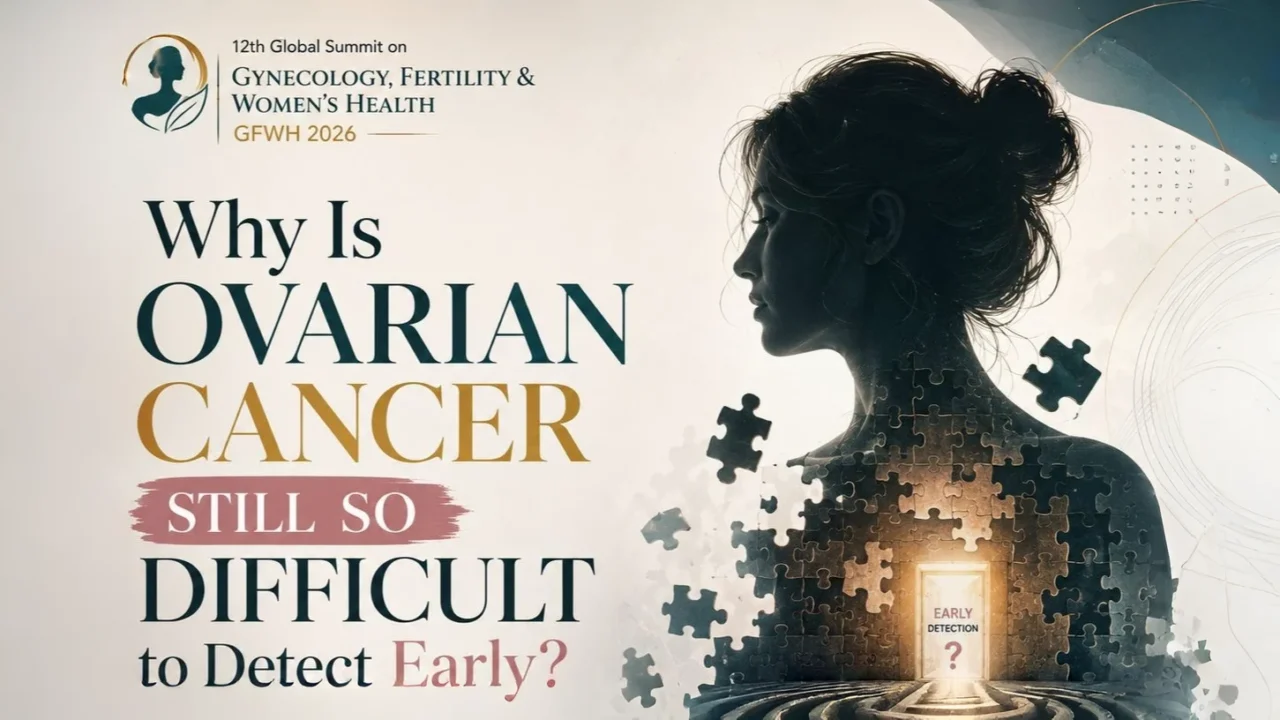
Devyanshi Dixit: Why Is Ovarian Cancer Still So Difficult to Detect Early?
Devyanshi Dixit, Program Manager at CLS Event and Publication and Conference Manager at the 12th Global Summit on Gynecology, shared on LinkedIn:
”Why Is Ovarian Cancer Still So Difficult to Detect Early?
Ovarian cancer is often called a ‘silent’ cancer.
The bigger problem is that its early symptoms can be subtle, common, and easily mistaken for everyday conditions.
And by the time persistent symptoms raise concern, the disease may already be more advanced.
What Makes Early Detection So Difficult?
- Symptoms can be vague
Bloating, pelvic or abdominal discomfort, feeling full quickly, urinary changes, or changes in bowel habits can have many causes.
- There is no reliable routine screening test for average – risk women
Unlike cervical cancer, there is currently no established population-wide screening strategy proven to reduce ovarian cancer mortality.
- Imaging has limitations
Ultrasound can identify ovarian abnormalities, but distinguishing benign findings from early cancer can be challenging.
- Biomarkers aren’t the complete answer – yet
Markers such as CA-125 can support evaluation in appropriate clinical settings, but they are not specific enough to serve as a standalone screening test for the general population.
- Cancer isn’t one disease
Ovarian cancers are biologically diverse. Different molecular pathways can behave very differently, making one universal detection strategy difficult.
Where Is Research Heading?
The next generation of detection may combine:
- Genomic and molecular biomarkers
- Liquid biopsy and circulating tumor DNA
- Artificial intelligence and predictive analytics
- Multi-marker blood tests
- Advanced imaging and image analysis
- Individualized risk prediction
At the 12th Global Summit on Gynecology, Fertility and Women’s Health (GFW 2026), experts will explore emerging advances in gynecologic oncology, precision medicine, molecular diagnostics, AI, and women’s healthcare.
- November 23-24, 2026
- Bangkok, Thailand
The challenge isn’t simply finding ovarian cancer earlier.
It’s finding it earlier – accurately enough to change the outcome.”
Other articles featuring Devyanshi Dixit on Fertility News.
-
Oct 21, 2026, 17:57Ula Sankowska: What I’ll Bring to ASRM INNOVATE in Baltimore
-
Oct 21, 2026, 17:40Robert Borowczyk: The Invisible Waiting Room
-
Oct 21, 2026, 17:35Fereshteh Safian: Behind the Scenes of Reproductive Medicine
-
Oct 21, 2026, 17:20The Relationship Between Trophectoderm Biopsy and Early Pregnancy Outcomes – RBMO
-
Oct 21, 2026, 17:09Jules McDonald: The Future of Fertility Is Happening in Abu Dhabi
-
Oct 21, 2026, 16:53Ashley Evans: I Never Imagined I’d Be a Fertility Story with a Group of People Whom I Have Never Met…
-
Oct 21, 2026, 16:41Karthik Raj: Asherman’s Syndrome – When the Endometrium Cannot Regenerate Normally
-
Oct 21, 2026, 16:36Katy Encalade: A Few Misconceptions I Think Every Woman Considering Egg Donation Deserves to Understand
-
Oct 21, 2026, 16:21The FeRGI Working Group 2026-2027 – ESHRE SIG Reproductive Genetics