
Rahul Manoj: Key Techniques for Sperm Immobilization in ICSI to Improve Fertilization Success
Rahul Manoj, Senior Embryologist at Best Life Fertility Center, shared a post on LinkedIn:
“Day 37 — Sperm Immobilization for ICSI: Technique, Importance and Media
Before a single sperm enters the oocyte, one of the most delicate yet crucial steps in ICSI is sperm immobilization. Though it may seem routine, how and where we immobilize the sperm directly affects fertilization success and oocyte activation.
Why Immobilize Sperm?
- To halt tail movement for smooth aspiration and controlled injection.
- To induce membrane rupture, enabling release of oocyte-activating factors (like PLCζ).
- To enhance fertilization — non-immobilized sperm often fail to trigger oocyte activation.
Correct Immobilization Technique
- Under 400×–600× magnification, select a progressively motile, morphologically normal sperm.
- Align tail perpendicular to the holding pipette.
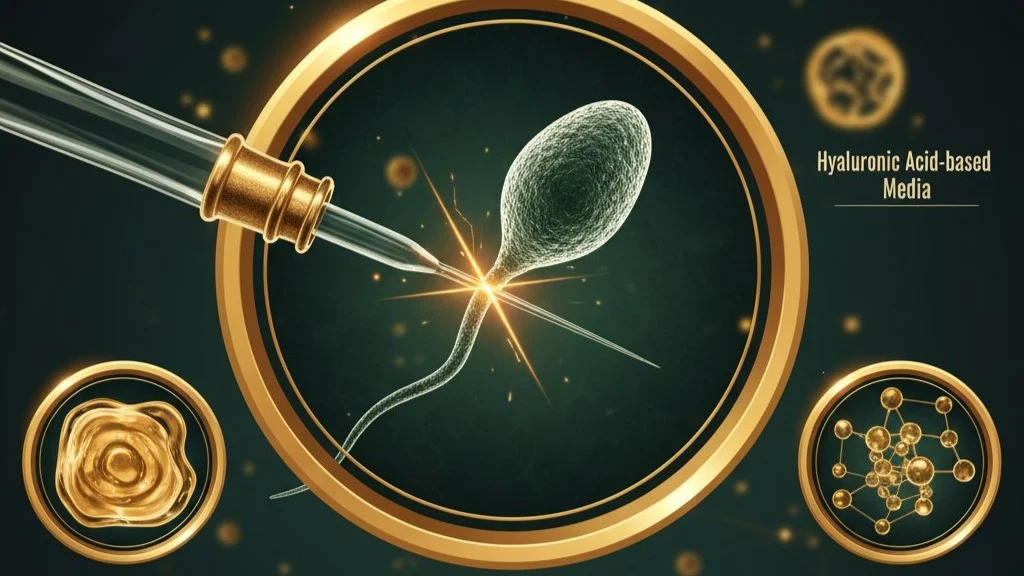
- Press gently at the mid or distal tail (midpiece–principal piece junction) with the ICSI pipette until the tail snaps.
- Confirm complete immobilization — sperm stops moving, but head integrity remains intact.
- Aspirate sperm for injection.
Media Used to Slow Down or Immobilize Sperm
Different media help reduce sperm motility and facilitate easier immobilization under the microscope:
Media to slow down sperm motility during sperm selection for ICSI
PVP (Polyvinylpyrrolidone) 7–10% viscous polymer solution Temporarily slows down sperm, making handling easier before immobilization.
Hyaluronic Acid-based Media (HA Binding Media) Mimics zona pellucida binding Slows down sperm naturally; helps select mature, DNA-intact sperm for ICSI (PICSI method).
Sperm Slow (Commercial) Viscous buffered medium containing methylcellulose Reduces motility without altering membrane integrity; ideal for microinjection timing.
Common Errors to Avoid
- Immobilizing near the head → risks acrosome or DNA damage.
- Incomplete tail breakage → sperm remains motile, increasing oocyte rupture risk.
- Overexposure to viscous media → may hinder sperm retrieval and viability.”
Stay updated on all scientific advances in the field of fertility with Fertility News.
-
Sep 18, 2026, 20:27Hrishikesh Pai: Rethinking Male Infertility
-
Sep 18, 2026, 20:25Eric Verdin: Wrapping Up the Reproductive Aging Summit at the Center for Healthy Aging in Women
-
Sep 18, 2026, 20:21Investigating Pregnancy Outcomes in Women with Idiopathic POI – RBMO
-
Sep 18, 2026, 20:18Sue Ritchie: Why Aren’t We Talking About Male Fertility More?
-
Sep 18, 2026, 20:13Salma Yasin: Every Day of BFS Study Week 2026 Has Been an Exceptional Learning Experience
-
Sep 18, 2026, 20:01Qingcai Wang: Over 35 and Torn Between Trying Longer and Starting IVF?
-
Sep 18, 2026, 19:58Bhumika: Can a Woman Become Pregnant Again While Already Pregnant?
-
Sep 18, 2026, 19:5215 More Experts Join the International Fertility Forum Mumbai 2026
-
Sep 18, 2026, 19:50Curious About What Happens Behind the Scenes in the Labs? – Sims IVF