

Vikram Sinai Talaulikar: Busy Weeks in Clinic: Reflections on Menopause Care
Vikram Sinai Talaulikar, Associate Specialist in Reproductive Medicine at UCLH and Hon, shared a post on LinkedIn:
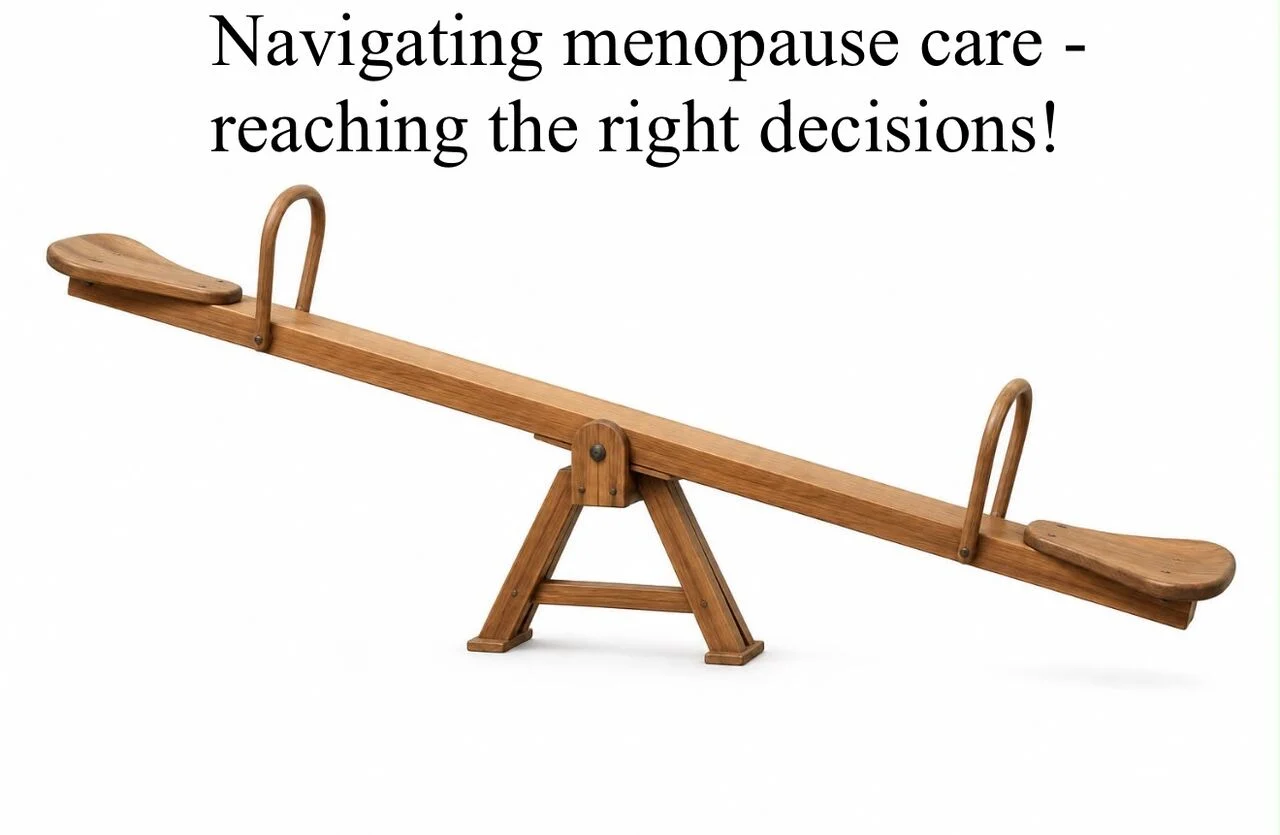
“It has been busy few weeks of clinics and some reflections on the variations in advice we provide for menopause care.
A 54 year old who had stopped her periods for a year and was experiencing typical menopause symptoms presented to her healthcare provider. She had no background medical problems but was worried about the risk of breast cancer associated with oestrogen and progesterone use. She was counselled about the risk based on guidelines which suggested a risk with both oestrogen and progesterone part of HRT. She felt that the risk was not something she was comfortable with but did decide to seek an alternative opinion. This time she was presented with data and figures which suggested a reduced risk of breast cancer with oestrogen and slightly increased risk with the combination. She felt confused – who to believe!
Another woman who had considered systemic HRT for menopause at 55, less for symptoms but mainly for long-term health benefits was counselled by one healthcare professional about multiple benefits for long-term cognitive health, bone and cardiovascular health while another healthcare professional advised against HRT purely for long-team health benefits in absence of symptoms. She felt confused – who to believe!
A 45 year old woman saw her healthcare professional for symptoms suggestive of menopause and requested HRT but was advised against it as she continued to have monthly periods and she could put herself at a risk of excess hormones. She consulted an alternative provider who suggested that it was fine for her to start HRT and offered a prescription advising no such risks of excess hormones would apply to her. The woman felt confused – who to believe!
Yet another woman who had started continuous combined HRT for menopause in her 50s had started experienced bleeding in the 3rd month of initiating her HRT. She had had no bleeding for past 2 years. She saw her healthcare provider who referred her for an urgent ultrasound scan on a cancer pathway for postmenopausal bleeding. She was anxiously waiting for her scan appointment when another healthcare provider called her to cancel her scan and suggested that it was not uncommon to bleed in the first 6 months of starting HRT and that she no longer needs a scan now but a review later. She felt confused – who to believe!
There are even more examples. Navigating menopause care can be confusing for patients. We need to continue our efforts to support them in decision making based on the best possible scientific evidence we have and it can be challenging at times!”
Stay updated on all scientific advances in the field of fertility with Fertility News.
-
Oct 21, 2026, 17:57Ula Sankowska: What I’ll Bring to ASRM INNOVATE in Baltimore
-
Oct 21, 2026, 17:40Robert Borowczyk: The Invisible Waiting Room
-
Oct 21, 2026, 17:35Fereshteh Safian: Behind the Scenes of Reproductive Medicine
-
Oct 21, 2026, 17:20The Relationship Between Trophectoderm Biopsy and Early Pregnancy Outcomes – RBMO
-
Oct 21, 2026, 17:09Jules McDonald: The Future of Fertility Is Happening in Abu Dhabi
-
Oct 21, 2026, 16:53Ashley Evans: I Never Imagined I’d Be a Fertility Story with a Group of People Whom I Have Never Met…
-
Oct 21, 2026, 16:41Karthik Raj: Asherman’s Syndrome – When the Endometrium Cannot Regenerate Normally
-
Oct 21, 2026, 16:36Katy Encalade: A Few Misconceptions I Think Every Woman Considering Egg Donation Deserves to Understand
-
Oct 21, 2026, 16:21The FeRGI Working Group 2026-2027 – ESHRE SIG Reproductive Genetics