

AI Can Watch Your IVF Embryo Grow and Predict If It’s Chromosomally Normal, Without Any Biopsy – Fertility Plus
Fertility Plus shared a post on LinkedIn:
“AI Can ‘Watch’ Your IVF Embryo Grow and Predict If It’s Chromosomally Normal — Without Any Biopsy!
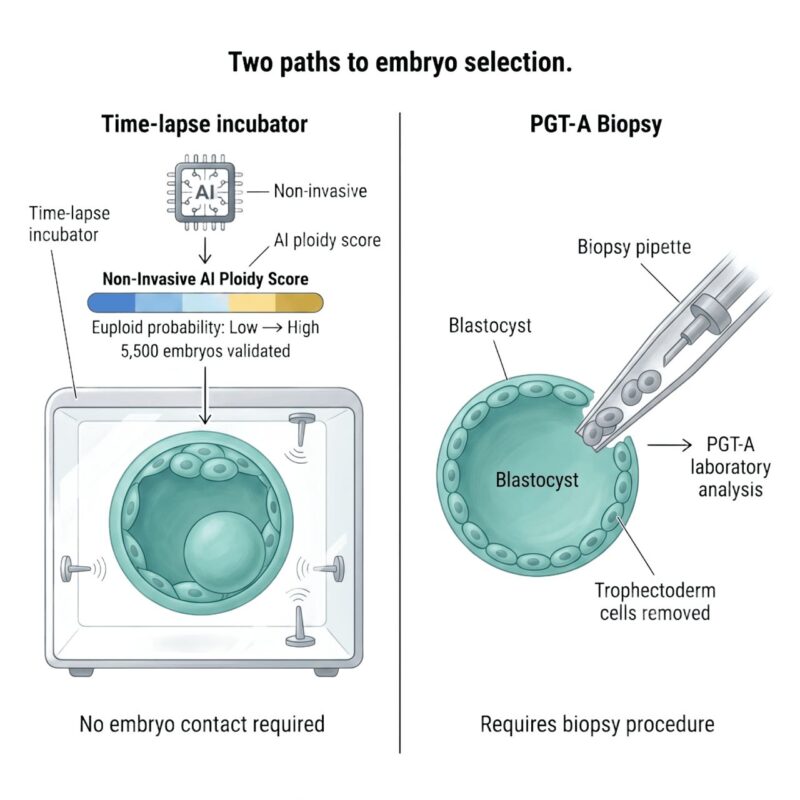
Imagine your IVF clinic using the same time-lapse videos they already record to quietly check which embryos are more likely to have the right number of chromosomes. A major new study trained an AI system on over 5,500 embryos from four different IVF clinics. Instead of taking cells from the embryo (which is invasive and expensive), the AI simply watches the full ‘movie’ of the embryo developing from fertilization to blastocyst stage.
It gives each embryo an AI ploidy score. The higher the score, the higher the chance the embryo is euploid (chromosomally normal). These higher-scoring embryos were also more likely to result in a fetal heartbeat after transfer. When doctors combined the AI score with the usual visual grading of embryos, they could predict which ones were likely normal even better than with visual grading alone.
This is exciting news for patients who cannot or do not want PGT-A genetic testing due to cost, personal choice, or limited embryos. It offers a safe, non-invasive extra layer of information using data your clinic is already collecting. The study shows the tool works across different clinics, making it more reliable for real-world use. While more research is still needed, this could help many couples feel more confident when choosing which embryo to transfer.
For any inquiries or questions, please email:
Giménez-Rodríguez C, Shapiro M, Tauber Y, Lustgarten N, Seidman DS, Gilboa D, Meseguer M. Bridging the gap between embryo euploidy, pregnancy potential and artificial intelligence: an AI-driven ploidy model using spatio-temporal time-lapse data. Reprod Biomed Online. In press 2025.
If you found this helpful, subscribe and follow for more clear, hopeful updates on the latest in fertility science and IVF breakthroughs!”
Stay updated on all scientific advances in the field of fertility with Fertility News.
-
May 14, 2026, 17:13Ribociclib Plus Letrozole in Recurrent Low-Grade Serous Carcinoma of the Ovary – IJGC
-
May 14, 2026, 17:11Christopher Robinson: Isolated Severe Systolic Hypertension During Delivery Admission and Maternal Outcomes
-
May 14, 2026, 17:08Ally Murji: Honoured to Deliver the 51st Annual RT Weaver Lecture at McMaster University
-
May 14, 2026, 17:00Your Hair Dye Could Be Affecting Your Fertility – Fertility Plus
-
May 14, 2026, 16:53Devora Lieberman on Reduced-Tip Needle Design and Its Role in Egg Collection for Older Women – City Fertility
-
May 14, 2026, 12:04Asma Khalil: Why Twin Pregnancies Need More Than Routine Monitoring?
-
May 14, 2026, 12:01Marco Zaccaria: Why Distension Media Selection Matters in Modern Hysteroscopy
-
May 14, 2026, 11:58Mathew Leonardi: PCOS Has Been Renamed to PMOS and It Changes How We Understand the Disease
-
May 14, 2026, 10:41Nitin Kataria: Should Every IVF Lab Track KPI Trends Publicly?