

Mathew Leonardi: PCOS Has Been Renamed to PMOS and It Changes How We Understand the Disease
Mathew Leonardi, Associate Professor at McMaster University, shared a post on LinkedIn about a paper by Helena Teede et al. publsihed in The Lancet:
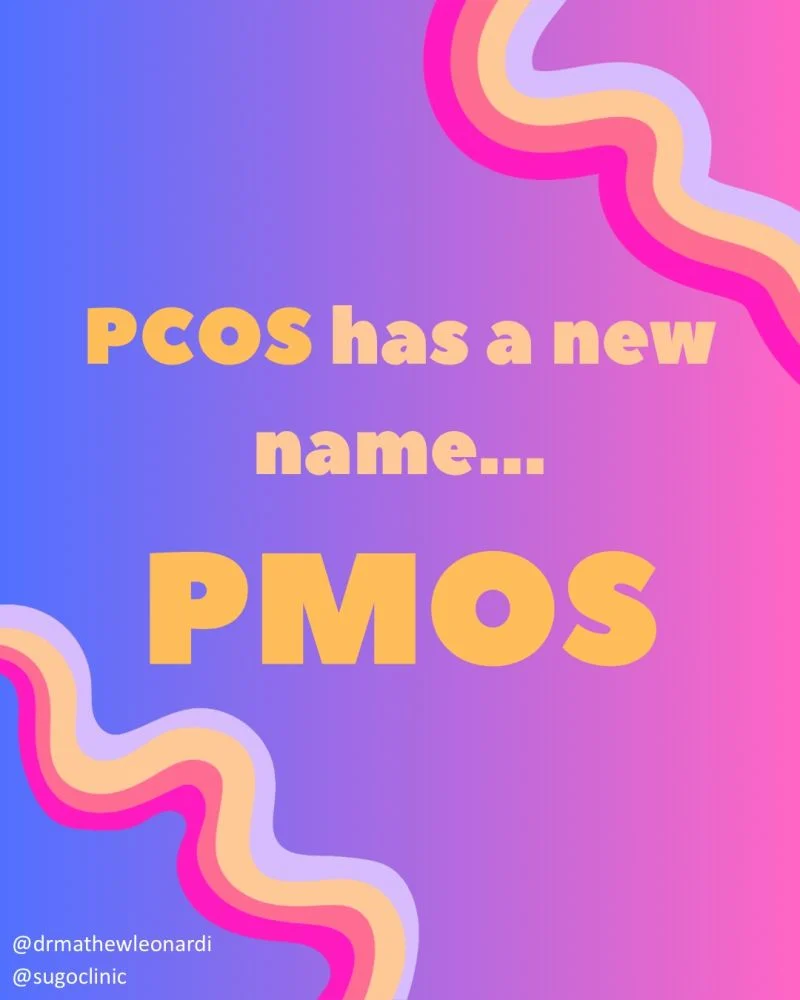
“PCOS has a new name: PMOS.
Polyendocrine Metabolic Ovarian Syndrome.
Honestly, I think this is a welcomed and important change. And the update deserves to be shared widely!
Every day in clinic, and at SUGO where we scan thousands of individuals, I see how much confusion the term ‘PCOS’ has created over the years. Patients are constantly told they either do or do not have the condition based mainly on whether their ovaries look ‘polycystic’ on ultrasound, when that has never been the full story. Many come in worried they have ‘ovarian cysts,’ others are reassured they cannot possibly have PCOS because their ovaries look normal, and meanwhile the broader hormonal and metabolic features of the condition are often missed or minimized.
The reality is that this has always been a far more complex endocrine and metabolic syndrome than the name suggested.
The updated term, PMOS, reflects that complexity much more accurately:
P for Polyendocrine, because multiple hormonal systems can be involved.
M for Metabolic, because insulin resistance and metabolic dysfunction are central features for many patients.
O for Ovarian, because the ovaries still matter, but are only one component of the condition.
S for Syndrome, because this does not present the same way in every individual.
One of the biggest misconceptions created by the old name is the idea that PCOS was fundamentally a disease of ‘ovarian cysts.’ In reality, what we typically see on ultrasound are multiple follicles, not pathologic ovarian cysts, and not every patient with the syndrome will even have classic ovarian morphology on imaging.
That misunderstanding has had real consequences. I see it constantly in practice. It contributes to delayed diagnosis, fragmented care, inappropriate reassurance, and patients feeling dismissed when their symptoms do not fit a narrow or outdated definition of the condition.
So while changing a name does not automatically fix gaps in care, terminology still matters. The language we use shapes how clinicians think, how patients understand their health, and how seriously a condition is taken.”
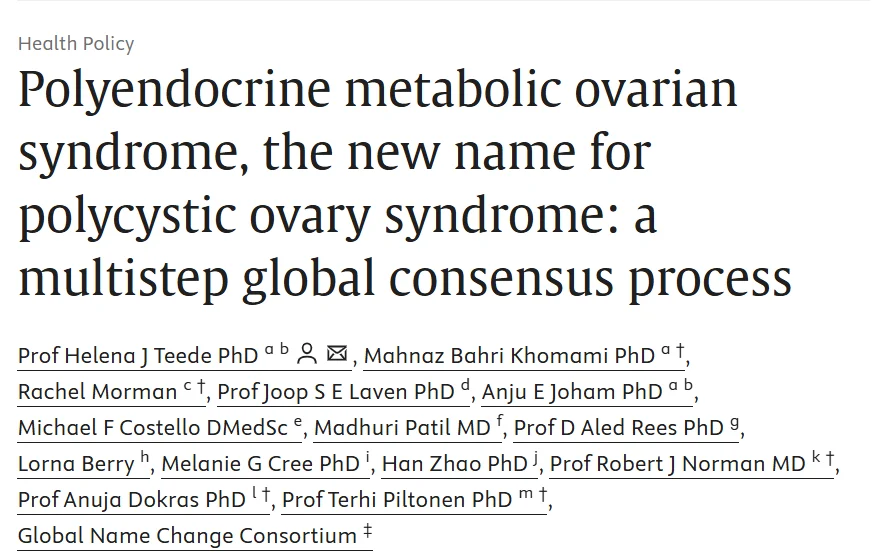
Title: Polyendocrine metabolic ovarian syndrome, the new name for polycystic ovary syndrome: a multistep global consensus process
Authors: Helena J Teede, Mahnaz Bahri Khomami, Rachel Morman, Joop S E Laven, Anju E Joham, Michael F Costello, Madhuri Patil, D Aled Rees, Lorna Berry, Melanie G Cree, Han Zhao, Robert J Norman, Anuja Dokras, Terhi Piltonen, Global Name Change Consortium
Read the full article.
Stay updated on all scientific advances in the field of fertility with Fertility News.
-
Sep 30, 2026, 17:51Devyanshi Dixit: 11 Years of Knowledge, Connection, Advancing Women’s Health, Now Preparing for the 12th Edition
-
Sep 30, 2026, 17:48Ashley Evans: Infertility Isn’t Something You Can Simply Relax Your Way Out Of
-
Sep 30, 2026, 17:41Mark Trolice: New SIG: Independent Fertility Practices
-
Sep 30, 2026, 17:34Abdelrahman H. Daifalla: The Clinical Reality of IVF Is More Complex…
-
Sep 30, 2026, 17:24Nicole Homan: Ovulation Is Not the Endpoint in PMOS Fertility Care
-
Sep 30, 2026, 17:13Devyanshi Dixit: What Happens When Chronic Pelvic Pain Becomes a Brain Problem?
-
Sep 30, 2026, 16:52Tunzala Ibadova: A Successful IVF Case – Individualized Approach to HLA Compatibility and Embryo Transfer
-
Sep 30, 2026, 16:49Robert Borowczyk: An IVF Conversion Rate Can Jump from 40% to 50% without 1 Extra Patient Starting Treatment
-
Sep 30, 2026, 16:46Asma Khalil: Important Reassurance for Women Who Become Pregnant after Taking GLP-1 Medicines