
Photo: DepositPhotos
Sep 8, 2026, 16:42
How Environmental and Lifestyle Exposures Could Play a Role in Fertility Outcomes – EMJ
European Medical Journal (EMJ) shared a post on LinkedIn about a paper by Myriam Mrad et al. published in EMJ Human Reproduction:
“IVF success may be influenced by more than clinical factors alone.
Explore how environmental and lifestyle exposures could play a role in fertility outcomes and what emerging evidence may mean for reproductive care.
Speaker is AI-generated.”
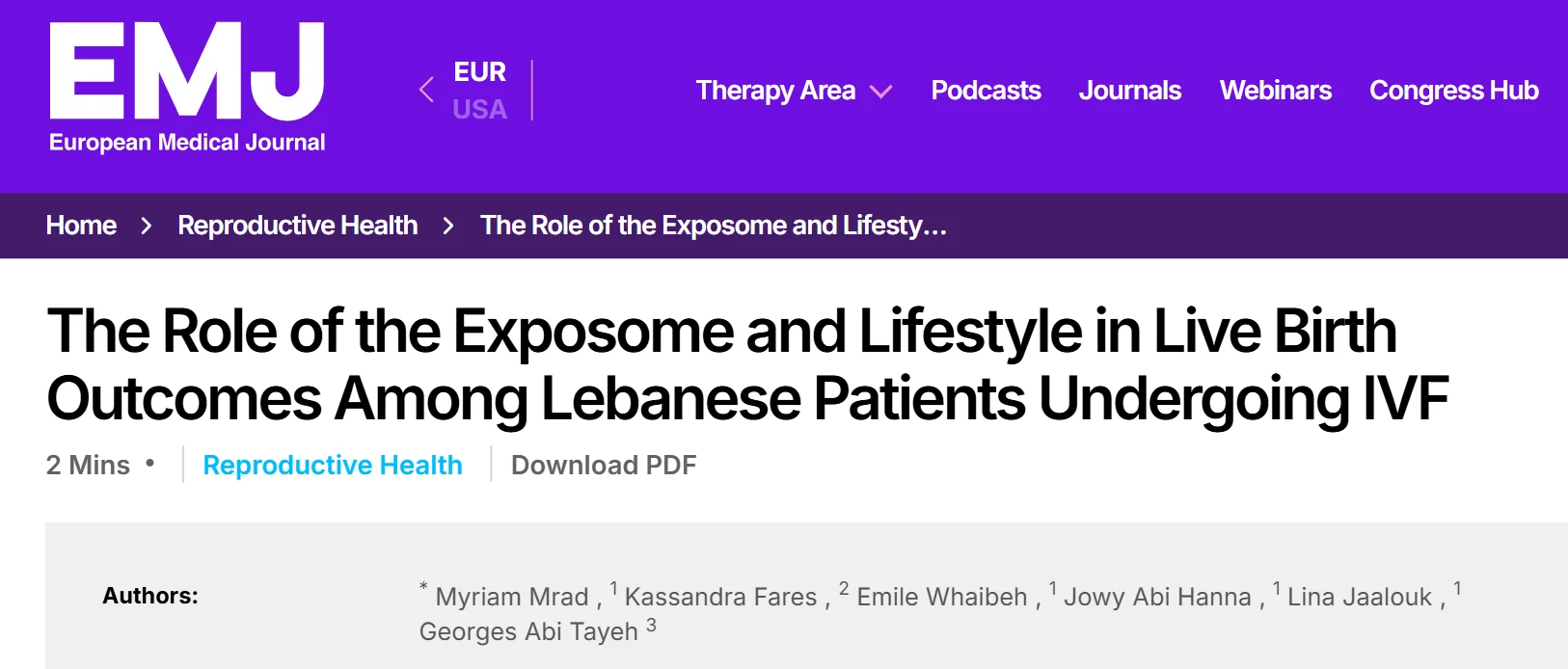
Title: The Role of the Exposome and Lifestyle in Live Birth Outcomes Among Lebanese Patients Undergoing IVF
Authors: Myriam Mrad, Kassandra Fares, Emile Whaibeh, Jowy Abi Hanna, Lina Jaalouk, Georges Abi Tayeh
You can read the Full Article in EMJ Reproductive Health․
Proceed to the video attached to the post.
Other articles featuring the European Medical Journal on Fertility News.
Emile Whaibeh
EMJ
Environmental Exposures
Environmental Health
European Medical Journal
Fertility
Fertility News
fertility outcomes
fertility research
Georges Abi Tayeh
in vitro fertilization
IVF
IVF Success
Jowy Abi Hanna
Kassandra Fares
Lifestyle and Fertility
Lifestyle Factors
Lina Jaalouk
Myriam Mrad
OBGYN
Reproductive Care
reproductive health
Reproductive Medicine
Reproductive Toxicology
Women’s Health
-
Oct 23, 2026, 17:34Breast Cancer Awareness Month: Supporting Women Through Every Journey – Egg Donor and Surrogate Solutions
-
Oct 23, 2026, 17:28Demián Glujovsky: What Happens to Fertility Patients Between Visits?
-
Oct 23, 2026, 17:21Stephen Parker Ellington: Empathetic Fertility Care Can Scale, Even When Your Team Can’t
-
Oct 23, 2026, 17:16ACOG Releases New Guidance on the Use of GLP-1s in Pregnancy and Lactation
-
Oct 23, 2026, 17:06Emad Sedeek: ESHRE Recommendations on Good Practice in the IVF Laboratory 2026 – Part 2
-
Oct 23, 2026, 16:59Nitiz Murdia: Guiding You Through IVF – Your Journey’s Pilot
-
Oct 23, 2026, 16:56Ben Peipert: Come See My Poster Presentation at ASRM 2026
-
Oct 23, 2026, 16:50New RBMO Review Examines Benefits and Risks of Freeze-All IVF Strategies Across Ovarian Response Groups
-
Oct 23, 2026, 16:381 Week and Counting to the Next Campus Course on Male Infertility – ESHRE