
Sargol Aminnezhad: How Fetal Cells Shape a Mother’s Body and Health
Sargol Aminnezhad, Post-doctoral Research Fellow at Tarbiat Modares University, shared a post on LinkedIn:
” ‘How Fetal Cells Shape a Mother’s Body and Health’
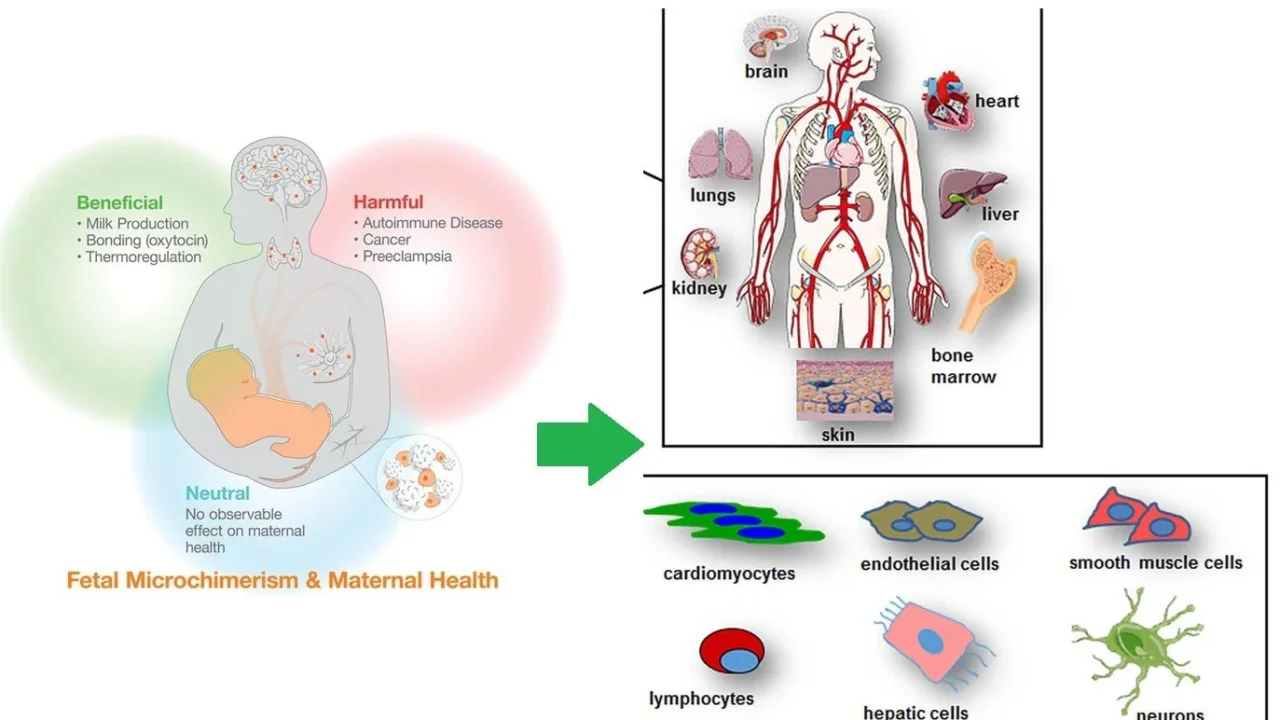
The concept of the mother–offspring tug-of-war provides an evolutionary framework for understanding the paradoxical role that fetal microchimerism plays in maternal health. During pregnancy, fetal cells can cross the placenta and take long-term residence within maternal tissues—a phenomenon known as fetal microchimerism. Research shows that these fetal cells may persist for decades and can exert both beneficial and detrimental effects on the mother.
Once in the maternal bloodstream, fetal cells can migrate and integrate into a variety of organs, including the liver, heart, thyroid, breast, and even the brain. Many of these tissues are deeply involved in regulating resource allocation, making them likely reservoirs for fetal cells. Within these tissues, the maternal immune system plays an active and dynamic role in shaping fetal–maternal interactions.
From an evolutionary perspective, these interactions can be viewed as a combination of cooperation and conflict. In some cases, fetal cells appear to assist in maternal tissue repair or enhance physiological functions such as lactation. In other cases, however, they may act in ways that prioritize fetal fitness—potentially competing for maternal resources and contributing to physiological strain or increased risk of autoimmune disorders.
Recent work by Amy Boddy and colleagues has significantly advanced our understanding of this phenomenon. Their research highlights that the impact of fetal microchimerism depends on where these cells settle and how they interact with local maternal tissues. The outcomes of these micro-level negotiations between mother and fetus—this ‘tug-of-war’—are therefore crucial in shaping maternal health and wellbeing.
References
Stay updated on all scientific advances in the field of fertility with Fertility News.
-
Sep 13, 2026, 15:11Sachintha Alwis: From Impaired Sperm Motility to Microrobotics
-
Sep 13, 2026, 15:08Laurence Orbuch: Before Endometriosis Surgery, Ask…
-
Sep 13, 2026, 15:05Ademola Ayodele: IUI, IVF or Egg Freezing – Which One Is Right for You?
-
Sep 13, 2026, 14:59Fiona Pathiraja-Møller: Tennis Players No Longer Have to Choose Between Career and Family
-
Sep 13, 2026, 14:571-Day Virtual Experience for People Impacted by PMOS – PCOS Awareness Association
-
Sep 13, 2026, 14:53Ozor Victor: Behind Every Embryo Is a Story of Science, Precision, and Hope
-
Sep 13, 2026, 14:50Diana Kayal: What They Don’t Tell You About IVF
-
Sep 13, 2026, 14:44Vikram Sinai Talaulikar: A Heartfelt Thank You to All Who Donated and Supported “Menopause and Cancer”
-
Sep 13, 2026, 14:41Nicole McPherson: Changing IVF Practices Is Hard – Integration Needs to Be Easy