
Michael Pendleton: Researchers Have Created the Lining of a Womb in a Dish
Michael Pendleton, Professor Emeritus of Law, shared a post on LinkedIn:
“Absolutely Fascinating, and a reminder from science that there’s no such thing as alternative facts.
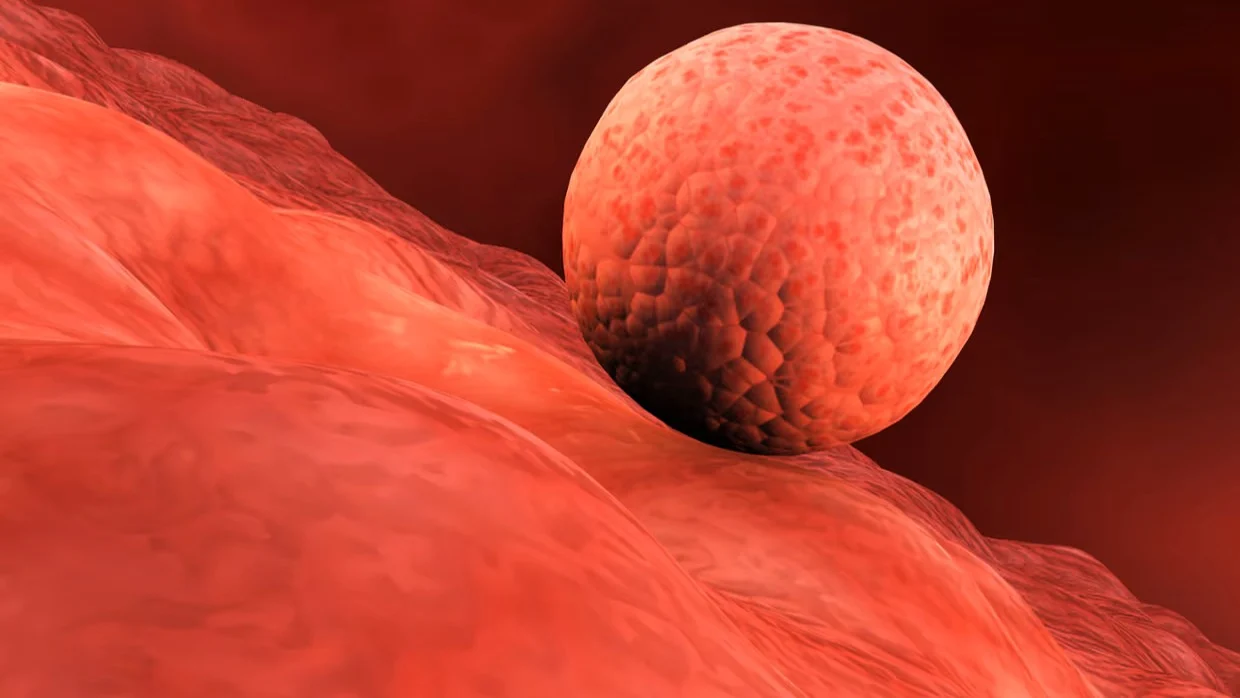
‘Researchers have created the lining of a womb in a dish, which promises to shed light on the mysterious early stages of human pregnancy and the glitches that can lead to miscarriage and medical complications.
In laboratory experiments, early-stage human embryos donated from couples after IVF treatment successfully implanted into the engineered lining and began to churn out key compounds, such as the hormone that results in a blue line on positive pregnancy tests.
The approach allowed scientists to eavesdrop on the chemical chatter that arises between the embryo and the womb lining as it embeds and begins to be nourished in the first weeks of gestation.
‘It’s incredible to see it,’ said Dr Peter Rugg-Gunn, a senior author on the study and group leader at the Babraham Institute in Cambridge. ‘Previously we’ve only had snapshots of this critical stage of pregnancy. This opens up a lot of new directions for us.’
Implantation takes place a week or so after fertilisation when the developing embryo attaches and then embeds itself into the uterus wall. It is a crucial phase in pregnancy, but the process is poorly understood because it is so hard to observe. Much of what is known comes from studies of hysterectomies that were performed in early pregnancy more than half a century ago.
To build the replica womb lining, Rugg-Gunn and his colleagues obtained uterine tissue from healthy women who donated biopsy samples. From this, the scientists isolated two different types of cells: stromal cells that give structural support to the womb lining, and epithelial cells, which form the lining’s surface. They encapsulated the stromal cells in a biodegradable material called a hydrogel and put the epithelial cells on top.
The researchers tested the engineered womb lining with donated early-stage IVF embryos. Writing in the journal Cell, they describe how the microscopic balls of cells attached and implanted as hoped. They then ramped up secretion of a hormone called human chorionic gonadotropin (hCG), the biochemical marker detected by pregnancy tests, along with other pregnancy-related compounds.
The technique enabled scientists to watch embryos grow for up to 14 days post-fertilisation, the legal limit for research. During the process, the embryos formed specialised cells and other cells involved in the growth of the placenta.’ ”
Stay updated on all scientific advances in the field of fertility with Fertility News.
-
Sep 18, 2026, 20:27Hrishikesh Pai: Rethinking Male Infertility
-
Sep 18, 2026, 20:25Eric Verdin: Wrapping Up the Reproductive Aging Summit at the Center for Healthy Aging in Women
-
Sep 18, 2026, 20:21Investigating Pregnancy Outcomes in Women with Idiopathic POI – RBMO
-
Sep 18, 2026, 20:18Sue Ritchie: Why Aren’t We Talking About Male Fertility More?
-
Sep 18, 2026, 20:13Salma Yasin: Every Day of BFS Study Week 2026 Has Been an Exceptional Learning Experience
-
Sep 18, 2026, 20:01Qingcai Wang: Over 35 and Torn Between Trying Longer and Starting IVF?
-
Sep 18, 2026, 19:58Bhumika: Can a Woman Become Pregnant Again While Already Pregnant?
-
Sep 18, 2026, 19:5215 More Experts Join the International Fertility Forum Mumbai 2026
-
Sep 18, 2026, 19:50Curious About What Happens Behind the Scenes in the Labs? – Sims IVF