
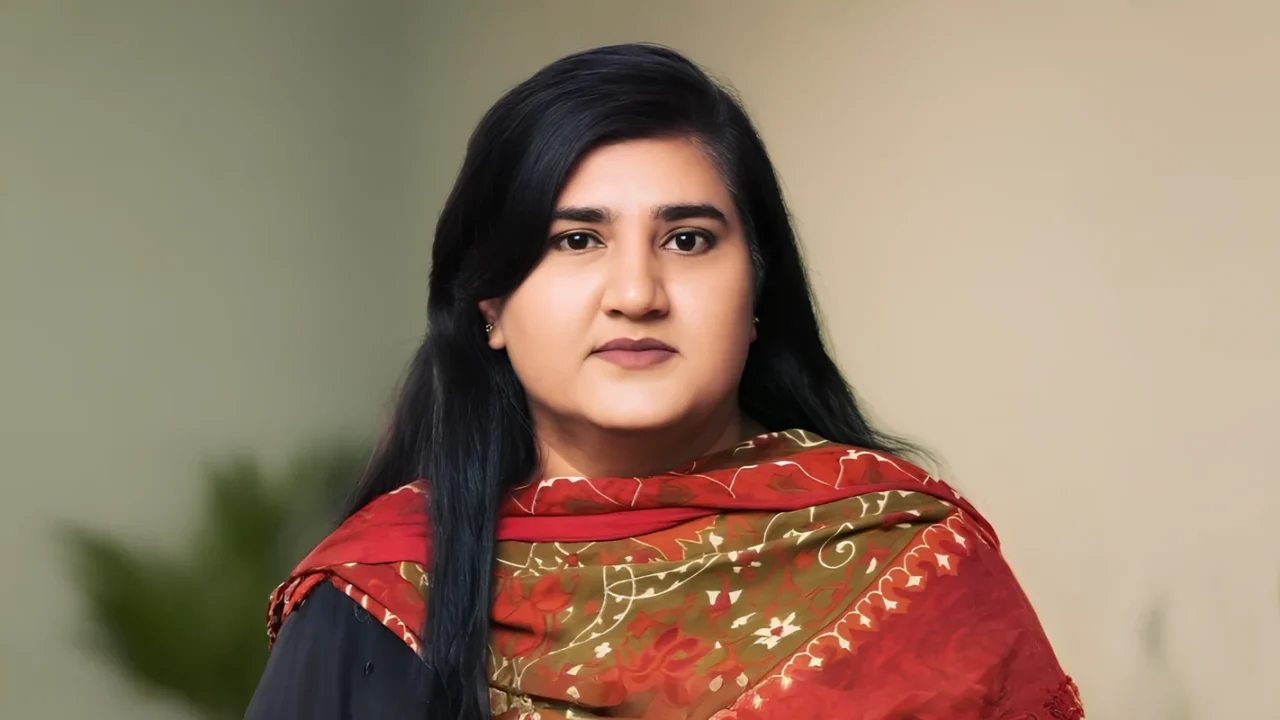
Saira Amir: Can a Semen Analysis Look Normal While the Sperm Epigenome Quietly Signals Reduced Fertility?
Saira Amir, Assistant Professor at COMSATS University Islamabad, shared a post on LinkedIn about a paper by Karolina Nowak et al. published in Human Reproduction:
”Can a semen analysis look normal while the sperm epigenome quietly signals reduced fertility?
How much biology do we miss when a semen report ends at count, motility and morphology?
A new study in Human Reproduction examined this question through the sperm epigenome.
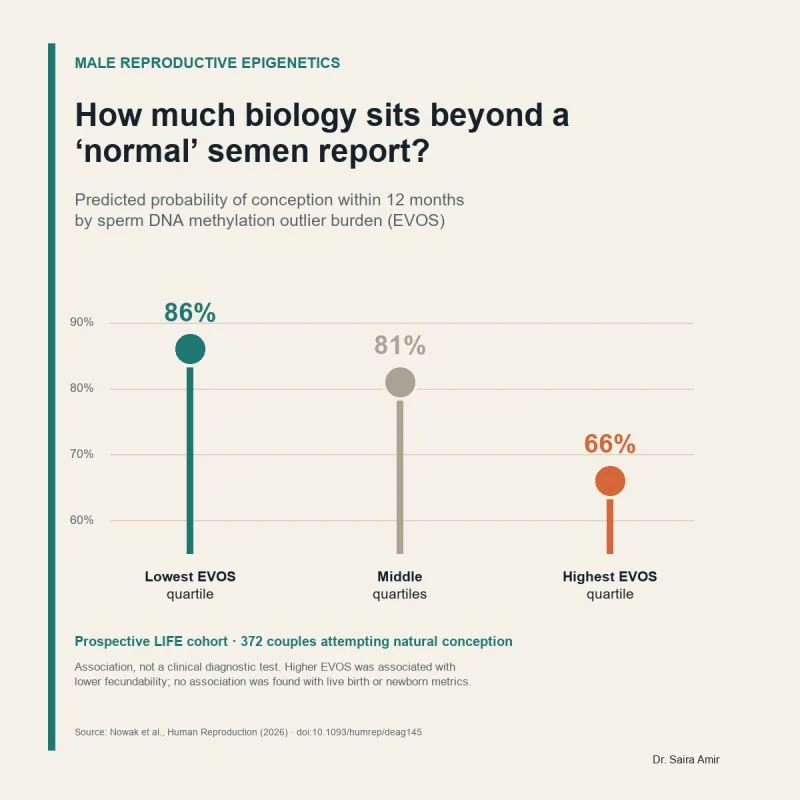
Researchers analysed sperm DNA methylation from 372 couples attempting natural conception. They developed EVOS, a measure of how many CpG sites in an individual’s sperm showed unusual deviations from expected methylation patterns.
The result deserves attention.
Couples in the highest EVOS quartile had a predicted 66% probability of conceiving within 12 months, compared with 86% among those in the lowest quartile.
After adjustment for male and female age, BMI and smoking, higher EVOS remained associated with a lower probability of conception per cycle.
What I found particularly interesting was that the association persisted when the analysis was restricted to 285 men classified as normospermic.
This does not make EVOS a clinical fertility test. The study found no association with live birth, gestational age or newborn measurements, and the result requires validation in independent populations.
But it raises an important methodological question, can a conventional semen profile appear reassuring while molecular instability remains undetected?
Semen analysis remains essential.
Still, male fertility assessment may eventually need to combine conventional parameters with carefully validated genomic, epigenetic and functional biomarkers.
‘Normal’ on one level of biology should not automatically end the investigation.”
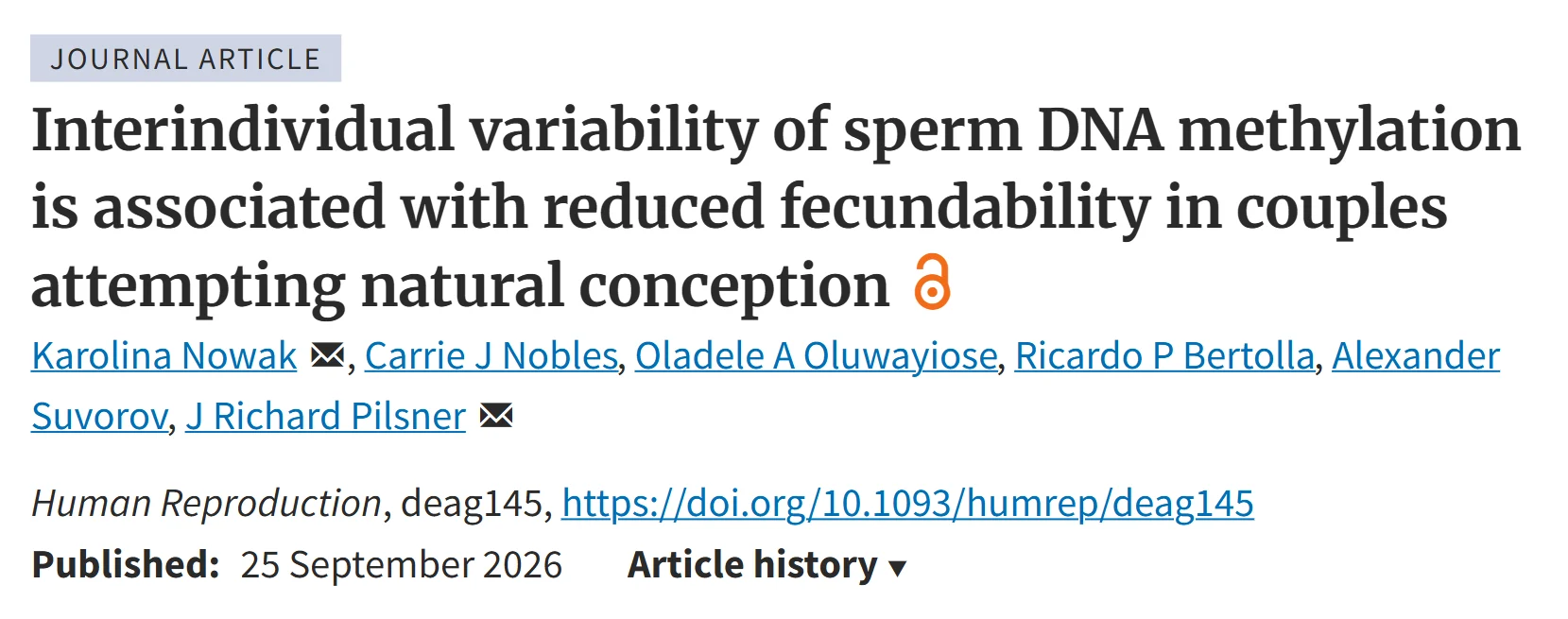
Title: Interindividual variability of sperm DNA methylation is associated with reduced fecundability in couples attempting natural conception
Authors: Karolina Nowak, Carrie J Nobles, Oladele A Oluwayiose, Ricardo P Bertolla, Alexander Suvorov, J Richard Pilsner.
You can read the Full Article in Human Reproduction.
Stay informed with the latest updates in fertility and reproductive medicine on Fertility News.
-
Oct 12, 2026, 16:55Karthik Raj: True Biological Embryo Mosaicism vs. Technical Detection
-
Oct 12, 2026, 16:50Nagi Rostom: Sharing Insights on Reproductive Health and Fertility at a Women’s Health Open Morning
-
Oct 12, 2026, 16:44Katy Encalade: Why Early Education Matters in Egg Donation and Surrogacy
-
Oct 12, 2026, 16:31It’s Time to Talk about Fertility-Aware Workplaces – ESHRE
-
Oct 12, 2026, 16:23Anu Chawla: WHO’s Global Roadmap for Hypertensive Disorders of Pregnancy Is a Significant Step Forward
-
Oct 12, 2026, 16:11Devyanshi Dixit: Behind Every Breakthrough Is a Reason to Keep Going
-
Oct 12, 2026, 16:01Suganya Venkat: The Kindest Thing to Say After a Failed IVF Cycle Is Not “Try Again”
-
Oct 12, 2026, 15:58Lucy Froese: When You Lose a Pregnancy, You Don’t Just Lose Your Baby…
-
Oct 12, 2026, 15:56Beata Blazkova: What Actually Makes an Embryo Keep Going?